Showing posts with label Robertson. Show all posts

Wednesday, 13 February 2013

Why are we rushing over the climate cliff? -- by Hugh Robertson

Published with his permission, this is the 18th in a series that Hugh Robertson, of Ottawa Monthly Meeting (Quakers), has written for a community paper. They are online at his site Ecology Economics Ethics.
*****
My daughter and her generation have been given a life sentence for a crime they did not commit. – Mark Hertsgaard 

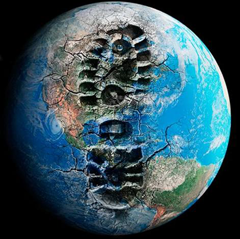
During the three US presidential debates there was just one fleeting reference to climate change. Clearly, the state of the planet was not a major issue with voters. One month later with Washington gripped and gridlocked and alarm bells sounding all over the country, the US inched towards the “fiscal cliff.” Inexplicably, nobody seems to care as the country sleepwalks over the “climate cliff.” At least, lemmings go over a cliff with their eyes wide open.

photomontage by montrealsimon.blogspot.com
Likewise in Canada, the environment is a political non-issue. Prior to the last election, a well known political advisor remarked in the National Post that the major parties had all concluded that “the environment is quite possibly a dangerous issue.” It must have been “dangerous” because the environment hardly came up for air in the election campaign. In the same article, a senior polling executive stated that “you can’t run an election nowadays on the environment.”

There is no perceptible difference between Canada – its moral monopoly long gone – and the US regarding environmental values, greenhouse gas (GHG) emissions and ecofootprints: just indifference. The inertia is overwhelming and the lethargy is pervasive continent-wide, punctuated only by lame lamentations about the impact of global warming on our privileged lifestyles.
Climate change from historical mean, March 2012 -- NASA
George Monbiot describes the public paralysis in his inimitable way: “We sit back and view the deteriorating climate scene with the impotent fascination with which we might watch a good disaster movie.” [Heat, 2006. See our summary. -- Ed.]

The silence and the somnambulism is not only surreal, it is stupefying.

Peer Pressure: The Paralyzing Impact of Social and Current Norms

 Both climate scientists and social scientists are baffled by this nonchalant, even defiant, public response to the threat of global warming in the face of overwhelming scientific evidence. Psychologists are now suggesting that changing contemporary cultural conditions in the form of social media, saturation advertising, rampant consumption, peer pressure, income disparities and polarized politics are transforming our world views.

Our individual subjective world views have to a great extent been shaped by our personal life experiences. Family, friends, education, religion and careers have all left their imprint that, in turn, influences our beliefs and values. This process of socialization or cultural conditioning tints the spectacles we all wear which then filter our perceptions of reality. We are, to a certain extent, captives of our upbringing.

Sociologists contend that as we grow up, we are increasingly gravitating to groups with similar world views. This is especially true of our smaller social circles which are usually representative of larger socio-cultural groupings, based primarily on income and bound together by implicit common values. Because social status and approval is such a powerful driver of behavior, we are defining ourselves by our socio-cultural group. As we conform to the lifestyle values of our group, we silently absorb the prevailing beliefs and consumption patterns.

An unspoken group solidarity discourages individuals from breaking ranks and risking social isolation. Even fewer will speak out publically on pressing environmental issues because messengers of bad news have traditionally met a messy end. Such is the power of social networks and peer pressure in shaping our ideological views and, ultimately, even our thinking processes. 
 
While we may be predisposed to developing certain attitudes because of our life experiences, we are not predestined to pursue any particular course. Nor is our behaviour predetermined or our choices constrained. Because our world views are not immutable, we can break the bonds that bind us to our upbringing. For the future of the planet, we dare not allow ourselves to be socialized into submission.

Widespread disapproval of smoking and drinking and driving and the subsequent public pressure forced the government to legislate changes. It is socially unacceptable to smoke today, but oddly, it is still socially acceptable to practise an extravagant lifestyle that is endangering the health of the planet. The consumer culture of our age – characterized by high-end cars, homes, cottages, travel, clothing and entertainment – has shaped a web of values that has neutered the popular pressure so essential to initiating political action. 
 
Increasing income disparity in North America is reinforcing social stratification and further entrenching divergent values and beliefs. The top twenty percent [in red] contribute a disproportionate share of GHGs and virtually every other form of pollution. Major decision makers, such as corporate and media executives, senior bureaucrats and politicians are all part of this influential segment of society, further militating against the enactment of environmental legislation.

A complex interlocking of sociology, psychology and ideology is helping social scientists understand the complexity of our task of mitigating climate change. Mitigation is not simply a matter of publishing detailed “menus” of environmental tips. Mitigation is mired in the mind and the responses are wired in our brains.


Political Polarization: The Impact of Ideological Solitudes

Jonathan Haidt - courtesy Wikipedia
Jonathan Haidt in his recent book, The Righteous Mind, suggests that there are six basic impulses or intuitions, shaped by our socio-cultural backgrounds, that drive the political behavior of liberals and conservatives. The six intuitions or traits are: Care, Fairness, Loyalty, Authority, Sanctity and Liberty.

Haidt’s analysis, although focused on the moral foundations of political behavior, is useful for understanding the competing ideologies behind the climate confrontation. The gulf between the progressive left and the conservative right is so wide and so deep and the environmental positions so unyielding that one wonders how the political process can ever reconcile the differences.

Haidt’s six basic traits are given different weight and interpretation by the ideological right and left. In applying his theory to the environment, it is “Sanctity” that especially divides liberals and conservatives. For the latter group, “Sanctity” represents the flag, the constitution and “God and country,” whereas the liberal left regards nature as the supreme symbol of sanctity.

Increasingly in North America, we are living in a world of social silos and ideological echo chambers where our world views and personal identities are bound up with our socio-cultural group and our values are defined by our political party affiliations.

Our “ideological solitudes” have major environmental policy implications. For example, progressive groups argue that free market capitalism promotes ecological destruction and that only decisive government intervention can stem the downward spiral. On the other hand, conservatives whose ideology is rooted in individualism, oppose any regulation of the economy. Some extreme conservatives even believe that global warming is a socialist plot. There is no common ground for discussion and if one group’s value stance clashes with the opposing group, there is no chance of resolution. Mother Nature must weep at the shenanigans in the sandbox.

Equally disturbing is Haidt’s contention that our deeply embedded socio-cultural intuitions can derail our cognitive processes and direct our reasoning. Not only can we be held captive by our upbringing, we may also be trapped by our thoughts. He suggests that we jump to conclusions on the basis of our intuitions and sentiments and we then use our cognitive skills to rationalize our decisions. 

Consequently, we are often selective in our listening and reading; we cherry pick what we need to support our arguments and then conveniently tune out the rest. We believe what we are conditioned to believe.

Prejudging is prejudice. Consciously selecting information, even though guided by subconscious forces, to support a preconceived position is bias. This disturbing process is often referred to in the media today as biased assimilation or confirmation bias. Sadly, it is intensifying the increasingly rigid mindsets around climate change.

We are faced then with the irony that information and knowledge, such as solid scientific data, is actually a barrier to mitigating global warming. Dispiriting indeed: our belief systems contort the evidence, facts fail to motivate us, and logical arguments backfire. No wonder efforts at mitigation hit a dead end.

What has happened to the role of education? The same discipline, the social sciences, that is helping us unravel the mysteries of the mind regarding our behavior and thought processes, claims as its objectives: critical thinking, problem solving, informed decision making and logical argumentation. These attributes are crucial weapons in the battle against climate demagoguery but how effectively are they taught in our schools and universities? 
 
Chris Mooney - courtesy Wikipedia
ChrisMooney, author of The Republican Brain, quotes a startling statistic: better educated Republicans are more in denial regarding the science behind climate change than their less educated colleagues. We are in deep trouble if the institution tasked with opening our minds, encounters minds that have already shut down. 
 
Perhaps education itself is a major barrier in resolving our ecological problems. Education is hardly living up to its universal claim that it overcomes ignorance. North America, possibly the most educated continent, is home to a range of antediluvian environmental views despite the impact of extreme weather conditions of recent years.

The pedagogical problems might not just be in the area of knowledge and skills but, of more concern, in the area of attitudes and values. Are our schools and universities focusing on beliefs and notions that conform to the dominant socio-cultural values, such as consumerism, entitlement and competitive self-interest rather than on community, co-operation and empathy?

We may be entering an anti-science age characterized by a contempt for evidence, rational discourse and experimentation and stoked by the climate denial industry. More ominously, we may be entering an age of anti-intellectualism characterized by a fear and distrust of education and learning. What a tragic paradox: the most educated generation in history leading the charge into a new Dark Age.

The Gender Divide: Man’s Inhumanity to Nature

According to the World Meteorological Organization and virtually every other major scientific body, global warming is primarily manmade. It is doubly manmade, however. Not only are GHGs largely anthropogenic in nature, but global warming is largely a function of gender. Generally, women are greener than men. 
 
The research of Aaron McCright, a sociologist at Michigan State University, demonstrates how education can reinforce the gender divide on environmental issues. He suggests that boys learn that masculinity emphasizes detachment, control, mastery and competence while the feminine identity stresses attachment, empathy, care and cooperation. These qualities play a major role in shaping our environmental behaviour. 
 
It is not just qualities and behaviour patterns that are different between men and women but also levels of knowledge. Men, certainly those of a more conservative bent, will often read the science explaining global warming and then cherry pick the information that will reinforce their denial stance. Many men, according to polls, rate their knowledge of climate science above women’s. But Professor McCright shows that although women underestimate their scientific comprehension, “their beliefs align much more closely with scientific consensus.”

Studies and surveys done recently in the UK and the EU, and probably would not differ greatly in Canada and the US, indicate a greater environmental concern and awareness among women than men. Women:
  • Support environmental initiatives and increased spending
  • Prepared to pay higher taxes to protect the environment
  • Volunteer more for environmental projects
  • Less likely to support geo-engineering projects
  • Purchase more green products
  • More concerned about environmental risks to health
  • Recycle more and use energy more efficiently
  • Buy smaller, more energy efficient vehicles
  • More concerned about the long term risks of climate change
  • More likely to make lifestyle changes
A study with a different focus from the University of Oregon demonstrates that in countries where women have a more prominent political status and a greater participation in public affairs, the carbon emissions are lower and these countries also ratify more environmental treaties.

Both the US Congress and the Canadian Parliament are male dominated. The upper echelons of the North American corporate world are also largely male and the various groups appearing at Congressional hearings are overwhelmingly male in composition. We should ask ourselves how many women are lobbyists in the Canadian fossil fuel industry and how many women work in the gas fracking business in the US.

Women are generally more in touch with their feelings and emotions than men and they are also more protective of Mother Earth, as the research shows. Although science can explain climate change, the environmental crisis itself can only be solved at the emotional and not at the intellectual level. Behavioural change flows from the heart, not from the head. 
 
Studies, polls and surveys are never conclusive but all the results show a disturbing pattern in the way men and women confront the dangers of climate change and the many other ecological problems facing the planet at the beginning of the 21st century.

Among the major barriers to mitigating climate change are ideology, wealth, gender and possibly education. These factors are all outgrowths of our cultural conditioning and they are both interconnected and self-reinforcing, thereby giving them added force and influence. 
 
As a sentient species, we can shed and shred the shackles that bind us to our past. We have to confront our consciences and challenge our beliefs – we must never allow conditioning to conquer conscience. Nor can we be held captive by outdated values that are inimical to the very foundations of life. Breaking through our behavioural barriers is a barometer of our moral maturity.

Government is not a barrier to combating climate change in a democratic society. To blame government for inaction on the climate file and for anti-environmental legislation is to absolve ourselves, both individually and collectively, of the ethical responsibility for initiating and promoting ecological change. 

Governments are not deaf. They are extremely sensitive to all signals and they will become proactive overnight when we, the electorate, send them a clear message – at present our environmental message is barely audible.

Saturday, 1 January 2011

Whither or Wither the Planet -- by Hugh Robertson

The author is a member of Ottawa Monthly Meeting. This article, 12th of a series, is online at his site Ecology Economics Ethics.
If we live as if there is no tomorrow, there really won’t be one.
-- Kurt Vonnegut
2010 is turning out to be the hottest year worldwide since temperature details were first documented in the 1850s, while the past decade has been the warmest ever recorded.
Russian wildfires by Jotman
Wildfires scorched Russia and Israel and parts of the interior of British Columbia were once again on the burn.
Pakistan flood damage: whatisthetrend
We have notoriously short memories but surely we have not forgotten the floods and landslides that ravaged Pakistan and China, the oil spill that will permanently cripple the Gulf of Mexico, or the toxic red sludge that engulfed the Danube.

The World Meteorological Organization has just announced that global concentrations of the main greenhouse gases reached their highest level in 2010 in almost one million years.

Is it any wonder that, with increased planetary warming, a massive chunk of the Greenland ice shelf broke off and slid into the ocean this summer or that species extinction is escalating?

One of the most reputable international think tanks, the New Economics Foundation, recently reported that the world went into ecological debt on 21st August this year. Earth Overshoot Day occurred a whole month earlier than last year. On that day we exhausted our annual environmental budget and we are now eating into our natural capital by extracting more from the planet than it is capable of reproducing.
Our shrinking earth -- ha. per capita 1950 to present: GRID-Arendal

Lester Brown, founder of the Worldwatch Institute, explains the problem in economic jargon to make it clearer: “We are liquidating earth’s natural assets to fuel our consumption.” No amount of Federal Reserve stimulus funding or bailouts can rescue us from this meltdown.

Enough doom and gloom? Read on.

One of the most frightening studies ever published appeared in July earlier this year but it sailed right under the radar screen of public awareness. It was reported in Nature that the concentrations of phytoplankton or plant plankton in the top layers of the oceans had declined by about 40 percent since 1950.
phytoplankton: Wikipedia
Plummeting levels seem to be linked to rising ocean temperatures triggered by global warming and to widespread contamination, such as oil spills and plastic pollutants. Increased acidification of the oceans, another consequence of global warming, is also suspected in the disturbing decline of the plankton.

Phytoplankton form part of a complex photosynthesis process that produces oxygen. It is estimated that half the world’s oxygen is created by marine photosynthesis – every second breath we take is dependent on the health of the oceans. In addition, phytoplankton help cool the planet by absorbing carbon dioxide from the atmosphere. The microscopic plankton also perform another vital role as the base of the ocean food chain.

The other half of the world’s oxygen supply is produced through photosynthesis on land by trees, grasses and plants. North America has been operating at an oxygen deficit for the last 40 years as we clearcut forests, ploughed under grasslands and burned fossil fuels in increasing volumes.
To deprive our unborn offspring of life-sustaining oxygen would be a crime of epic proportions. And just because, as the late Carl Sagan put it, we were too lazy to change our destructive lifestyles. We have no moral right to download the costs, both economic and ecologic, on the backs of future generations or to squander their birthright.

We have probably one decade at most to dramatically control our greenhouse gas emissions, reduce pollution and learn to live within the natural limits of the planet. If we remain so resolute in our refusal to modify our lifestyles and our consumption habits, ecological tipping points will kick in with consequences far beyond human control. No technofixes will ever rescue us once we pass the point of no return.

The environmental crisis in its different manifestations is the defining crisis of the 21st century – not terrorism, not unemployment, not nuclear weapons or socialism vs capitalism. Environmentalism is not simply another –ism or ideology. It is our life support system.

We are better informed than any generation in history about the dangers threatening the environment and yet we appear immobilized by the magnitude of the problems. We have to frame, and face, the critical questions that will help provide us with a sense of direction
to combat the impending crisis.
  • Why do we recoil from using language such as "morality, ethics, values, principles, emotions, feelings, compassion, justice, empathy and spirituality" when discussing environmental issues?
  • What are the relative roles of the individual and institutions, such as the media, corporations, churches and government, in confronting environmental problems?
  • How do we shape an environmental conscience among the corporate, political and moneyed elites?
  • Why do we promote infinite progress and prosperity on a planet with finite resources?
  • How do we persuade individuals to reduce their ecological footprint?
  • Since advertising is aimed solely at expanding consumption, should marketing programs in colleges and universities be converted into departments of ecological economics and sustainable business?
  • Should we consider draconian measures, such as restricting the size of houses, limiting the number of cars per family and rationing airline flights?
  • How can we hold governments to account on environmental policies if the electorate is not engaged or is ill-informed?
  • Do we have the right to protest government environmental policies until we have set an example and curbed our own consumption?
  • How do we depoliticize so important an issue as climate change in our partisan political system?
  • Are the wealthy developed countries, with their over-sized ecological footprints, creating “climate apartheid” in the words of Archbishop Desmond Tutu?
  • Is the climate crisis not more of a consumption problem in the developed countries than a problem of over-population in the developing world?
  • If Canada is already overpopulated in terms of its biocapacity, should we discourage immigration and devote funds to improving the lives of people in other countries?
We will never solve the environmental crisis until we see it as a moral problem. Some years ago, Wendell Berry, the renowned writer and ecologist, wrote that the environmental crisis is fundamentally a crisis of character; it still is. Dr James Hansen, the dean of climate scientists, describes the ecological crisis as both a legal and a moral problem because it is an issue of intergenerational justice. To modify a Marshall McLuhan metaphor: the moral is the message.

countries with food riots, 2008: coathangrrr
It is a moral issue because our conscious decisions and lifestyle choices affect others, not only the unborn but also the disadvantaged struggling to survive in societies shattered by climate change and pollution. If we are not personally aware of the dangers of unrestrained consumption, we have the responsibility to inform ourselves of the impact of our lifestyle decisions on the less fortunate. We are, after all, a sentient species governed by conscious free will, not by programmed determinism.

The environmental crisis is also a crisis of ideology. How sustainable, both ecologically and socially, are the values embedded in our market economy, that focus on self-interest, competition, consumption and growth? Does an adversarial political system that frequently appeals to our baser instincts, best serve our long term ecological and social interests?
melting ice sheet, Antarctica: Getty Images
Furthermore, it is a crisis of emotions. Somehow, we have to develop and demonstrate the empathy to feel and sense the anguish of the environmentally dispossessed: the submerged Pacific islanders and the victims of floods, fires and droughts. Dare we forget our own northern people as the melting ice and the thawing tundra destroys their age-old lifestyles. How can we even imagine and envision the plight of future generations on a ravaged planet, if we are alienated and estranged from our own emotions?

family, Cape Dorset: Wikipedia
Above all, the environmental crisis is a spiritual crisis. It is not spiritual in a “new age” or narrow religious sense. What we desperately need is an all-embracing, ecumenical spirituality built around a reverence for the divine in nature and focused on the perpetuation of life on a vibrant planet – a “reverential ecology” in the words of Satish Kumar, editor of Resurgence magazine.

Sacrifice is central to spirituality. Our individual Canadian carbon and ecological footprints are among the highest in the world, far exceeding nature’s regenerative capacity. Our level of spiritual commitment must be measured by the sacrifices that we personally are prepared to make in our material lifestyles that will allow us to live within the sustainable limits of the planet.

The eminent ecologist E.O.Wilson’s blunt assessment of the anthropogenic causes of global environmental degradation is that we live in an era of Stone Age emotions, mediaeval institutions and, in our arrogance, we attempt to play God with our technology.

Canada's carbon footprint: The Tyee 2008
Judging by a recent vote in the Canadian Senate, that institution is still mired in a mediaeval mindset. A procedural problem enabled a majority of Conservative-appointed senators to defeat Bill C-311, The Climate Accountability Act. The bill had twice won majority support in the elected House of Commons but it was overturned by an unelected Senate without any discussion. It has been decades since the Senate attempted to defeat a Commons bill without discussion.

Intense lobbying, especially by the fossil fuel industry, reinforced the resolve of the Conservatives to defeat the climate initiative. The Canadian Chamber of Commerce even circulated a request to its members encouraging them to pressure the senators to kill the legislation. Their message could not be more blunt: “Bill C-311 must die in the Senate.”

The Canadian Climate Act simply laid out targets for our greenhouse gases: 25 percent below 1990 levels by 2020 and 80 percent below 1990 levels by 2050. These emission caps, according to the vast majority of climate scientists, are the only way we will limit the earth’s temperature to a 2 degree increase by 2050. Lest we forget, the 2 degree temperature increase was the target that the majority of countries, including Canada, accepted at the Copenhagen climate conference a year ago and then reaffirmed at Cancún this month.

Government spin claimed that the climate bill, if enacted, would shut down the economy and create mass unemployment. One does not have to be a statistician to estimate the unemployment rate in 2050 on a plundered planet. Future Canadians will weep at our self-indulgent narcissism that allowed a minority government to derail a climate protection plan by exploiting a tactic as inane as a procedural matter.

It is crystal clear that we cannot rely on our governments for ethical and enlightened environmental leadership. Partly it is because of the constant pressure exerted on our politicians by corporate lobbyists and partly because of our own fickle voting nature. The lack of political will largely reflects a lack of public will.

Sadly, there is no critical mass of voters to drive public policy on the environment. Many governments, including Canada, have sensed this lack of domestic electoral commitment to climate issues and, consequently, they are cooling on their emission pledges. We need look no further than the results of the recent mid-term elections in the US as a possible portent for progress on climate change initiatives. How tragically ironic it would be if it was democracy that dashed international attempts to save the planet.

The latest polling numbers indicate that Canadians rate climate change as only the eighth most important global issue. Canada’s role as a co-conspirator in the slow death of the Kyoto Protocol, with the execution date set for December 2012, was inspired largely by a careful reading of the electorate. Kyoto will be viewed by future historians as our “Climate Munich” where politicians abandoned principle to appease the party faithful, and then capitulated to voter whims.
from Walt Kelly's Pogo comic strip
Although we need national governments to develop progressive environmental policies and to seek international cooperation on ecological issues, we must never rely on them to legislate our attitudes and to restrain our consumption. Joel Salatin, the hero of Food Inc puts it succinctly: There is no salvation through legislation. Furthermore, government decrees merely absolve us from the moral responsibility of regulating our own behaviour.

The onus is on us as individuals to initiate and to ignite the changes that will revolutionize political and public attitudes and action. We can only lead through personal example, not through preaching or through protesting, and the revolution must start in our own homes and in our hearts. Just as Gandhi reminds us that our priorities are best expressed in actions, so must we also anchor our aspirations in actions.

If, as the psychologists suggest, reducing our consumption and moderating our lifestyles, is largely a matter of behavioural change, what is delaying us? We are the arbiters of our own behaviour. Surely we don’t lack the courage or the conscience to change our behaviour for the benefit of our offspring.

Appeals to circumscribe our consumption are not new. The prescient English poet of the late 18th century, William Blake, was ahead of his time when he asked: How do we know what is too much, when we don’t even know what is enough? Jeffrey Sachs, the respected humanitarian, in his address to the graduating students at Carleton University recently acknowledged that “our consumerism has too often overtaken our common humanity.”

The first step in an action-based crusade is to quantify our consumption and establish our personal ecological footprints. We have to measure and monitor the full sweep of our lifestyles from waste disposal and personal shopping to fossil fuel use and vacations. Earlier articles in this series suggested ways of both reducing and measuring our footprints.

Conservation is really no more difficult than consumption, partly because we already waste so much food and energy in North America. Conserving a litre of gasoline or a kilowatt of electricity not only reduces carbon emissions and pollution, it also preserves scarce resources for future generations. The cheapest, cleanest fuel is that which we leave in the ground or the electricity we do not use. Furthermore, modifying our lifestyles and reducing our use of fossil fuels will eliminate the need for government regulations to "price carbon” in the form of carbon taxes and cap-and-trade policies.

We must examine all our lifestyle decisions through the lens of ecological precaution and strive to live within the biocapacity of the planet. Mother Earth is, after all, our one and only home.

Once you have set your house in order, take the crusade into your neighbourhood. Major societal change invariably comes from below – it is seldom top down and it is seldom achieved without a protracted struggle. But the struggle for ecological balance, unlike any major change in history, has an overriding urgency.

Communities inspired by an overarching moral purpose and energized by collective action will coalesce into larger movements creating a grassroots groundswell that will drive changes throughout all levels of society. Many municipalities and cities, for example, are undertaking major environmental initiatives and provinces and states are stepping into the vacuum left by our national governments.

For inspiration, read about living simply and what other communities are doing.
By transforming your lifestyle and inspiring others, you will have left an imprint on your community and perhaps the wider world. It may not always be possible to measure the broader impact our personal efforts. Ultimately, at the end of life’s journey, however, it is our conscience that is our most trusty companion, especially when it is reinforced by the conviction that we have done our best.

Wednesday, 13 January 2010

How we reduced our footprint -- by Hugh and Jo-Ann Robertson

Canada has the third highest ecofootprint in the world after the United Arab Emirates and the US. The ecofootprint is the amount of land and water that we require for consumption and subsequent waste disposal. We require 7.5 hectares per person (4 times the earth's biocapacity per person). Switzerland requires 5 hectares, China is presently at 1.8, and Bangladesh only requires 1 ha/pp. If every person on the planet lived at our level of material consumption, we would need four planets. See how you rate with this UBC calculator and tips from the Suzuki Foundation.

Carbon footprint (CO2 tonnes per person) - Wikipedia

A carbon footprint, on the other hand, measures the volume of greenhouse gases released into the atmosphere. Like our ecofootprint, Canada also has the third highest carbon footprint in the world: 24 tonnes per person. By comparison, the UK is 11 t/pp while China is far behind at 2 tonnes per person. Per year. A more comprehensive carbon footprint not only measures immediate emissions, but the life cycle of a product. Instead of measuring only the electricity that we use to prepare our food, an extended carbon footprint would also include the energy used in the production of the food and its delivery to market. The earth's ability to absorb carbon is fast declining. Scientists estimate we have already overshot it by 30%. The oceans are close to saturation; forest cover is decreasing and fertile soils are eroding. Our lifestyle exceeds the sustainable limits of the biosphere. Our ecological debt is surging. We are no longer living off nature’s interest; we eating up our scarce biological capital.

In September 2005, the (now cancelled) One-Tonne Challenge program assessed our home carbon footprint at 3.4 tonnes of greenhouse gases per individual occupant, just over half the national average and well below the Kyoto target of 4.5. After the changes we describe below, using the same carbon calculator, it came in at about 2.5 - a reduction of more than 25%. Our home's ecological footprint in September, 2005, was 4.3 hectares per person. The latest calculation puts us at 3.5 hectares per person, slightly less than half the national average - a 20% reduction.

We have passed global peak productions in oil, fish and food and we have reached the physical limits of fertile land, freshwater and clean air. We are also close to a tipping point in atmospheric concentrations of greenhouse gases and face irreversible climate change.

Furthermore, statistical footprints cannot measure some of the less discernible damage we are inflicting on natural ecosystems. We are choking the oceans with plastic, poisoning our lakes and rivers with chemical toxins, and contaminating the subterranean water table with leachate from our garbage dumps. The extinction of countless species is unraveling the complex web of life underpinning human survival.

Curbing Consumption: The First Step Towards Sustainable Living

"Be the change that you wish to see," said Gandhi. There are no technofixes that will reduce our environmental footprint while keeping our consumer lifestyle. Changing our behaviour is far less expensive, (though more difficult) the only approach that will ensure a sustainable future for the planet, just as conservation is far cheaper than consumption. It is time for the real conservatives to stand up.

For the past 4 years, I and my wife have been engaged in a personal quest to reduce our energy consumption and greenhouse gas emissions, to demonstrate that the targets in the Kyoto Protocol and in the (sadly defunct) One-Tonne Challenge are attainable without sacrificing quality of life.

We live in Ottawa (a cold city) in a 19 year old, 1800 square foot townhouse. We started with an energy audit of the house, which gave us a mere 66% energy efficiency rating. Most of the loss is through windows, doors and roof. Other hard-to-find exterior heat losses, such as faulty wall insulation, were located with an infrared scan. The audit took baseline readings of utilities' energy consumption, for post-refit comparison. Our home was one of the first in Ottawa to install a digital smart meter, which allows us to check how each step reduced consumption.

Armed with baseline readings, energy audit, and recommendations for improvement, we were ready to start. Focussing on low tech energy conservation, we:

  • replaced bulbs with compact fluorescents
  • installed rain barrels
  • installed low-flow showerheads and toilets
  • sealed air leaks
  • gradually replaced old windows
  • put in a wrought iron front door
  • awnings on south facing windows (we do not use air conditioning)
  • overhead ceiling fans
  • an indoor drying rack in stairwell (Dumbarton air dryer, see photo)
  • reshingled the roof with light shingles, and
  • reinsulated and ventilated attic space.

Food consumption: we try to buy produce from a 100 mile radius by shopping at local organic markets and by tending our own vegetable garden in the summer. We reduced our consumption of meat. A locavore vegetarian diet could cut our eco-footprint by as much as 30%.

In addition to energy-saving, we reduced our ecological footprint by almost eliminating garbage disposal -- by minimizing all purchases, recycling and composting biodegradable material. We are down to one small bag every 6 months. We also shop second-hand when possible. All products contain embedded energy (carbon emissions, processed water-- a cotton shirt, for example, has a water footprint of 2,00 litres!). Second-hand shopping is a good way to practise an important environmental R, “re-use.”

The next step

We also bought an inexpensive watt meter to measure individual appliances. Appliances using 220 volts that are wired directly into the panel require a more advanced meter, such as The Energy Detective” which must be installed by an electrician. All appliances contain embedded energy used in the manufacturing process -- so simply replacing a relatively new fridge, for example, might not be a wise decision, financially or environmentally. Another decision involved the cost of new appliances. Bill Kemp, a renowned Ottawa area energy efficiency specialist, explains the concept of life cycle cost, which he calls “true cost” as opposed to “first cost” (or initial cost) in his book Smart Power: An Urban Guide to Renewable Energy and Efficiency. He argues that basing the purchase of appliances on their energy efficiency and buying quality (and, often, more expensive) products when upgrading will actually outperform the stock market in the long run. We have tried to apply the concept of life cycle costs to all our purchases. Already we can see a return on investment as resource and energy prices continue to rise.

Pursuing these principles, we gradually replaced our major appliances and car with:

  • a high efficiency natural gas furnace.
  • efficient dish and clothes washers.
  • a small 25-gallon electric hot water heater
  • a natural gas cooktop
  • a small electric convection oven.
  • an energy recovery ventilator
  • an airtight woodstove
  • a smaller barbeque, and
  • a Toyoto Prius.
Jo-Ann and Hugh with their airtight woodstove

In order to monitor our energy costs more closely, we ended "equalized utility billing" that gives you the same monthly bill in all seasons. We now know exactly what our natural gas, electricity and water cost. It requires a small amount of extra effort -- reading a meter and phoning in the reading, to correct the company's estimate. We continue to use automatic bank deductions. Equalized billing is supposed to eliminate spikes for winter heating and summer air conditioning. But our new appliances mitigated any major spikes. In fact, with a personal effort to minimize energy use, we have reduced our bills dramatically.

Four years later

Our electricity consumption is now only 375 kilowatt hours per month, compared to the Ontario average of 750-1,000 kwh/m (varying with number of occupants, and use of electricity for space and water heating -- we use lower-cost natural gas). Because our electrical water heater is small, set at 49 degrees C and our showers and appliances are low-flow, power demand is not quite low. For two people, we use half the provincial average.

We need no air conditioning in summer. A screened wrought iron door allows cool night air to circulate through the house; fans and awnings keep the house comfortable during the day. We cook outdoors on a small barbecue or a two-burner hotplate to minimize indoor heat buildup. On smoggy days, we eat cold plates and salads because coal-fired electricity and barbecues both contribute to particulate emissions. Replacing energy-hog dryers, we use an outdoor drying rack for clothes in the summer, and the indoor rack during the winter.

To trim our carbon emissions even further, the Robertsons have signed on to renewable energy from wind and low-impact hydro at marginally higher prices from Bullfrog Power. Because so much of Ontarios electricity is still coal-fired, this substantially reduces our carbon footprint.

In winter, our home is heated by a high efficiency natural gas furnace, complemented by a low emission airtight wood stove. We also use a gas-fired cooktop in the kitchen. Together with improved insulation, reduced air leaks, our consumption of natural gas 900 cubic meters/year and dropping steadily. The Ontario household average is 3,000 cubic meters for water and space heating alone!

Our water footprint is down to 80 litres per person per day because of rain barrels, efficient appliances and low flush toilets. The daily Ottawa consumption is 250 litres per person; the national average is about 300. More than half the City’s operating budget is spent on electricity charges to pump, clean and distribute water and then remove and treat wastewater and sewage. Imagine how happy citizens would be if their city taxes were cut by one-third!

Three years back, we replaced our 13 year old Volvo with a hybrid Prius. Our gasoline consumption has dropped by two-thirds. This and no repairs have saved us at least $3000 per year, helping to offset the capital costs of the Prius. The initial cost of $30,000 is more expensive than many cars in the family sedan category. But based on life cycle expenses, Consumer Reports recently rated the Prius “least expensive” car in this category.

Driving is still the largest part of the our carbon emissions. They are not proud of the fact that they average 25,000 kilometres per year, slightly more than the national average. The high mileage is partly for family reasons (“love miles” in the words of George Monbiot, author of Heat) and partly because they avoid flying for environmental reasons. We are all too aware that driving accounts for half of the carbon footprint of Canadians who own a vehicle.

Our first energy audit rated our house at 65 out of 100. Minor refits improved it to 72. Further improvements have now pushed its rating to 79, qualifying us for Energy Star status. We came within a whisker of the R2000 level of 80. If our 18 year old townhouse can be transformed into virtually an R2000 home, why are we as a society not demanding construction of energy efficient houses? Retrofitting is a more expensive way of improving efficiency and fighting global warming than new-build. Approximately half the greenhouse gases created by each Canadian are generated in the home.

Return on investment - sunlightelectric.com

Costs and gains

How cost effective are retrofits and renovations? What is the cost recovery period? These are legitimate questions for homeowners. Our improvements were done gradually, as regular maintenance, upgrading substandard workmanship, or replacing worn out appliances or. We had no major capital projects, such as installing solar panels. Over the past 4 years we have spent about $30,000, partly financed by government rebates and dramatically lower utility bills. We have established our own carbon fund to offset the emissions of the Prius. We use these “carbon dollars” for our energy-saving projects. Real estate consultants advise homeowners to set aside 5% of the value of the house per year for maintenance -- such as Energy Star doors and windows, and energy efficiency. Last year we had to replace the roof shingles. We chose a light colour, to reflect sunlight during the summer, thereby reducing heat build up in the attic and keep the house cooler. Our roof shines out clearly on Google Earth. At least we are safe from a heat seeking missile!

A recent CMHC study shows most home renovations are undertaken for cosmetic reasons. These may no longer enhance the resale price of a house, as resources become scarce. In the UK, the law will soon require that home sellers get an energy audit. Energy efficiency rather than cosmetics may soon determine home prices. So retrofit and energy-conserving appliances make both economic and ecological sense. Improvements will increase the value of a house, both short and long-term. Monthly utility costs, paid in after-tax dollars, are reduced and generally our homes are healthier and more comfortable. Unlike other possessions, homes are free of capital gains taxes when sold.

Our upgrading costs over the past 4 years were $30,000 for home improvements and $30,000 for a Prius. Neither of these expenditures is excessive by current standards for renovations and vehicles. We estimated the cost recovery periods home, appliances and car at between 3 and 12 years. But rising energy and resource prices may well shorten these periods. For us, money was not the main motive – moderating climate change by reducing our footprints may be the most rewarding result.

We do not live like ascetics. In winter, our thermostat is set at 20 degrees during the day and 17 at night. We also run an Energy Recovery Ventilator which circulates fresh air but recaptures the heat from the outgoing air. Our energy and carbon savings have not imposed a dramatic change in quality of life. So it is doable, by ordinary people. We can live more sustainably at no great cost or inconvenience. Individuals can make a difference in the battle against climate change.