Brian Tokar

An earlier version of this article appeared in
Communalism: A
Social Ecology Journal, Issue no. 1, December, 2009. Reprinted
with the author's permission from
Perspectives in Anarchist Theory. One of the inspirers -- like
Adbusters -- of the
Occupy
movement, Brian Tokar was a founder of
Climate
SOS, the
Northeast Resistance Against Genetic Engineering, and directs the
Institute for Social
Ecology, Plainfield VT, where he has originated the Biotechnology and
Climate Justice projects.
He also lectures at the University of Vermont. His books include
The Green Alternative (1987,
rev. ed. 1992),
Earth for Sale (1997),
and
Toward
Climate Justice (2010);
as editor,
Redesigning Life? (2001), Gene
Traders (2004),
Agriculture
and Food in Crisis (2010).
*****
There is little doubt today that we are living in apocalyptic
times. From mega-selling Christian “end times” novels on the
right, to the neoprimitivist nihilism that has captivated so much of
the antiauthoritarian left, people across the political spectrum seem
to be anticipating the end of the world. Predictions of “peak oil”
have inspired important efforts at community-centered renewal, but
also encouraged the revival of gun-hoarding survivalism. A 2009
Hollywood disaster epic elaborated the myth, falsely attributed to
Mayan peoples, that the world will end in 2012.
 |
| Sony movie and videogame |
A cable TV series
featured detailed computer animations purporting to show exactly how
the world’s most iconic structures would eventually crumble and
collapse if people ceased to maintain essential infrastructure.
Numerous literary genres have embraced the apocalyptic mood, from
Jared Diamond’s detailed histories in
Collapse, to Margaret
Atwood’s current dystopian trilogy, which began with the darkly
satiric biotech nightmare,
Oryx and Crake.
The prevalence of apocalyptic images is not at all limited to
literature and popular culture. Disaster scenarios stemming from the
accelerating global climate crisis look more severe with every new
study of the effects of the rising levels of greenhouse gases in the
earth’s atmosphere. Steadily rising levels of drought, wildfires
and floods have been recorded on all the earth’s continents, and
people in the tropics and subtropics already face difficulty growing
enough food due to increasingly unstable weather patterns. Studies
predict mass-scale migrations of people desperate to escape the worst
consequences of widespread climate disruptions. And the diplomatic
failure of the 2009 UN climate talks in Copenhagen raised the profile
of several new studies forecasting the dire consequences of
temperature increases that may exceed 15 degrees in the Arctic and in
parts of Africa.[1] Bill McKibben’s latest book,
Eaarth,
elaborates the view that we are now living on a far more turbulent
planet, one that is already strikingly different from the one most of
us grew up on.
In this context, the utopian ecological visions that inspired
earlier generations of social ecologists – and environmental
activists more broadly – may seem quaint and out-of-date. The
images of autonomous, self-reliant, solar-powered cities and towns
that illuminated the first large wave of anti-nuclear activism in the
1970s and eighties sometimes appear more distant than ever. Despite
an unprecedented flowering of local food systems, natural building,
permaculture design, and other important innovations that first
emerged from that earlier wave of activism, today’s advocates of
local self reliance and ecological lifestyles only rarely seem
engaged in the political struggles necessary to sustain their visions
for the longer-term.
 |
| Murray Bookchin |
For social ecologists seeking to further the forward-looking,
reconstructive dimensions of an ecological world view, this presents
a serious dilemma. From the 1960s onward, Murray Bookchin, the
founding theorist of social ecology, proposed that the critical,
holistic outlook of ecological science was logically and historically
linked to a radically transformative vision for society. A
fundamental rethinking of human societies’ relationship to the
natural world, he proposed, is made imperative by the understandings
that emerge from ecological science, and these understandings also
embody the potential for a revolutionary transformation of our
philosophical assumptions and our political and social institutions.
Can this approach to ecology, politics and history be renewed for our
time? What kinds of movements have the potential to express these
possibilities? Can we meaningfully address the simultaneous threats
of climate chaos and potential social breakdown while renewing and
further developing the revolutionary outlook of social ecology?
Ecology and Capitalism
From the 1960s until
his passing in 2006, Bookchin insisted that the ecological crisis was
a fundamental threat to capitalism, due to the system’s built in
necessity to continuously expand its scope and its spheres of
control. In a 2001 reflection on the origins of social ecology, he
wrote:
“I was trying to provide a viable substitute for Marx’s
defunct economic imperative, namely an
ecological imperative
that, if thought out … would show that
capitalism stood in an
irreconcilable contradiction with the natural world… In short,
precisely because capitalism was,
by definition, a competitive
and commodity-based economy, it would be compelled to turn the
complex into the simple and give rise to a planet that was
incompatible environmentally with advanced life forms. The growth of
capitalism was incompatible with the evolution of biotic complexity
as such – and certainly, with the development of human life
and the evolution of human society.”[2]
For a couple of decades, however, it appeared to many that
capitalism had found a way to accommodate non-human nature and
perhaps to “green” itself. This notion can be traced to the
period leading up to the 20th anniversary of the first Earth Day. By
the spring of 1990, many of the largest, most notoriously polluting
corporations had begun to incorporate environmental messages into
their advertising. By reducing waste, partially restoring damaged
ecosystems, investing in renewable energy, and generally promoting an
environmental ethic, the oil, chemical, and other highly polluting
industries would become “stewards” of the environment. The 1990s,
we were told, would usher in a “sustainable,” even a “natural”
capitalism, whereby production and consumption would continue to
grow, and companies like Exxon and Monsanto would join with a new
generation of “green” entrepreneurs to solve our environmental
problems.
As awareness of the climate crisis rose rapidly with the cost of
energy during 2006-7, the “green consumerism” that was promoted
as a conscientious lifestyle choice in the 1990s became an
all-encompassing mass culture phenomenon. Mainstream lifestyle and
even fashion magazines featured special “green” issues, and the
New York Times reported that 35 million Americans were
regularly seeking out (often high-priced) “earth-friendly”
products, “from organic beeswax lipstick from the west Zambian rain
forest to Toyota Priuses.”[3] But the
Times acknowledged
rising criticism of the trend as well, quoting the one-time “green
business” pioneer Paul Hawken as saying, “Green consumerism is an
oxymoronic phrase,” and acknowledging that green living may indeed
require buying less. With rising awareness of the cost of
manufacturing new “green” products, even the iconic Prius has
come under criticism for the high energy costs embedded in its
manufacture.
The more forward-looking capitalists have had to admit in recent
years that an increasingly chaotic natural and social environment
will necessarily limit business opportunities. Some critics have
suggested that this is one reason for the increasing hegemony of the
financial sector. The Midnight Notes Collective writes:
“… in its disciplinary zeal, capitalism has so undermined the
ecological conditions of so many people that a state of global
ungovernability has developed, further forcing investors to escape
into the mediated world of finance where they hope to make hefty
returns without bodily confronting the people they need to exploit.
But this exodus has merely deferred the crisis, since “ecological”
struggles are being fought all over the planet and are forcing an
inevitable increase in the cost of future constant capital.”[4]
The result is an increasingly parasitic form of capitalism,
featuring widening discrepancies in wealth, both worldwide and within
most countries, and the outsourcing of most production to the
countries and regions where labor costs and environmental enforcement
are at the lowest possible levels. As the profitability of socially
useful production has fallen precipitously, we have seen the
emergence of a casino-like “shadow” economy, in which a rising
share of society’s material resources are squandered by elites in
the pursuit of meaningless but lucrative profits from ever-more
exotic financial manipulations.[5]
Simultaneously, capital is advancing a number of highly promoted,
but thoroughly false solutions to the climate crisis. These vary from
relatively trivial lifestyle suggestions, like changing light bulbs,
to disastrous technical fixes such as reviving nuclear power, pumping
sun-blocking particulates into the atmosphere, and processing the
world’s grain supplies into automotive fuels. Different sectors of
industrial and finance capital favor different variations on the
general theme, but the overarching message is that solutions to
global warming are at hand, and everyone should simply go on
consuming. More hopeful innovations in solar and wind technology,
“smart” power grids, and even energy saving technologies are
promoted by some “green” capitalists as well, but these
technologies continue to be marginalized by the prevailing financial
and political system, raising serious questions about how such
alternatives could be implemented. A comprehensive understanding of
capitalism’s false solutions to the climate crisis is an essential
prerequisite for moving forward in a thoughtful and proactive way.
Exposing False Solutions
Capitalist false
solutions to the climate crisis fall into two broad categories. First
are a series of technological interventions. They aim to either
increase energy supplies while reducing reliance on fossil fuels, or
to intervene on a massive physical scale to counter the warming
effects of increasing carbon dioxide in the earth’s atmosphere.
Reducing fossil fuel use is certainly a necessary step, though
attempting to transform our energy systems without changing the way
economic decisions are made may prove to be a futile pursuit. The
latter approach, broadly described by the term “geoengineering,”
threatens to create a host of new environmental problems in the
pursuit of a world-scale techno-fix to the climate crisis.[6]

The other broad category of capitalist false solutions relies on
the tools of the so-called “free market” as a substitute for
direct interventions against pollution. These include the creation of
new markets in tradable carbon dioxide emissions allowances (now
termed “cap-and-trade”), and the use of carbon offsets, i.e.
investments in nominally low-carbon technologies elsewhere, as a
substitute for reducing an individual or a corporation’s own
emissions profile.

Among the technological false solutions, efforts to expand the use
of nuclear power are by far the most insidious. Nuclear power has
been subsidized for over fifty years by various governments –
amounting to over a hundred billion dollars in the US alone – yet
it still presents intractable technical and environmental problems.
Any expansion of nuclear power would expose countless more
communities to the legacy of cancer that critical scientists such as
Ernest Sternglass have documented, and many indigenous communities to
the even more severe consequences of uranium mining and milling.
Scientists still have few clues what to do with the ever-increasing
quantities of nuclear waste that will remain highly radioactive for
millennia. Efforts to export the nominally most successful example of
nuclear development, i.e., the French model, have utterly failed, as
demonstrated by France’s own legacy of nuclear contamination, as
well as years of delays, quality-assurance problems, and massive cost
overruns at the 5 billion euro French nuclear construction project in
Finland.[7]
Recent studies of the implications of an expanded nuclear industry
have also revealed some new problems. First it appears that supplies
of the relatively accessible, high-grade uranium ore that has thus
far helped reduce the nuclear fuel cycle’s greenhouse gas emissions
are quite limited. If the nuclear industry ever begins to approach
its goal of doubling or tripling world nuclear generating capacity –
sufficient to displace a significant portion of the predicted
growth
in carbon dioxide emissions – they will quickly deplete known
reserves of high-grade uranium, and soon have to rely upon fuel
sources that require far more energy to mine and purify.[8]

Additionally, the economics of nuclear power rule it out as a
significant aid in alleviating the climate crisis. In one recent
study, energy economist (and
Natural Capitalism co-author)
Amory Lovins compared the current cost of nuclear power to a variety
of other sources, both in terms of their power output and their CO2
emissions savings. He concluded that from 2 to 10 times as much
carbon dioxide can be withheld from the atmosphere with comparable
investments in wind power, cogeneration (simultaneously extracting
electricity and heat from the burning of natural gas), and energy
efficiency.[9] Such findings, however, are far from adequate to sway
either industrialists or politicians who are ideologically committed
to the nuclear path. Well known environmental advocates, including
the British scientist James Lovelock and
Whole Earth Catalog
founder Stewart Brand, reap the apparently unending adoration of the
mainstream press for their born-again advocacy for nuclear power,
while US Senator John Kerry has offered generous new subsidies to the
nuclear industry in an effort to win Republican Senators’ support
for his proposed climate and energy legislation.[10]
Claims that the coal industry will soon clean up its act and cease
contributing to the climate crisis are equally fanciful. While
politicians incessantly repeat the promise of “clean coal,” and
the World Bank has established a new carbon capture trust fund for
developing countries, scientists actually engaged in efforts to
capture and sequester CO2 emissions from coal plants admit that the
technology is decades away, at best. Many are doubtful that huge
quantities of CO2 can be permanently stored underground, and project
that attempting to do so will increase the energy consumed by
coal-burning plants as much as 40 percent.[11] Still, the myth of
“cleaner” coal is aggressively promoted in the US and around the
world, partly to justify the continued construction of a new
generation of coal-burning plants, which are misleadingly sold as
“capture-ready.”
 |
| Tennessee spill – photo courtesy of NDRC |
The difficulty of minimizing even conventional pollution from coal
plants were dramatized by a massive spill of hundreds of millions of
gallons of toxic coal ash in 2008, following the breach of a large
dam in the US state of Tennessee. That incident literally buried the
valleys below in up to six feet of ashen sludge, which is essentially
the byproduct of scrubbers installed to make coal burning somewhat
cleaner; contaminants that were once spewed into the air are now
contaminating waterways instead. An investigation by the
New York
Times revealed that more than 300 coal plants have violated US
water pollution rules in the past five years, only 10 percent of
which were fined or sanctioned in any way.[12] Activists in regions
of the Appalachian Mountains that have relied on coal mining for over
a century are now rising up against the practice of “mountaintop
removal” mining, in which mountaintops are literally blasted off to
reveal the coal seams below.

So-called “biofuels” present a more ambiguous story. On a
hobbyist or farm scale, people are running cars and tractors on
everything from waste oil from restaurants to homegrown oil from
sunflowers. But industrial-scale biofuels present a very different
picture; activists in the global South use the more appropriate term,
“agrofuels,” as these are first and foremost products of global
agribusiness. Running American cars on ethanol fermented from corn,
and European vehicles on diesel fuel pressed from soybeans and other
food crops, has contributed to the worldwide food shortages that
brought starvation and food riots to at least 35 countries in
2007-8.[13] The amount of corn needed to produce the ethanol for one
large SUV tank contains enough calories to feed a hungry person for a
year.[14]
Even if the entire US corn crop were to be used for fuel, it would
only displace about 12 percent of domestic gasoline use, according to
University of Minnesota researchers.[15] The current push for
agrofuels has consumed a growing share of US corn – more than 30
percent in 2009 – and encouraged growers of less energy and
chemical-intensive crops such as wheat and soybeans to transfer more
of their acreage to growing corn. Land in the Brazilian Amazon and
other fragile regions is being plowed under to grow soybeans for
export, while Brazil’s uniquely biodiverse coastal grasslands are
appropriated to grow sugarcane, today’s most efficient source of
ethanol. Two studies released in 2008 show that deforestation and
other changes in land use that go along with agrofuel development
clearly make these fuels net contributors to global warming.[16]
Commercial supplies of biodiesel often come from soybean or canola
fields in the US Midwest, Canada, or the Amazon, where these crops
are genetically engineered to withstand large doses of chemical
herbicides. Increasingly, biodiesel originates from the vast
monoculture oil palm plantations that have in recent years displaced
more than 80 percent of the native rainforests of Indonesia and
Malaysia. As the global food crisis has escalated, agrofuel
proponents have asserted that using food crops for fuel is only a
temporary solution, and that soon we will run all of our cars on fuel
extracted from grasses and trees; this dangerous myth is exacerbating
global conversion of forests to timber plantations, and helping to
drive a new wave of subsidies to the US biotechnology industry to
develop fast-growing genetically engineered trees.[17]
Trading Pollution
Perhaps the most brazen
expression of capitalist ideology in the climate debate is the notion
that the capitalist market itself can be a tool for reducing global
emissions of greenhouse gases. When Al Gore – then US Vice
President – addressed the UN climate conference in Kyoto in 1997,
he offered that the US would sign on to what soon became the Kyoto
Protocol under two conditions: that mandated reductions in emissions
be far less ambitious than originally proposed, and that any
reductions be implemented through the market-based trading of “rights
to pollute” among various companies and between countries. Under
this “cap-and-trade” model, companies that fail to meet their
quota for emission reductions can readily purchase the difference
from another permit holder that was able to reduce its emissions
faster. While economists claim that this scheme induces companies to
implement the most cost-effective changes as soon as possible,
experience shows that carbon markets are at least as prone to fraud
and manipulation as any other financial markets. Over a dozen years
after the Kyoto Protocol was signed, most industrialized countries
are still struggling to bring down their annual rate of
increase
in global warming pollution.[18]
The intellectual roots of carbon trading go back to the early
1960s, when corporate managers were just beginning to consider the
consequences of pollution and resource depletion. Chicago School
economist R. H. Coase published a key paper in 1960, where he
challenged the traditional view of pollution as an economic
“externality,” and proposed a direct equivalence between the harm
caused by pollution and the economic loss to polluting entities if
they are compelled to curtail production. “[T]he right to do
something which has a harmful effect,” argued Coase, “is also a
factor of production.”[19] He proposed that steps to regulate
production be evaluated on par with the value of the market
transactions that those regulations aim to alter, arguing that
economics should determine the optimal allocation of resources needed
to best satisfy all parties to any dispute.
The Canadian economist J.H. Dales, widely acknowledged as the
founder of pollution trading, carried the discussion two steps
further. First, he echoed the neoclassical view that charging for
pollution, via a disposal fee or tax, is more efficient than either
regulation or subsidizing alternative technologies. Then, as an
extension of this argument, Dales proposed a “market in pollution
rights” as an administratively simpler and less costly means of
implementing pollution charges. “[T]he pollution rights scheme, it
seems clear, would require far less policing than any of the others
we have discussed,” Dales suggested – a proposition thoroughly at
odds with the world’s experience since Kyoto.[20] In 1972,
California Institute of Technology economist David Montgomery
presented a detailed mathematical model, purporting to show that a
market in licenses to pollute indeed reaches a point of equilibrium
at which desired levels of environmental quality are achieved at the
lowest possible cost[21]
By the mid-1970s, the still-new US Environmental Protection Agency
(EPA) was actively experimenting with pollution trading, initially
through brokered deals, in which Agency would allow companies to
offset pollution from new industrial facilities by reducing existing
emissions elsewhere or negotiating with another company to do so. But
it appears that the real breakthrough was a 1979 Harvard Law Review
article by US Supreme Court Justice (then a law professor) Stephen
Breyer. Breyer proposed that regulation is only appropriate to
replicate the market conditions of a “hypothetically competitive
world” and introduced a broader array of policymakers to the
concept of “marketable rights to pollute,” as a substitute for
regulation.[22]
By the late 1980s, Harvard economist Robert Stavins, associated
with the uniquely corporate-friendly Environmental Defense Fund, was
collaborating with environmentalists, academics, government
officials, and representatives of corporations such as Chevron and
Monsanto to propose new environmental initiatives to the incoming
administration of the elder George H.W. Bush. These initiatives
featured market incentives as a supplement to regulation. Seeking to
distinguish himself from Ronald Reagan, his rabidly
anti-environmental White House predecessor, Bush soon announced a
plan based on tradable permits to reduce the sulfur dioxide emissions
from power plants that were causing acid rain throughout the eastern
US.[23] The US has indeed reduced acid rain since 1990, but more
slowly than other countries, and mainly as a result of pollution
controls mandated by state-level regulators. Trading may have helped
reduce the cost of some companies’ compliance with the rules, but
also likely contributed to limiting the spread of important new
technologies.[24]
That didn’t stop the Environmental Defense Fund’s senior
economist, Daniel Dudek, from proposing that the limited trading of
acid rain emissions in the US was an appropriate “scale model”
for a much more ambitious plan to trade global emissions of carbon
dioxide and other greenhouse gases. Al Gore first endorsed the idea
in his best-selling 1992 book,
Earth in the Balance, and
Richard Sandor, then the director of the Chicago Board of Trade,
North America’s largest commodities market, co-authored a study for
UNCTAD (UN Conference on Trade and Development) that endorsed
international emissions trading. Sandor went on to found the Chicago
Climate Exchange, which today engages nearly 400 international
companies and public agencies in a wholly voluntary carbon market.
While the US never adopted the Kyoto Protocol, the rest of the
world has had to live with the consequences of Gore’s intervention
in Kyoto, which created what the British columnist George Monbiot has
aptly termed “an exuberant market in fake emissions cuts.”[25]
The European Union’s Emissions Trading System, for example, has
produced huge new subsidies for highly polluting corporations,
without demonstrable reductions in pollution. While European
countries are also supporting energy conservation and renewable
energy technologies with public funds, in the US we are told that
solar and wind technologies first need to prove their viability in
the so-called “free market” – in marked contrast to
ever-increasing subsidies for nuclear power and agrofuels.
Carbon offsets are the other key aspect of the “market”
approach to global warming. These investments in nominally
emissions-reducing projects in other parts of the world are now a
central feature of carbon markets, and an even greater obstacle to
real solutions. They are aptly compared to the “indulgences” that
sinners would buy from the Catholic Church during the Middle Ages.
Larry Lohmann of the UK’s Corner House research group has
demonstrated in detail how carbon offsets are encouraging the
conversion of native forests into monoculture tree plantations,
lengthening the lifespan of polluting industrial facilities and toxic
landfills in Asia and Africa – in exchange for only incremental
changes in their operations – and ultimately perpetuating the very
inequalities that we need to eliminate in order to create a more just
and sustainable world.[26] Even if they can occasionally help support
beneficial projects, offsets postpone investments in necessary
emissions reductions at home, and represent a gaping hole in any
mandated “cap” in carbon dioxide emissions. They are a means for
polluting industries to continue business as usual at home while
contributing, marginally at best, to emission reductions elsewhere.
Capitalist techno-fixes, trading and offsets will simply not bring
us any closer to the zero-emissions future that we know is both
necessary and achievable. Nevertheless, markets in greenhouse gas
emissions allowances continue to be a central feature of proposed
climate legislation in the US and worldwide. This clash of worldviews
compels us to revisit an earlier time in the evolution of popular
movements around energy and climate issues, and re-evaluate the
lessons that past movements may have to teach us today.
A Utopian Movement?
The last time that a
forward-looking popular movement compelled significant changes in
environmental and energy policies was during the late 1970s. In the
aftermath of the OPEC oil embargo, imposed during the 1973
Arab-Israeli war, the nuclear and utility industries adopted a plan
to construct more than 300 nuclear power plants in the United States
by the year 2000. Utility and state officials identified rural
communities across the US as potential sites for new nuclear
facilities, and the popular response was swift and unanticipated. A
new grassroots antinuclear movement united traditional rural dwellers
and those who had recently moved “back-to-the-land” with seasoned
urban activists, as well as a new generation of environmentalists who
only partially experienced the ferment of the 1960s.
In April of 1977, over 1400 people were arrested trying to
nonviolently occupy a nuclear construction site in the coastal town
of Seabrook, New Hampshire. That event helped inspire the emergence
of decentralized, grassroots antinuclear alliances all across the
country, committed to nonviolent direct action, bottom-up forms of
internal organization, and a sophisticated understanding of the
relationship between technological and social changes. Not only did
these groups adopt an uncompromising call for “No Nukes,” but
many promoted a vision of an entirely new social order, rooted in
decentralized, solar-powered communities empowered to decide both
their energy future and their political future. If the nuclear state
almost inevitably leads to a police state – due to the massive
security apparatus necessary to protect hundreds of nuclear plants
and radioactive waste dumps all over the country – activists
proposed that a solar-based energy system could be the underpinning
for a radically decentralized and directly democratic model for
society.
This movement was so successful in raising the hazards of nuclear
power as a matter of urgent public concern that nuclear projects all
across the US began to be cancelled. When the nuclear reactor at
Three Mile Island near Harrisburg, Pennsylvania partially melted down
in March of 1979, it spelled the end of the nuclear expansion. While
politicians in Washington today are doing everything possible to
underwrite a revival of nuclear power, it is still the case, as of
this writing, that no new nuclear plants have been licensed or built
in the United States since Three Mile Island. The antinuclear
movement of the late 1970s helped spawn the first wave of significant
development of solar and wind technologies, aided by substantial but
temporary tax benefits for solar installations, and helped launch a
visionary “green cities” movement that captured the imaginations
of architects, planners and ordinary citizens.
The 1970s and early ‘80s were relatively hopeful times, and
utopian thinking was far more widespread than it is today. This was
prior to the “Reagan revolution” in US politics and the rise of
neoliberalism worldwide. The political right had not yet begun its
crusade to depict the former Soviet Union as the apotheosis of
utopian social engineering gone awry. Many antinuclear activists
looked to the emerging outlook of social ecology and the writings of
Murray Bookchin as a source of theoretical grounding for a
revolutionary ecological politics. Social ecology challenged
activists by overturning prevailing views about the evolution of
social and cultural relationships to non-human nature and examining
the roots of domination in the earliest emergence of human social
hierarchies.[27] For the activists of that period, Bookchin’s
insistence that environmental problems are fundamentally social and
political in origin encouraged forward-looking responses to
ecological concerns and reconstructive visions of a fundamentally
transformed society. Social ecology’s emphasis on popular power and
direct democracy continued to inspire activists during the emergence
of the global justice movement in the 1990s.
While radically reconstructive social visions are relatively
scarce in today’s political climate, dissatisfaction with the
status quo has a wide reach among many sectors of the population. The
more people consume, and the deeper they fall into debt, the less
satisfied they seem to be with the world of business-as-usual. Though
elite discourse and the corporate media continue to be confined by a
narrowly circumscribed status-quo, there is also the potential for a
new opening, reaching far beyond the confines of what is now deemed
politically “acceptable.”
 |
| Van Jones |
Activists hesitant to question the underlying assumptions of
capitalism tend to focus on various techno-fixes. While these are
generally far more benign than the false solutions proposed by the
coal, nuclear and agrofuel industries, they won’t likely proceed
very far in the absence of broader, systemic changes. Not that such
proposals aren’t often compelling in their own terms. For example,
the acclaimed advocate Van Jones, who advised Barack Obama on green
jobs policies before he fell victim to a vicious right wing
witch-hunt, writes:
“Hundreds of thousands of green-collar jobs will be weatherizing
and energy-retrofitting every building in the United States.
Buildings with leaky windows, ill-fitting doors, poor insulation and
old appliances can gobble up 30 percent more energy… Drafty
buildings create broke, chilly people – and an overheated
planet.”[28]
Clearly, measures to address these problems will offer an
important benefit for those most in need, and are a necessary step
toward a greener future. But are such near-term measures sufficient?
Since the 1970s, Amory Lovins has been a tireless advocate for
dramatically increased energy efficiency throughout the US and global
economies. He has demonstrated in exhaustive detail how we can
feasibly reduce energy consumption by 60 - 80 percent, and how many
of the necessary measures would result in an unambiguous economic
gain. Lovins’ pitch is unapologetically aimed at believers in the
“free market,” and at those whose primary concern is market
profitability, yet adoption of his proposals has been spotty at best.
The problem, as we have seen, is that capitalism aims to maximize
profits, not efficiency. Indeed, economists since the 19th century
have suggested that improvements in the efficiency of resource
consumption will most often increase demand and further economic
expansion under capitalism.[29] Nonetheless, while efficiency
improvements often reduce the costs of production, corporations will
generally accept the perhaps higher expense of sustaining existing
methods that have proven to keep profits growing. Corporations almost
invariably prefer to lay off workers, outsource production, or move
factories overseas than to invest in environmentally meaningful
improvements. Lovins’ focus on efficiency runs counter to the
inclinations of a business world aggressively oriented toward growth,
capital mobility and accumulation. While important innovations in
solar technology, for example, are announced almost daily, its
acceptance in the capitalist marketplace is still decades behind
other, far more speculative and hazardous alternatives.[30]
Hope and Despair
If technological fixes are
insufficient to usher in an age of renewable technologies, is the
situation hopeless? Is a nihilistic response, anticipating a
cataclysmic “end-of-civilization,” the only viable alternative?
Are we limited to a future of defensive battles against an
increasingly authoritarian world of scarcity and climate chaos? Or
can the prefigurative dimensions of earlier, more hopeful radical
ecological movements be renewed in our time?
Dystopian outlooks are clearly on the rise in today’s
anti-authoritarian left. “Anarchists and their allies are now
required to project themselves into a future of growing instability
and deterioration,” writes Israeli activist and scholar Uri Gordon.
He acknowledges the current flowering of permaculture and other
sustainable technologies as a central aspect of today’s experiments
toward “community self-sufficiency,” but views these as “rear
guard” actions, best aimed to “encourage and protect the autonomy
and grassroots orientation of emergent resistances” in a
fundamentally deteriorating social and political climate.[31]
 |
| Derrick Jensen - Photo: Dawn Paley, END:CIV |
Derrick Jensen, one of the most prolific and popular
anti-authoritarian writers today, insists that a rational transition
to an ecologically sustainable society is impossible, and that the
only sensible role for ecologically aware activists is to help bring
on the collapse of Western civilization. Hope itself, for Jensen, is
“a curse and a bane,” an acceptance of powerlessness, and
ultimately “what keeps us chained to the system.” Well before
Barack Obama adopted a vaguely defined “Hope” as a theme of his
presidential campaign, Jensen argued that hope “serves the needs of
those in power as surely as belief in a distant heaven; that hope is
really nothing more than a secular way of keeping us in line.”[32]
This view is considerably at odds with decades of historical
scholarship and activist praxis. Radical hopelessness may be
sufficient to help motivate young people to confront authorities when
necessary, but it seems unlikely to be able to sustain the lifetimes
of radical thought and action that are necessary if we are to create
a different world. As social movement historian Richard Flacks has
shown, most people are only willing to disrupt the patterns of their
daily lives to engage in the project he terms “making history”
when social grievances become personal, and when they have a tangible
sense that a better way is possible. This, for Flacks, is among the
historic roles of democratic popular movements, to further the idea
“that people are capable of and ought to be making their own
history, that the making of history ought to be integrated with
everyday life, that [prevailing] social arrangements … can and must
be replaced by frameworks that permit routine access and
participation by all in the decisions that affect their lives.”[33]
Richard Flacks, emeritus prof UCSB

Flacks’ expansive view of democracy resonates well with social
ecology’s long-range, community-centered vision. Bookchin’s
reconstructive outlook is rooted in direct democracy, in
confederations of empowered communities challenging the hegemony of
the state and capital, and in restoring a sense of reciprocity to
economic relationships, which are ultimately subordinated to the
needs of the community. He viewed these as essential steps toward
restoring harmony to human relations, and to the reharmonization of
our communities with non-human nature.
Further, in his 1970s and eighties’ anthropological studies,
Bookchin sought to draw out a number of ethical principles common to
preliterate, or “organic” societies, that could further
illuminate the path toward such a reharmonization. These include
anthropologist Paul Radin’s concept of the irreducible minimum –
the idea that communities are responsible for satisfying their
members’ most basic human needs – and an expanded view of social
complementarity, through which communities accept responsibility to
compensate for differences among individuals, helping assure that
differences in skill or ability in particular areas will not serve to
rationalize the emergence of new forms of hierarchy.
Rather than prescribing blueprints for a future society, Bookchin
sought to educe principles from the broad scope of human history that
he saw as expressing potentialities for further human development.
His outlook on social change is resonant with the best of the utopian
tradition, as described in a recent essay by Randall Amster, who
describes utopia as:
“a dynamic
process and not a static
place …
attaining a harmonious exchange with nature and an open,
participatory process among community members are central features of
these [utopian] endeavors; that resistance to dominant cultures of
repression and authoritarianism is a common impetus for
anarcho-utopian undertakings; and that communities embodying these
principles are properly viewed as ongoing experiments and not
finished products.”[34]
While people of different material circumstances and cultural
backgrounds would surely emphasize differing needs and inclinations
in their search for a better society, such a long-range utopian
perspective can help us comprehend the fullest scope of human
possibilities.
This view clearly has far more to offer than a bleak “end of
civilization” outlook, both for people in Northern countries facing
increasingly chaotic weather, as well as to the majority of people
around the world who are experiencing more direct consequences of
climate disruptions. It is the hope for a better society, along with
the determination and support necessary to intervene to challenge
current inequities, that has inspired people around the world to
refuse to accept an oppressive status quo and act to take the future
into their hands.
Still, since the collapse of the authoritarian, nominally
socialist bloc of countries that was dominated by the Soviet Union
and spanned nearly all of Eastern Europe, many thinkers have cast
doubt on all forms of radical speculation about the future. Utopian
political thought—with its legacy reaching back to Plato and to the
writings of Thomas More in the early 16th century—is now seen by
many as utterly discredited. Liberal centrists, as well as ideologues
of the political right tend to dismiss the pursuit of any
comprehensive alternative political outlook as if it were a potential
stepping stone to tyranny. Even such forward-looking thinkers as the
literary critic Frederic Jameson suggest that utopia “had come to
designate a program which neglected human frailty” implying “the
ideal purity of a perfect system that always had to be imposed by
force on its imperfect and reluctant subjects.”[35]
This is in stark contrast to the view of Ernst Bloch, the mid-20th
century chronicler of the utopian tradition who, instead, in
Jameson’s words, “posits a Utopian impulse governing everything
future-oriented in life and culture.”[36] Bloch’s exhaustive and
free-ranging 3-volume work,
The Principle of Hope begins with
the simple act of daydreaming and embarks on an epic journey through
the myriad expressions of the utopian impulse throughout Western
history, spanning folktales, the arts and literature, along with the
perennial search for a better world. “Fraudulent hope is one of the
greatest malefactors, even enervators of the human race,” states
Bloch, while “concretely genuine hope its most dedicated
benefactor.”[37]
Current scholarship on the utopian tradition often views utopia as
a central element in the emergence of a secular social order, marking
the decline of religion as the sole means for expressing people’s
hopes for the future. French social critic Alain Touraine writes,
“Utopia was born only when the political order separated from the
cosmological or religious order ... Utopia is one of the products of
secularization.”[38] Utopian scholar Lyman Sargent quotes the Dutch
future studies pioneer Frederick Polak, who wrote in 1961:
“... if Western man now stops thinking and dreaming the
materials of new images of the future and attempts to shut himself up
in the present, out of longing for security and for fear of the
future, his civilization will come to an end. He has no choice but to
dream or to die, condemning the whole of Western society to die with
him.”[39]
The pioneering German sociologist Kark Mannheim wrote that “The
utopian mentality is at the base of all serious social change” and
saw the integrity of human will as resting to a large part on “the
reality-transcending power of utopia.”[40] While the popular
literature of the past two centuries wavers continuallly between the
poles of utopia and dystopia, even many intellectuals who lived
through the nightmare of Stalinism and its decline warn against
discarding utopia along with the baggage of authoritarian Marxism.
For example the Czech dissident Milan Simecka, who personally
experienced the repression of the Prague Spring of 1968, writes that
“A world without utopias would be a world without social hope, a
world of resignation to the status quo and the devalued slogans of
everyday political life.”[41] Today, if we fail to sustain the
legacy of utopia, not only will we miss the opportunity to envision
and actualize a humane, postcapitalist, postpetroleum future, but we
may inadvertently surrender humanity’s future to the false hopes of
an ascendant religious fundamentalism.

The social critic Immanuel Wallerstein is one who has very
recently sought to rescue utopian thinking from its role as a breeder
“of illusions, and therefore, inevitably, of disillusions,”
proposing a renewed “utopistics” that broadly examines the
alternatives and reveals “the substantive rationality of
alternative possible historical systems.”[42] Wallerstein is one
renowned contemporary social theorist who very explicitly speaks to
the likelihood of a difficult, contentious and unpredictable, but
potentially rational and democratic long-term transition to a
postcapitalist world. It is in this spirit of exploring rational,
liberatory future possibilities that Bookchin developed and
elaborated his theory of social ecology, and today’s climate
justice activists are seeking to define the terms of a world beyond
petro-capitalism.
Toward Climate Justice and a Greener World
From the Zapatistas of southeastern Mexico, who have inspired
global justice activists worldwide since the 1990s, to the landless
workers of the MST in Brazil, and the scores of self-identified
peasant organizations in some eighty countries that constitute the
global network Via Campesina, a wide array of contemporary people’s
movements in the global South are challenging stereotypes and
transcending the limits of the possible. These grassroots efforts to
reclaim the means of life, while articulating far-reaching demands
for a different world, represent a starkly different relationship to
both the present and the future than is offered by relatively
affluent activists and writers in the global North whose most
insistent contribution is to contemplate the end of civilization.

The actions of mainly indigenous, land-based people around the
world are also a central inspiration for the emerging climate justice
movement. The outlook of climate justice reflects the growing
understanding that those most affected by accelerating
climate-related disasters around the world are generally the least
responsible for causing disruptions to the climate. The call for
climate justice is uniting activists from both the North and the
South, with a commitment to highlight the voices of these most
affected communities. Many are simultaneously impacted by
accelerating climate chaos and by the emerging false solutions to
climate change, including carbon trading and offsets, the destruction
of forests to create agrofuel plantations, large-scale hydroelectric
projects, and the entire nuclear fuel cycle. Climate justice
movements are also challenging the expanding scope of commodification
and privatization, whether of land, waterways, or the atmosphere
itself.[43]
In the US, the call for climate justice is uniting indigenous
communities, who are resisting increased mining of coal and uranium
throughout North America, with long-time residents of southern
Appalachia, who are regularly risking arrest to block the devastating
“mountaintop removal” coal mining practices that have already
destroyed over 500 mountains in their region. At the same time as
they are challenging the most devastating mining practices, some
people in coal-dependent communities are demanding a restorative
economic model that relieves the stranglehold of the coal companies
over their communities, protects people’s health, and facilitates
the phase-out of the most environmentally-destructive form of energy
production.
Meanwhile, hundreds of cities and towns in the US have defied the
federal government’s 20 years of inaction on the climate crisis and
committed to substantial, publicly-aided CO2 reductions of their own.
At the local level, people across the country are working to
regenerate local food systems, develop locally controlled, renewable
energy sources and, sometimes, to build solidarity with kindred
movements around the world. Campaigns to create urban gardens and
farmers’ markets are among the most successful and well-organized
efforts toward community-centered solutions to the climate crisis. In
recent years, they have been joined in many areas by nonprofit
networks aiming to more systematically raise the availability of
healthy, local food for urban dwellers, especially those dependent on
public assistance. The local foods movement in the US, once dominated
by those affluent enough to seek out gourmet products, is learning
from Slow Food activists in Europe that it is necessary to directly
support farmers and food producers, and to aim to meet the needs of
all members of their communities. As the food system is responsible
for at least a quarter and possibly half of all greenhouse gas
emissions, such efforts are far more than symbolic in their
importance.[44]
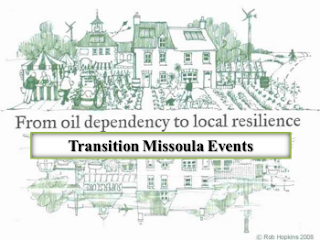
Community-based efforts to reduce energy consumption and move
toward carbon-free energy systems have seen some important successes
as well. More than two hundred cities and towns throughout the
English-speaking world have signed on as “transition towns,”
initiating local efforts to address the dual crises of climate chaos
and peak oil. While this movement often has a disturbing tendency to
focus on personal rather than political transformation, and has been
critiqued for shying away from important local controversies in some
areas, the effort is filling an important vacuum in social
organization, and creating public spaces that more forward-looking
and politically engaged efforts may be able to fill as the tangible
effects of various crises strike closer to home.[45]
Still, many chronically vexing questions remain. Can the potential
for a more thoroughgoing transformation of society actually be
realized? Is it possible for now-isolated local efforts to come
together in a holistic manner and fulfill the generations-old
left-libertarian dream of a “movement of movements,” organized
from the ground up to radically change the world? Can we envision a
genuine synthesis of oppositional and alternative-building efforts
able to challenge systems of deeply entrenched power, and transcend
the dual challenges of political burn-out and co-optation of
counter-institutions? Can a new movement for social and ecological
renewal emerge from the individual and community levels toward the
radical re-envisioning of entire regions and a genuinely transformed
social and political order?
In these often cynical times, with ever-increasing disparities in
wealth and media-drenched cultures of conspicuous consumption in the
North, together with increased dislocation and looming climate crises
in the South, it is sometimes difficult to imagine what a genuinely
transformative movement would look like. In the US, right wing
demagogues appear to be far more effective than progressive forces in
channeling the resentments that have emerged from the continuing
economic meltdown toward serving their narrow political agendas. But
it is clear that when people have the opportunity to act on their
deepest aspirations for a stronger sense of community, for the health
of their families and neighbors, and for a more hopeful future,
people’s better instincts often triumph over parochial interests.
This is a reliable feature of daily life, and one that also
illuminates the entire history of popular social movements. It offers
an important kernel of hope for the kind of movement that can perhaps
reinvigorate the long-range reconstructive potential of a social
ecological outlook.
A 2009 poll commissioned by the BBC confirmed that people in a
dozen key countries now agree that capitalism has serious endemic
problems, and that we may need a fundamentally different economic
system. Only in Pakistan and the US did more than 20 percent of those
interviewed express confidence in the present status quo.[46] Perhaps
this is the kind of sensibility that will reopen a broader popular
discussion of the potential for a different kind of society. Perhaps
we don’t yet need to resign ourselves to apocalyptic visions of the
end of the world. Perhaps the climate crisis, along with the
continuing meltdown of the neoliberal economic order of recent
decades, can indeed help us envision a transition toward a more
harmonious, more humane and ecological way of
life.
___________________
End Notes
1 See, for example, Juliet Eilperin,
“New Analysis Brings Dire Forecast Of 6.3-Degree TemperatureIncrease,” Washington Post, September 25, 2009; David Adam, “MetOffice warns of catastrophic global warming in our lifetimes,” The
Guardian, September 28, 2009. On the justice implications of the
climate crisis, see Brian Tokar, “Toward a Movement for Peace andClimate Justice,” in In the Middle of a Whirlwind, Journal of
Aesthetics & Protest (Summer 2008).
2 Murray Bookchin, “Reflections: An Overview of the Roots ofSocial Ecology,” Harbinger, Vol. 3.1.
3 Alex Williams, “Buying Into the GreenMovement,” New York Times, July 1, 2007.
4 Midnight Notes
Collective, Promissory Notes: From Crisis to Commons (April 2009), p.
5.
5 For an insightful discussion of the capitalist trend toward
financialization, see John Bellamy Foster and Robert McChesney,
“Monopoly Finance Capital and the Paradox of Accumulation,”
Monthly Review, Vol. 61, No. 5 (2009).
6 See, for example, the
report The Emperor’s New Climate: Geoengineering as 21st Century Fairytale (Ottawa: ETCgroup, 2009.
7 Linda Gunter, “The
French Nuclear Industry Is Bad Enough in France; Let's Not Expand It
to the U.S.,” AlterNet, March 23, 2009.
8 See, for example,
Jan Willem Storm van Leeuwen and Philip Smith, Nuclear
Power: The Energy Balance.
9 Amory B. Lovins and Imran Sheikh,
The
Nuclear Illusion.
10 John Kerry and Lindsey Graham, “Yes We Can (Pass Climate Change Legislation),” New York Times, October 11,
2009; Darren Samuelsohn, “Senate
Dems Opening to Nuclear as Path to GOP Support for Climate Bill,”
(accessed 14.11.2009).
11 See, for example, Emily Rochon, et al.,
False Hope: Why carbon capture and storage won't save the climate
(Amsterdam: Greenpeace International, 2008).
12 Charles Duhigg,
“Cleansing the Air at the Expense of Waterways,” New York Times,
October 13, 2009.
13 See Fred Magdoff and Brian Tokar, eds.,
Agriculture and Food in Crisis (New York: Monthly Review Press,
forthcoming), and earlier versions of some chapters in the
July-August 2009 issue of the journal Monthly Review.
14 Lester R.
Brown, “Supermarkets and Service Stations Now Competing for Grain,”
Earth Policy Institute Update, July 13, 2006; C. Ford Runge
and Benjamin Senauer, “How Biofuels Could Starve the Poor,”
Foreign Affairs, Vol. 86, No. 3 (2007), pp. 41-53.
15 Jason Hill,
et al., “Environmental, economic, and energetic costs and benefitsof biodiesel and ethanol biofuels,” Proceedings of the National
Academy of Sciences, Vol. 103 no. 30 (2006), pp. 11206 –11210.
16
Joseph Fargione, et al., “Land Clearing and the Biofuel CarbonDebt,” Science Vol. 319 (2008), pp. 1235-1238, and Timothy
Searchinger, et al., “Use of U.S. Croplands for Biofuels Increases Greenhouse Gases Through Emissions from Land-Use Change,” Science
Vol. 319 (2008), pp. 1238-1240.
17 See Rachel Smolker, et al.,
“The True Cost of Agrofuels: Impacts on food, forests, peoples and
the climate,” (Global Forest Coalition, 2008), especially Chapter
6, available online;
for continuing updates see nogetrees.org
18
See, for example, Netherlands Environmental Assessment Agency,
“Global CO2 emissions: annual increase halves in 2008”.
19 R.H. Coase, “The Problem of Social Cost,” Journal of Law
and Economics, Vol. 3 (1960), p. 44.
20 J.H. Dales, Pollution,
Property & Prices (Toronto: University of Toronto Press, 1968),
p. 97.
21 W. David Montgomery, “Markets in Licenses and
Efficient Pollution Control Programs,” Journal of Economic Theory,
Vol. 5 (1972), pp. 395-418.
22 Stephen Breyer, “Analyzing
regulatory failure, mismatches, less restrictive alternatives and
reform,” Harvard Law Review, Vol. 92, No. 3 (1979), pp. 547-609.
23
For a more complete treatment of the origins of the US Acid Rain
Program, see Brian Tokar, Earth For Sale (Boston: South End Press,
1997), pp. 33-45.
24 See, for example, Gar Lipow, “Emissions trading: A mixed record, with plenty of failures,” Grist Februrary 20, 2007.
25 George Monbiot, “We've been suckered again by the US. Sofar the Bali deal is worse than Kyoto,” The Guardian, December 17,
2007.
26 Larry Lohmann, Carbon Trading: A Critical Conversation onClimate Change, Privatization and Power (Uppsala: Dag Hammarskjold
Foundation, 2006).
27 See Brian Tokar, “On Bookchin’s SocialEcology and its Contributions to Social Movements,” Capitalism,
Nature, Socialism, Volume 19, No. 2 (2008).
28 Van Jones, The
Green Collar Economy: How One Solution Can Fix Our Two Biggest
Problems, New York: Harper One, 2008, pp. 9-10.
29 John Bellamy
Foster, “The Jeavons Paradox: Environment and Technology Under
Capitalism,” in The Ecological Revolution: Making Peace with the
Planet (New York: Monthly Review Books, 2009), pp. 121-128.
30
Recent prescriptions for a technologically feasible solar future
include Mark Z. Jacobson and Mark A. Delucchi, “A Path to Sustainable Energy by 2030,” Scientific American, November 2009;
David Schwartzman, “Ecosocialism or Ecocatastrophe?,” Capitalism
Nature Socialism, vol. 20, no. 1, March 2009; and Greenpeace
International, Energy [R]evolution: A Sustainable World Energy Outlook.
For a more speculative future vision, see Harvey Wasserman,
Solartopia: Our Green-Powered Earth, A.D. 2030 (2010), available from
solartopia.org.
31 Uri Gordon, “Dark Tidings: Anarchist Politics
in the Age of Collapse,” in Randall Amster, et al., eds.,
Contemporary Anarchist Studies: An Introductory Anthology of Anarchy
in the Academy (New York: Routledge, 2009).
32 Derrick Jensen,
“Beyond Hope,” Orion, May/June 2006
33 Richard Flacks, Making
History: The American Left and the American Mind, (New York: Columbia
University Press, 1988), p. 7.
34 Randall Amster, “Anarchy,
Utopia, and the State of Things to Come,” in Amster, et al., eds.,
Contemporary Anarchist Studies. Emphasis in original; several
embedded references have been deleted here.
35 Frederic Jameson,
Archaeologies of the Future: The Desire Called Utopia and other
Science Fictions (London: Verso, 2005), p. xi.
36 Jameson,
Archaeologies of the Future, p. 2.
37 Ernst Bloch, The Principle
of Hope Volume 1 (Cambridge: MIT Press, 1995), p. 5.
38 Alain
Touraine, “Society as Utopia,” in R. Schaer, G. Claeys, and
L.T.Sargent, eds., Utopia: The Search for the Ideal Society in the
Western World (NY: Oxford U. Press, 2000), pp. 18, 29. Interestingly
Touraine, once a pioneering scholar of social movements, today
prefers “moral individualism” to political action as a means for
limiting autocratic power.
39 Lyman Tower Sargent, “Utopian
Traditions: Themes and Variations,” in R. Schaer, et al., eds.,
Utopia, p. 15.
40 L. T. Sargent, ibid., p. 14; Krishnan Kumar,
“Utopia and Anti- Utopia in the Twentieth Century,” in R. Schaer,
et al., eds., Utopia, p. 265.
41 Quoted in K. Kumar, ibid., p.
266.
42 Immanuel Wallerstein, Utopistics: Or Historical Choices of
the Twenty-first Century (New York: The New Press, 1998).
43 For a
comprehensive review of the emerging climate justice movement, see
Brian Tokar, Toward Climate Justice: New Perspectives on the Climate
Crisis and Social Change (Porsgrunn, Norway: Communalism Press,
2010).
44 For evidence that factory farming may be raising
agriculture’s contribution to global warming to as much as 50
percent, see Robert Goodland and Jeff Anhang, Livestock and Climate Change, WorldWatch, November/December 2009.
45 For an
articulate political critique of the emerging “transition towns”
movement, see Paul Chatterton and Alice Cutler, The rocky road to a real transition (Leeds: Trapese Collective, April 2008).
46
“Worldwide poll: Vast majority say capitalism not working,”
November 9, 2009 .


 Even spiritually-minded moderns do not often show this kind of hope. Usually when I hear folks testify to it, I doubt them; surely their faith has not been sufficiently tested. Well we are being tested, and “honest hope” is not going to answer the test.


