Showing posts with label Australia. Show all posts

Monday, 16 December 2013

Recycle art -- by John Dahlsen


Primary Totems (courtesy of Sydney Powerhouse Museum) are 12 foot high piles of found plastic objects collected from Australian beaches, impaled on stainless steel. Commissioned for the Eco-logic exhibition 2000-2013. Originally an abstract painter, John Dahlsen won the Wynne prize for Landscape art at the Art Gallery of New South Wales in 2000. He was named the official artist for 'Clean up Australia' and 'Clean up the world' in 2000. 

Sydney Powerhouse Museum curator's comments: We Australians tend to see themselves as beach lovers, yet continue to throw waste and into the seas and waterways. The central theme in Ecologic is  that our actions have consequences. John Dahlsen's sculptures started by accident. He had asked the Victorian National Parks for permission to collect driftwood off beaches to make furniture. They said he could as long as he picked up the rubbish as well. John began collecting and sorting it off beaches and He ended up with thousands of plastic, foam and rubber items, which he meticulously collects, cleans, sorts, and assembles by texture, size and colour, presenting it either behind Perspex or as totemic stacks.

John Dahlsen collects and manipulates flotsam and jetsam that is carelessly discarded on beaches, from divers, picnickers, surfers, boaters and commercial ships. Much of it is thrown up by the sea onto beaches. His approach here is a new way of looking at the assortment of materials western society produces and discards. The glow sticks of divers form a fascinating story of deceit, betrayal and slaughter with a touch of pollution on the side. These colorful sticks are use by divers to lure fish to be speared, and then discarded -- a vivid illustration of the way Australians view the temporary nature of materials and the effect their behavior has on the environment.

Thongs
Totems are one form of his work. They consist of steel poles with stacks of brown and black thong sandals, masses of coke bottles or same colored foam. There is something pleasingly ironic about art created from a standard Aussie icon, the thong.

Orange rope


His wall works take on landscape characteristics due to careful layering and placement of objects.

Maddy Hunter-Smith writes in the Sustainable Artists and Designers wiki, "After collecting ocean debris from Australian coastline, John Dahlsen meticulously collects, cleans, sorts, assembles and places these found objects by texture, size and colour. Once sorted, Dahlsen works long and hard to see how he can arrange his objects to create art that is both visually effective and that includes a meaningful message about the environment. This is done by Dahlsen carefully layering and placing the objects until something starts to come together. It is a very long process but his dedication and faith in himself allow him to create something beautiful. After researching [his art], I have been inspired to make a change in the way I approach environmental issues."

See johndahlsen.com for more examples of his work.

Thursday, 11 August 2011

Guarding Eden -- new book by Deborah Hart

Deborah Hart is a mother of two and climate activist who left her day job in Australian arts and culture organisations to found LIVE, a local climate change action with more than 3,000 supporters and  CLIMARTE, for artist activists.


Guarding Eden brings together visions, actions, and life stories. Its themes include climate, water, food, animals, forests. The website is adding additional material for a series. See this list of contributors from Australia and around the world.
Allana Beltran as "The Weld Angel" forest guardian, March 2007, Weld Valley Tasmania - Photo: Matthew Newton

The site announces, "We follow the work of people who are driving change to implement sustainable solutions, and provide readers with the means through which to connect with a powerful, rapidly growing grassroots environment movement."

Friday, 11 March 2011

The Land Owns Us -- by Bob Randall, a Yankunytjatjara Elder, Australia

Thanks to Global Oneness project for this video. Bob Randall is a Yankunytjatjara Elder and a traditional owner of Uluru (Ayers Rock, Australia). Bob is one of the Stolen Generation of the Aboriginal people, taken from his family at the age of seven. Throughout his life, Bob has worked as a teacher and leader for Aboriginal land rights, education, community development and cultural awareness. In the early ‘70s, Bob's song "Brown Skin Baby (They Took Me Away)" became an anthem for the Aboriginal people. He is the author of two books: his autobiography Songman and a children's book, Tracker Tjginji. He is also the subject of the recent documentary film, Kanyini. Full bio and links

Thursday, 19 August 2010

Vote Climate Now video

This video is by a US group, Vote Climate Now. Similar campaigns are underway in Canada and in Australia.

Music "Realm Of You" by Marisa and Jonathan Brownfield, Fusion Fable. Photos: babies by Sean Dreilinger and AF-Photography, mosquito net by MikeBlyth, drought by safe democracy.

See also US Youth Summit for Climate Action.
Beware quick fixes, warn scientists in "Climate change: helping nature survive the human response" Conservation Letters 4 Aug 2010.

Thursday, 20 May 2010

Gardening for 10% carbon -- by Amanda Soule

From Amanda Soule's blog Fixie's Shelf: she is a dancer, storyteller, puppeteer and gardener, living a low-carbon lifestyle in Melbourne, Australia (when not going round the world).

16 April -- I got this fantastic book, How To Grow More Vegetables, Fruit and Nuts on Less Land Than You Can Imagine. It gives very detailed instructions for how to get the absolute most out of a limited number of garden beds. I'm making some changes to the way I garden and water, based on the ideas in this book.

I love this book because a) it answers so many of my questions about gardening, and b) the entire approach is centred around sustainable principles. So often I've read gardening advice that suggests we bring home tonnes of compost, organic fertiliser, straw for mulch and more, and it all seems so costly. This book focuses on how to get as quickly as possible to a "closed system" where you can recycle all nutrients on the property and not need to bring in more. There is no mention of raised garden beds or special compost bins to be built, because as the author points out, the timber used to build them is probably better put to another use - it's a waste of resources. Indeed, the entire system of gardening is focussed on using minimal resources, including water, for maximum gain.

The only thing lacking in the book, I think, is the use of of the compost pile to compost human waste (I'm talking about poo) - as this would really bring it to a closed system.

I think if you are a beginning gardener and need a way to get started that isn't daunting at all, you'd be better to get One Magic Square, which makes it feel so easy to get started and is very inspiring. But if you already grow vegies and are looking for ways to increase your yield, this book is fantastic.

Here's a few of the key ideas the book presents:

- Do a proper soil test to find out exactly what nutrients your soil really needs, then add the right amount of organic matter to balance out the nutrients (the book tells you what and how much to use). This way you can avoid low yields and yellow leaves and other plant problems, because the soil is perfectly balanced.

- Double dig the soil before every crop to aerate it, and give it a nice layer of compost on top. Be very careful not to compact the soil after digging, as this makes it harder for the plants to extend their roots. The method described loosens the soil without destroying the structure.

- Build a big, proper compost pile, and recycle all your nutrients and garden waste here. If you grow the right plants within your garden bed, they will make enough material to build the amount of compost you need to feed that amount of soil. This is more sustainable than using, say cow manure, where the cow has destroyed a piece of land in order to generate the fertiliser for your garden.

- Plant your vegies exactly the correct distance apart. Each plant has a root ball of a particular size, and by planting them as close as possible but not too close, then you create the right micro-climate beneath the leaves for healthy soil, and the plants don't need to compete for water and nutrients.

- Use a "breakfast-lunch-dinner" concept to raise plants from seed. First you plant the seeds one inch apart in a seed tray, and let them grow there for a specified amount of time, usually two weeks. This is breakfast. Then you transplant into a deeper seed tray, two inches apart, which gives the plants a fresh burst of nutrients and newly airated soil, and they grow there for a certain amount of time. This is lunch. Then finally you transplant them into the growing bed, which again has fresh compost and moist airated soil, which works as dinner for the plants. By doing this you also use less water, than you would if you'd planted directly into the growing bed. It's more work, transplanting everything, but it means you can have other food growing in the bed until the last minute, and it really shortens the time a plant needs to be in your garden bed before it starts producing food.

- Water with a soft shower head, similar to rain. Don't blast the soil with a heavy spray, as this can compact the soil. Water the soil rather than the plants, and make sure you keep all the soil moist, even in beds where nothing is currently growing. When soil dries out it is very hard to re-wet as it repels water rather than absorbing it.

My very favourite part of the book is the plans they have for sustainable gardens. They suggest that 100 square feet is a good starting size (my vegie garden is about 125 square feet of growing beds, plus I have other beds around the house for permanent crops), but to be sustainable you really need 300 square feet per person! Yikes. With the plans the authors tell you exactly what to plant, when to plant it, where to put it in the garden bed, and what to replace it with throughout the growing season. I am a bit surprised you'd get to harvest some of these vegies so quickly, so am interested to test it out for myself.

I've planned my own winter garden, using ideas from all the garden plans offered, and have planted my seeds with the last new moon. They came up beautifully and you can see them in the photo. Then just after the full moon, I transplanted them to their second tray. Fingers crossed this results in a winter full of food. With the next new moon I popped them into the garden bed. I was astonished to see how much they grew each day, compared with the previous lot of beet seedlings I put into a garden bed. I'm not sure which of the many things I'm doing differently is the key, but something's working and my beets are growing like never before.

The results

My spring garden, by the way, did indeed supply food for the summer - we've hardly had to buy vegetables since late December [mid-summer in Australia]. Even though you need more garden space for three people to be self-sufficient, our garden is very much meeting our vegetable needs already, and with a bit more careful planning and hopefully the above techniques, I hope we can continue to do that year-round. My next focus is to try and increase the flow of fruit, because we really could use more, and a more steady supply too.

27 March 2010 -- To avert the worst of climate change and peak oil, we need to change how we live. Riot for Austerity is a 90% reduction project - in joining this I am aiming to cut my emissions and use of resources to 10% of what the average American uses. This is the amount deemed necessary to leave our children and grandchildren a decent world. Care to join me?

I've been participating in the Riot4Austerity for 6 months now - with the aim of reducing my use of resources to 10% of the average. Mostly I'm using US averages since I don't know Australian averages. I can't believe half a year has gone by. I can see now as the months pass the new habits I've been trying to create have settled in and are becoming more routine - much of what I'm doing doesn't feel like a big deal any more. I've averaged my use of everything over the last 6 months and here's the results:

Target is 10% of the US national average for each category, or less.

Transportation fuel - 8%
Electricity - 14%
Gas/Kero - 7%
Rubbish - 4%
Water - 16% til 1 March then 0%
Consumer Goods - 12%
Food - I'm aiming for 75% local sustainable/homegrown produce, and we're on 73%.
*****
More posts on low impact / low carbon living are to come - Ed.

Saturday, 13 March 2010

Walking on country with spirits (Australia) -- Marilyn of the Nyungkal

Marilyn is an aboriginal of the Nyungkal people in tropical Australia. In the country they have lived in since the dreamtime (Creation), she sees fundamental changes: flowing streams become stagnant water, animals must move to higher and cooler altitudes to survive. "The country is transforming, food is disappearing. If animals continue to move further up the mountain, they will disappear into the sky." Scientists confirm her prediction; global warming threatens two-thirds of species in the ecosystem.

As she walks her homeland, the Nyungkal bubu, she respects and thanks its spirit life: the flowing stream that provides her family with freshwater, the spirits of her mother, father and grandparents who cared for the country before her, ancestors transformed into rocks, the spirits of the trees and animals that give us shade and sustenance.

This is just one of a series of filmed testimonies by indigenous people, online at United Nations University's Our World 2.0. The site offers videos on other environmental topics too.

Sunday, 7 February 2010

Human wellbeing -- a proposal by Shelini Harris and Brigid Walsh

The authors are Quakers. This is their July 2009 submission to the National Human Rights Consultation in Australia.
Preamble: placing humanity in a holistic and well-being context

The purpose of human rights is, at its most basic level, to ensure a minimum standard of human wellbeing. It is proposed that the concepts of ongoing human happiness and human wellbeing be taken as the overarching values from which any instrument of human rights in Australia is derived.

Increasingly, Australians, like other human beings across the planet, have been confronted with the imminent dangers of mistakenly separating human from ecological rights. The effects of climate change, the dwindling access to potable water, and the nutritionally depleted and devastated soils and landscapes, are numerous and widespread.

Inattention to ecological wellbeing inevitably leads to violations of the right to food, right to health (physical, mental, and spiritual), and right to shelter, severely compromising people’s ability to procure the basic means of fulfilling the right to life. Included in such effects on personal wellbeing are the widespread social difficulties associated with food production and farming, that seem to correlate closely to the growing number of mental illnesses and suicides amongst farmers.

As more and larger areas become polluted and unable to sustain food production and access to water, it appears inevitable that people will give up their homes and move to areas where they may be less vulnerable to the effects of ecological degradation and catastrophe.

Existing policies based on "polluter pays” principles are insufficient to address the long-term devastating effects of many industrial practices, including conventional farming methods. The payments are not always directed towards the restoration of the affected environment or for finding and funding alternatives to the practices that create the pollution in the first place. Too often these policies are considered to be satisfactory solutions to the ecological problem, when they should only be seen as temporary solutions until more holistic and ecologically sustainable forms of energy, water supply, or farming are developed.

Unfortunately, where they exist, the human rights regimes of other countries are anthropocentric - only protecting the planet
for the purposes of continued resource exploitation. This extends to affording functional (as opposed to theoretical) protection to ecological species, populations and communities once they are extremely endangered.- Australia at least has an advantage in being late to develop a human rights instrument in that it can learn from the weaknesses of existing instruments, overcoming limitations such as anthropocentrism and instrumentalism. Australia is exploring the scope for an instrument to protect human rights at the very point in human history when human society is at an ecological crossroads.

The measures we put in place now to protect Earth and its inhabitants will determine the sustainability of the human race, as well as other species and the environment. We do not have the luxury of engaging in half-measures. A factor which is interwoven with this is the maintenance and improvement of ecological integrity. We do not have the luxury of engaging in half-measures.

Australia is the driest inhabited continent with severely compromised water systems. Australia cannot afford to proclaim any human right that would in any way compromise ecological integrity. Short-term economic benefit; considerations of corporate profit and loss; contractual obligations; or continuation in jobs causing extensive and significant ecological damage cannot take priority over repairing and living sustainably on, from and with the ecosphere.
Australians have the opportunity to demonstrate leadership by framing a modern human rights instrument from a holistic perspective that neither maintains nor continues the errors and misconceptions of past views of humanity’s place in the universe. This opportunity can be fulfilled by acknowledging and enumerating ecologically-centred human rights or well-being.

Priorities for consideration include:
  1. Provision for individuals or groups to bring claims of violations of ecological integrity irrespective of the locality in question. (Humans should be able speak for entities that cannot speak for themselves).
  2. Investigations of ecological (inclusive of social) impact should not be limited to the immediate vicinity of a project. Scientists and people with traditional or local knowledge should be solicited to ascertain the possible long-term, off-site and not immediately identifiable effects of particular projects.
  3. Ecological protection cannot be limited to what might be described as ecological excisions or exclusions, e.g. not cutting down particular trees or leaving some portions of a river in their natural state to enable the survival of a particular species. Ecosystems, inclusive of the human component, are inter-connected. Actions in a distant area can have significant impacts on other beings and systems.
  4. Profit and loss calculations should not be limited to conventional measures of GDP but incorporate the values inherent in natural entities such as river, mountains, and trees, including the value of their role in the various ecological cycles. Practices must be developed which avoid the “playing off” of one resource against another, i.e. mining against water; potable and irrigation water supply schemes against ‘environmental flows’ in streams.
  5. Australia is already ecologically damaged. There should be a strong political, industry, and social commitment in support of major efforts to restore the health of land and water and the ecological integrity required to maintain a full range of Australian ecosystems and their components.
  6. It is not enough to enact laws that address human wellbeing more holistically. Consideration must be given to the development of holistic thinking at all levels and across all sections of Australian society. For instance, legal officials, including judges, need to be better educated about ecological issues so that their judgments are not short-sighted or reliant on experts appointed by the proponents and opponents that appear before them. .
Far greater use should be made of independent expertise (this occurs to a limited extent in the NSW Land & Environment Court, which employs non-legally trained Commissioners in addition to exclusively legally trained Judges, and which can appoint expert advisers to assist the Court / Commission in weighing technical evidence).

Without particular ecological rights, human happiness and human wellbeing are neither well supported nor advanced. We note that the Australian Treasury, which guides this nation’s economic and financial policies, already operates within a Wellbeing Framework.

Treasury’s mission is ‘to improve the wellbeing of the Australian people by providing sound and timely advice to the Government, based on objective and thorough analysis of options, and by assisting Treasury Ministers in the administration of their responsibilities and the implementation of Government decisions’
.

Increasingly, Western cultures are moving to an understanding that has been integral to indigenous and many Eastern cultures: that we co-exist in a web of life that is, with due care and responsibility, sustainable.

It is proposed that, in the development of a formal instrument to protect human rights in Australia, the Australian Government does so within a Wellbeing Framework. In short, human rights should not be an end in themselves. Human rights should be one of the means by which human happiness and human wellbeing is established in Australia.

The rights proposed should not be seen as the totality of human rights that might be introduced in any future instrument. This proposal has intentionally limited itself to ecological rights and those rights which would enable the free discussion of and activism in support of those rights.


Right to Water

* The human right to drinking water is fundamental for life and health. Sufficient and safe drinking water is a precondition for ecological functionality; human happiness and wellbeing; and the realization of all human rights.
* The sufficiency, safety, affordability, of and accessibility to water, are fundamental to human dignity, happiness and well-being. These are fundamental to the human right to water. The human right to water entitles everyone to sufficient, affordable, physically accessible, safe, and acceptable water for personal and domestic use subject to sustainability and ecological restraints.
* Water is a fundamental human right, a public good, a public trust and part of the global commons.
* Water must also be managed to protect ecological integrity inclusive of the rights of future generations.
* Water must not be treated as a commodity and must neither be subjected to privatization, corporate profit nor international trade agreements.
* Water must not be traded in a stock exchange fashion
* Water must be re-bundled with land. Land and water cannot be separated.
* Responsibilities extend beyond the Australian government to corporations, international financial institutions operating within Australia and other non-governmental water actors.
* Water systems must be locally, publicly and democratically owned and controlled, in a transparent manner. Reports on such ownership, control and management must be made annually in Australian, State and Territory Parliaments.
* Australian governments – whether federal, state, territory, or local government – and their agencies, agents and instrumentalities together with the private water industry and international financial institutions and others must not interfere with nor circumscribe the human right to water.
* Sustainable access to water resources for agriculture must be protected to realise the right to adequate food subject to ecological constraints (inclusive of the need to produce food closest to where it will be consumed)
* Individual, family, and small companies must be considered for positive attention and action with regard to equitable access to water and water management systems, including sustainable rain harvesting and irrigation technology, to prevent imbalance by large corporate agricultural holdings.
* Governments must ensure access to water for subsistence farming and for securing the livelihoods and self-determination of Aboriginal and Torres Strait Islander people subject to ecological restraints.
* Water is to be treated as a social and cultural good, not primarily as an economic good. The manner of the realization of the right to water must also be sustainable, ensuring that the right can be realized for present and future generations.
* While the adequacy of water required for the right to water may vary according to different conditions, the following factors apply in all circumstances:

(a) Availability. The water supply for each person must be sufficient and continuous for personal and domestic uses. These uses ordinarily include drinking, personal sanitation, washing of clothes, food preparation, personal and household hygiene. The quantity of water available for each person should correspond to World Health Organization (WHO) guidelines. Some individuals and groups may also require additional water due to health, climate, and work conditions;
(b) Quality. The water required for each personal or domestic use must be safe, therefore free from micro-organisms, chemical substances and radiological hazards that constitute a threat to a person’s health. Furthermore, water should be of an acceptable colour, odour and taste for each personal or domestic use.
(c) Accessibility. Water and water facilities and services have to be accessible to everyone without discrimination.
Accessibility has four overlapping dimensions:
(i) Physical accessibility: Water, and adequate water facilities and services, must be within safe physical reach for all sections of the population. Sufficient, safe and acceptable water must be accessible within, or in the immediate vicinity, of each household, educational institution and workplace. All water facilities and services must be of sufficient quality, culturally appropriate and sensitive to gender, life-cycle and privacy requirements. This has particular applicability in indigenous communities. Physical security should not be threatened during access to water facilities and services;
(ii) Economic accessibility: Water, and water facilities and services, must be affordable for all. The direct and indirect costs and charges associated with securing water must be affordable, and must not compromise or threaten the realization of other rights, particularly the right to adequate food;
(iii) Non-discrimination: Water and water facilities and services must be accessible to all, including the most vulnerable or marginalized sections of the population, in law and in fact, without discrimination; and
(iv) Information accessibility: accessibility includes the right to seek, receive and impart information concerning water issues.

* All Governments – Federal, State, Territory, and Local – to take steps to remove de facto discrimination, interference, barriers by which individuals and groups are deprived of the means or entitlements necessary for achieving the right to water. Such discrimination, interference, barrier may include lack of investment in facilities in remote communities; failure to update facilities in small or remote communities.
* All Governments – Federal State, Territory or Local - should ensure that the allocation of water resources, and investments in water, facilitate access to water for all members of society. Inappropriate resource allocation can lead to discrimination that may not be overt.
* Water investments should not favour expensive water supply services and facilities that may, for practical purpose, be only accessible to a small, privileged fraction of the population, rather than investing in services and facilities that benefit a far larger part of the population.
* Children must not be prevented from enjoying their human rights due to lack of adequate water in educational institutions and households. Provision of adequate water to educational institutions, including provision of refrigerated water in tropical climates, without adequate drinking water should be addressed urgently;
* Rural and deprived urban areas must have access to properly maintained water facilities. Access to traditional water sources in rural areas should be protected from unlawful encroachment and pollution. Deprived urban areas, including informal human settlements, and homeless persons, should have access to properly maintained water facilities. No household should be denied the right to water on the grounds of their housing or land status;
* Indigenous peoples’ access to water resources on their ancestral and traditional lands must be protected from encroachment and unlawful pollution. Governments should provide resources for indigenous peoples to design, deliver and control their access to water;
* Groups facing difficulties with physical access to water, such as older persons, persons with disabilities, victims of natural disasters, persons living in disaster-prone areas, and those living in arid and semi-arid areas, or on small islands must be provided with safe and sufficient water.
* The right to water, like any human right, imposes four types of obligations on Government: obligations to respect, obligations to protect, obligations to fulfil and obligations to promote.
* The obligation to respect requires that governments refrain from interfering directly or indirectly with the enjoyment of the right to water. The obligation includes, inter alia, refraining from engaging in any practice or activity that denies or limits equal access to adequate water; arbitrarily interfering with customary or traditional arrangements for water allocation; unlawfully diminishing or polluting water, for example through waste or through use and testing of weapons; and limiting access to, or destroying, water services and infrastructure as a punitive measure, for example, during armed conflicts in violation of international humanitarian law.
* The obligation to protect means Government need to prevent third parties from interfering in any way with the enjoyment of the right to water. Third parties include individuals, groups, corporations and other entities as well as agents acting under their authority. The obligation includes, inter alia, adopting the necessary and effective legislative and other measures to restrain, for example, third parties from denying equal access to adequate water; and polluting and inequitably extracting from water resources, including natural sources, wells and other water distribution systems. Where water services (such as piped water networks, water tankers, access to rivers and wells) are operated or controlled by third parties, governments must prevent them from compromising equal, affordable, and physical access to sufficient, safe and acceptable water. To prevent such abuses an effective regulatory system must be established, in conformity with the Covenant and this General Comment, which includes independent monitoring, genuine public participation and imposition of penalties for non-compliance.
* The obligation to fulfil places on Governments the obligations to facilitate, promote and provide. The obligation to facilitate requires the Governments to take positive measures to assist individuals and communities to enjoy the right to water.
* The obligation to promote obliges Governments to take steps to ensure that there is appropriate education concerning the hygienic use of water, protection of water sources and methods to minimize water wastage. Governments are also obliged to fulfil (provide) the right when individuals or a group are unable, for reasons beyond their control, to realize that right themselves by the means at their disposal.

· Governments should adopt comprehensive and integrated strategies and programmes to ensure that there is sufficient and safe water for present and future generations. Such strategies and programmes may include:
(a) reducing depletion of water resources through unsustainable extraction, diversion and damming;
(b) reducing and eliminating contamination of watersheds and water-related eco-systems by substances such as radiation, harmful chemicals, industrial discharge, human excreta and farm runoff;
(c) monitoring water reserves;
(d) ensuring that proposed developments do not interfere with access to adequate water;
(e) assessing the impacts of actions that may impinge upon water availability and natural-ecosystems watersheds, such as climate changes, desertification and increased soil salinity, deforestation and loss of biodiversity;
(f) increasing the efficient use of water by end-users;
(g) reducing water wastage in its distribution;
(h) response mechanisms for emergency situations; and
(i) establishing competent institutions and appropriate institutional arrangements to carry out the strategies and programmes.

* All victims of violations of the right to water should be entitled to adequate reparation, including restitution, compensation, satisfaction or guarantees of non-repetition. National ombudsmen, human rights commissions, and similar institutions should be permitted to address violations of the right.
* Citizens and residents have the right to hold governments, government agencies and instrumentalities and similar organisations as well as corporations accountable for environmental degradation impacting on food and the rights outlined herein.


Right to Health

* Enjoyment of the highest attainable standard of physical, mental and spiritual health without discrimination of any kind
* Vulnerable groups are to receive such positive discrimination that will ensure a high standard of health by both Australian and international standards.
* Access to a sufficient amount of safe and clean water for personal, domestic and communal use is fundamental to the realization of the right to the enjoyment of the highest attainable standard of health. Good governance, sound economic policies, and responsive democratic institutions are key to the full realization of the right
* People living in remote Australia should enjoy equity of access to all that is necessary to raise their health and their living conditions to an equitable Australian standard within a sound sustainable and ecological context.
* Enjoyment of air, water, land, workplaces, buildings in a healthful and life-sustaining manner free of toxicity or other threats to life and health
* Enjoyment of adequate and appropriate housing to meet changing climatic conditions
* Citizens and residents have the right to hold governments, government agencies and instrumentalities and similar organisations as well as corporations accountable for ecological degradation impacting on health and disease.
* Adverse ecological impact deemed to be within the parameters of human control can be taken to limit access to this right and may, therefore, be subject to judicial redress for those adversely affected and impacted.


Right to Adequate Food

Accessibility – price; availability.
  • Quality - fresh; nutritious; healthful; pollutant free; free of genetic modification; disease free; cruelty free; non-damaging.
  • Availability – distribution which provides fair and equal access to everyone; freedom to reproduce food plants and save seeds; freedom to lawfully grow food plants on private and public property.
  • Food information – freedom of access to food information relating to diet, nutrition, health, food processing and production; freedom of information in respect to accessible, intelligible, easily understandable, and clearly laid out labelling of all food. Where food can be purchased without labelling, information must be provided by fact sheets and must be publicised on shelving and fittings where food is accessed in intelligible and easily understandable form.
  • Food from animals – Must be cruelty free; must contain information relating to additives such as anti-biotics, growth stimulators. Food which appears to be free from animal products must be clearly labelled to be such or have the animal products boldly identified.
  • Connectedness – the right to connectedness with the production of food so that there is widespread community understanding of animals, animal cruelty, use of pesticides and genetic modification; and any possible ecological harm or degradation brought about by food production.
  • In no case, may citizens and residents be denied of their own means of subsistence except with regard to ecological degradation or to safeguard animal and plant species and their reproduction.
  • Citizens and residents have the right to hold governments, government agencies and instrumentalities and similar organisations as well as corporations accountable for ecological degradation impacting on food and the rights outlined herein.
Right to an Environment of a Particular Quality

,

  • Citizens and residents of Australia may not be disadvantaged by an deleterious effect on the quality of their environment which may prevent their enjoyment of other rights such as the right to life; the right to water; the right to adequate food and the right to health
  • People outside Australia have a special case for seeking asylum and refuge in Australia on the basis of adverse ecological impact within their own nation.
  • The precautionary approach shall be widely applied by Australian governments and corporations. Where there are threats of serious or irreversible damage, lack of full scientific certainty shall not be used as a reason for postponing cost-effective measures to prevent ecological degradation.
Right to Use and Enjoy Property Without Undue Interference

• Enjoyment of the right to use and enjoy property with due regard to safety, security, impact on others, impact on the environment, impact on life, health and wellbeing.

• Adverse environmental impact deemed to be within the parameters of human control can be taken to limit access to this right and may, therefore, be subject to judicial redress for those adversely affected and impacted.

Rights of Indigenous Peoples

In addition to other human rights, Australia owes a particular responsibility and obligation to the Aboriginal and Torres Strait Islander peoples of Australia in respect of the rights to

* Cultural and spiritual practice and their transmission

* Traditional country and its resources of food and water subject to sustainable ecological restraints.

The same access to health, education, and other services as all other Australians.


Right to Culture

  • Provided that the rights of others are not infringed upon, all persons with a particular cultural, religious, racial or linguistic background must be allowed the right, in community with other persons of that background, to enjoy his or her culture, to declare and practice his or her religion and to use his or her language.

  • Freedom to transmit cultural and ecological practices within sustainable ecological restraints.

Amnesty International, USA
* Citizens and residents have the right to hold corporations, private actors, agencies, agents and instrumentalities and similar persons and entities accountable for ecological (inclusive of human social) degradation and despoliation impacting on the rights described here.

* Citizens and residents have the right to hold corporations, private actors, agencies, agents and instrumentalities and similar persons and entities accountable for cruelty and poor animal welfare practices in the supply of food.

* Citizens and residents have the right to interactive consultation and dialogue – as individuals, groups or organisations - with governments, their agencies, agents and instrumentalities and corporations, whether public or private, which affect their interests.

* A code of conduct will be drawn up by governments and corporations with widespread and representative community input to ensure a high standard of interactive consultation and dialogue. Such interactive consultation and dialogue will be based upon freedom of information with the same rights of discovery as exist judicially. This will be known as the Consultation and Dialogue (CaD) process.


* All major environmental applications will be subject to the Consultation and Dialogue (CaD) process.

Right to Public Participation

* Every person has the right, and is to have the opportunity, without discrimination, to participate in the conduct of public affairs, directly or through freely chosen representatives

Every eligible person has the right, and is to have the opportunity, without discrimination to vote and be elected at periodic elections, whether Federal, State/Territory or Municipal, that guarantee the free expression of the will of the electors


*****
Resources used in preparing this proposal:
Australian Human Rights Commission: Background Paper - HUMAN RIGHTS AND CLIMATE CHANGE,
Blue Planet Project,
Environment Defenders Office Victoria, Environmental Health Perspectives,Human Rights Act 2004 - ACT,
Human Rights Law Resource Centre,
International Covenant on Economic, Social and Cultural Rights,
International Working Group for Indigenous Affairs,
PILCH - Public Interest Law Clearing House,
Policy advice and Treasury’s wellbeing framework,
UN Division for the Advancement of Women,
UN Economic and Social Council Document - General Comment No. 15 (2002): The right to water (arts. 11 and 12 of the International Covenant on Economic, Social and Cultural Rights),
Victorian Charter of Human Rights and Responsibilities,
Water is a human right,
The Human Right to Water

Saturday, 7 February 2009

Greening capitalism - Tim Flannery

Australian climate change activist Tim Flannery spent over 20 years in zoological research in Papua New Guinea, Pacific islands and Australia where he witnessed the growing impact of climate change. He wrote a series of warnings to lay audiences The Future Eaters: An Ecological History of the Australasian Lands and People (1994), Throwim Way Leg (1998), and The Eternal Frontier: An Ecological History of North America and its Peoples (2001) calling attention to the rapid destruction of species.

His 2005 book The Weather Makers defended scientific evidence of climate change against the fossil fuel lobby and rightwing deniers. He says global warming could destroy the world economic system, causing riots, wars and millions of environmental refugees. If business refuses to find a "green capitalist" solution, the alternative is a "global carbon dictatorship". He has since attracted considerable support from progressive multinationals such as the WCSBD for his Copenhagen Climate Council, which will publish a series of Thought Leadership papers by business, science and government stakeholders. But for their real goals see Oscar Reyes' report on the CCC/WBCSD World Business Summit on Climate Change in May 2009.
.
See a summary of The Weather Makers online, Flannery's biography. The WBCSD is a major backer of UNEP's Sustainable Production and Consumption program, aka "The Marrakech Process" which may in the absence of international agreement on Kyoto2 targets, become a weaker but de facto system of carbon governance. UNEP's Green Economy Initiative supports this and other market mechanisms.

Tuesday, 5 August 2008

No Coal protests spread to England

In mid-July civil disobedience stopped coal trains in Australia. Arriving in Alberta this morning, we read about local farmers' fight against strip-mining. In the USA, mountaintop removal has become a major political issue, Black Mesa shows the impact on native people, and discussion of a post-carbon economy has begun. The latest protest is in England, where George Monbiot is about to join the King's North Climate Camp:

ecologist George Monbiot


As soon as I have finished this column I will jump on the train to Kent... Everything now hinges on stopping coal. Whether we prevent runaway climate change largely depends on whether we keep using the most carbon-intensive fossil fuel. Unless we either leave it - or the carbon dioxide it produces - in the ground, human development will start spiralling backwards. The more coal is burnt, the smaller are our chances of future comfort and prosperity...

It is not because of butterflies or frogs or penguins or rainforests, much as I love them all. It is because everything I have fought for and that all campaigners for social justice have ever fought for - food, clean water, shelter, security - is jeopardised by climate change. Those who claim to identify a conflict between environmentalism and humanitarianism have either failed to read the science or have refused to understand it.

Our government could lead the world in one of two directions. Roughly one third of our power stations will come to the end of their lives by 2020. It could replace them with low-carbon plants or it could repeat - this time in full knowledge of the consequences - the disastrous decisions of the past. [German energy company]
E.ON's application to build a new coal-burning power station at Kingsnorth is the first for many years. [Five other proposed plants would add 54 mTCO2 per year]...

The government seems determined to make the
wrong decision. It has inherited the party's traditional love for coal, but, being New Labour, now supports the bosses instead of the workers, and has colluded with them to make the case for a new generation of power stations. It has one justification for this policy: that one day dirty coal will be transformed into clean coal by means of carbon capture and storage (CCS). All that is needed to effect this transformation is a sprinkling of alchemical dust, in the form of the future price of carbon. The market, it claims, will automatically ensure that coal plants bury their carbon dioxide, as this will be cheaper than buying pollution permits. Last month the House of Commons environmental audit committee examined this proposition and found that it was nonsense.

This is the sum of government policy: to cross its fingers and hope the market delivers... companies are asked to write their own rules... There is a simple means by which the government could ensure that our future electricity supplies would not commit the UK to stoking runaway climate change. It would do as California has done and set, by a certain date, a maximum level for carbon pollution per megawatt-hour of electricity production....

Several recent studies have shown how, through maximising the diversity of renewable generators and by spreading them as far apart as possible, by using new techniques for balancing demand with supply and clever schemes for storing energy, between 80% and 100% of our electricity could be produced by renewables, without any loss in the reliability of power supplies. Unlike CCS, wind, wave, tidal, solar, hydro and geothermal power are proven technologies. Unlike nuclear power, they can be safely decommissioned as soon as they become redundant.

[How can we make our government] stand up to business... when the future prospects of mankind are at stake? If fear is the only thing that moves them, we must present them with a greater threat than the companies planning new coal plants. We must show that this issue has become a political flashpoint; that the public revulsion towards new coal could help to eject them from office. You could do no better than joining us at Kingsnorth this week.
(excerpts from full text of his "Coal Scuttled" article in the Guardian 5 Aug 08)

See also the Kings North Climate Camp website and worldwide Climate Convergences camps July 10-15 in Newcastle, Australia, July 28-August 4 in Eugene, Oregon and High Falls, NY; August 3-11 in Kent, UK; August 5-11 in Louisa County, Virginia; and August 15-26 in Hamburg, Germany. Sep 15 in Virginia. Ted Nace article "Stopping Coal..." Orion Jan/Feb 2008, and Coal Moratorium Now! list of proposed US coal plants.
NGOs international appeal for 350 ppm limit on CO2. UK scientists object to coal plans.
The 350 ppm debate in the USA. DailyKos: Is coal the new oil? and coal kills
Our previous posts on Selling indulgences and Steps to sustainability: how to reduce greenhouse gas emissions

Saturday, 5 July 2008

Bad days at Black Mesa

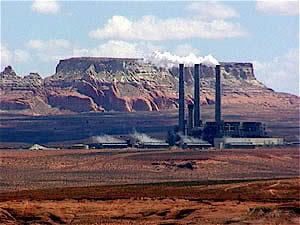
Black Mesa, Arizona, home to the Diné (Navajo) and Hopi tribal reservations, is also home to massive mining operations run by Peabody Coal. In the past 30 years the mine at Black Mesa has contributed 325 million tons of carbon dioxide to atmospheric levels. Mining officials, with backing from the U.S. government, are responsible for capping local water supply (to supply mines) and harassing, threatening and in some cases assaulting Black Mesa residents, many who are elders resisting being driven from the land their ancestors have occupied for hundreds of years. Over 14000 Diné have already been "relocated".

Peabody Coal now wants to expand the mining operation at a potential environmental cost of 290 million tons of CO2 and an unfathomable personal cost to all who continue to live and fight for their lives on Black Mesa. In related news, area residents continue to face threats and intimidation at the hands of the U.S. government, and it is no coincidence that the afflicted live on what Peabody Coal clearly sees as “their profit”.

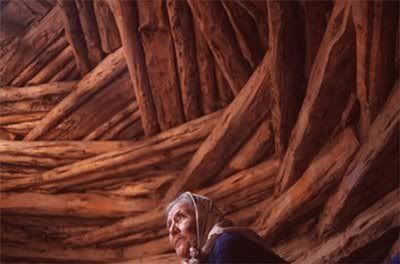
Diné grandmother resistor Pauline Whitesinger (above), 76, was recently served a notice by the Bureau of Indian Affairs (BIA) officers and Hopi Tribal Rangers to immediately halt repairs being made to her ceremonial earth lodge (hogan) on penalty of fines and criminal charges. Officials also attempted to harass Pauline’s on-land supporter/sheepherder. Threats of intimidation accompanied the “notice” and have continued unabated. Support has been requested for Pauline Whitesinger in the form of phone calls, letters and on-land support to let the BIA and Hopi officials know that their unacceptable actions are under scrutiny.

The overarching story here, that of Peabody Coal, lies at the core of environmental and human devastation. Peabody’s proposed expansion would detonate coal on a daily basis polluting the air and affect health of miners and residents, deplete residential water supplies (already scarce in the desert thanks to mining), accelerate climate change and, perhaps most significantly, sacrifice human dignity and planetary health for corporate profit.

The Student Environmental Action Coalition (SEAC) has responded to the calls for action by mailing a statement denouncing the harassment of Pauline Whitesinger and also collecting signatures to add to a comment letter expressing opposition to the Peabody mine expansion. Similar actions have also been taken up by other national groups such as Black Mesa Indigenous Support, Student/Farmworker Alliance, and Black Mesa Water Coalition (heading up the call for action). Together, we can connect the dots of coal industry devastation from Appalachia to the mesas of Arizona, standing together in solidarity. -- SEAC 2 Jul 08. Here is what the Diné say:

Editor's notes

98% of US CO2 emissions come from the combustion of coal, oil and gas; with oil accounting for over 40%, coal 35% and natural gas 22% of energy related emissions. The United States alone produces about a quarter of global CO2. See world GHG diagram. On 23 June 08, climate scientist James Hansen accused executives of ExxonMobil, Peabody and other fossil fuel companies of deliberately spreading misinformation to delay climate action; he said they should be tried for crimes against humanity.

Letter for US citizens to sign
Judith Nies, "The Black Mesa Syndrome" history first appeared in Orion 1998. See Corpwatch, SEC, Hoover's and Coaltrans reports on Peabody Energy's political payoffs and multinational maneuvers. Also its history. In 2007 it posted $4.6B in sales, 10% of all U.S. electricity generation and 3% worldwide. One of the world's biggest polluters, owning over 9b tons of coal reserves in China, Canada, Australia, Venezuela, AZ, CO, IL, IN, NM, WV, KE, PA, the corporation lobbies hard for misnamed clean coal (which reduces sulfur, increases toxic mercury, and pollutes huge amounts of water), and (with their own specific impacts) coalbed methane and liquid coal methods. Peabody has a century-long history of union-busting, black lung, and tampering with safety data. Other coal majors are Arch, CONSOL, Massey, Kennecott, RAG, Vulcan and TXU.
Interfaith report 2006 on Peabody union-busting since 1995. Union website, including Peabody CEO Greg Boyce's refusal of shareholder calls for corporate transparency and annual elections. Irl Engelhardt, the previous CEO, continues as the Chairman of the Board of Directors. His annual earnings are 94 times those of the average miner.
NDRC video exposing the pollution impacts of liquid coal.

Tuesday, 27 May 2008

I might have gone to war, by Rose Mae Harkness of Ottawa MM

photo courtesy of news.yahoo.com
I might have gone to war
instead I campaigned to get girls
into our high school bugle band.

I might have gone to war
instead I won scholarships
in social and philosophical studies
at the University of Toronto.

I might have gone to war
to tackle gender equity in the basically male
military organizations of the time.
Instead I ventured into international development
where issues of gender equity are world wide.

I might have gone to war
instead I went on an all-day
silent retreat of Quakers in Kingston.

During worship at the FWCC Triennial
in New Hampshire in 2000, I said,
I have heard the leper crying at our door in India.
I have heard our gardener's HIV-infected baby crying in Zimbabwe.
Now I hear our planet crying with the burden humanity has placed upon it.

I might have gone to war
Instead I am trying to lessen the burden
I have placed upon our planetary home.

-- Rose Mae Harkness, at Regional Gathering 23 May 2008.
These images came as I remembered a handsome young man asking for directions. When I offered to help, he said he was looking for the Canadian army recruiting centre. I thought, how sad that so many young people's options are limited by the culture in which they grew up and the lack of economic resources. I then thought of choices in my own life, leading to my realization that the devastation of our planetary home is the major issue of our time... I have decided to "retrofit" my life. At a Friends' meeting in Powell House in upstate New York two months ago, after a deep worship sharing, I have understood that to stop flying in airplanes may be the easiest thing required of me.

See also: Boston Globe interview with WWII woman worker Frances Millebrandt, especially the last page and her video; Australia Yearly Meeting's 2008 minute on earthcare; at the regional gathering we decided to set up a Quaker wiki on "building a culture of peace", to which Friends worldwide are invited to contribute.

See also Orion June 2008 article on The Gospel of Consumption, and 4-part BBC documentary The Century of the Self about Freud, Bernays, and their influence on advertising industry/consumption/politics (BBC description, videos on Youtube)

Thursday, 20 March 2008

Spirit People: the view of Australian Aboriginals

Three Rivers dreaming, by Roslyn Anna Kemp, Wakka Wakka tribe, Queensland. courtesy of karaart.com Click for full screen view.
Statement by Aboriginal elders, ca. 2003 to NATSIEC the National Aboriginal and Torres Strait Islander Ecumenical Commission hearings of NCC Australia, quoted by Jason Goroncy in his blog Per Crucem ad Lucem
We are what we are - Spirit People

We Aboriginal and Torres Strait Islander peoples believe that the Creator has always been with our people since the beginning of time. Our connection to this land Australia and the stories from long ago emphasise this and reveal to us our ongoing relationship to the Creator. We know that the Spirit is always close to us and within us. The Spirits of our ancestors are always around us looking out for us and showing us the path we should travel. We are surrounded by a cloud of witnesses.

We have been given a gift to offer the rest of humanity; the importance of relationships. The Creator still has a strong relationship with us and helps us build stronger relationships with one another. These relationships also cover everything around us, for it is through the land, water and air that we are continually reminded of this. It is not just the symbol of the rainbow that reminds us about the covenant between the Creator and humanity. There are signs all around us that continually remind us of the Covenant.
.
Our peoples are generous, caring and compassionate towards each other and other Australians. We have survived many negative things yet we still reach out our hand in reconciliation. This is the message of long ago from our roots and also the message through the Christian Bible. It has been the message passed down from generation to generation from parent to children since time began.

The Spirit lives on through us and we must continually foster this relationship through acts that remind us of this great truth. These acts are ceremonies, which help us to draw closer to our creator who has left the Spirit with us. Through them we retell and relive the great stories of our past.

Since the coming of the Western Culture, there has been a breakdown in our relationship with the Creator. Our ways have been under threat and this has led us to move away from our roots and into a foreign way of thinking. This has caused hardships within our communities as we struggle to find our way. Sometimes we have failed to recognise the Spirit present with us. We looked to the new culture to show us the way forward and it has led to more confusion and loss of direction. This culture has failed our people. It has shown it cannot satisfy our deepest yearnings.

This culture wanted us to look for the Creator through their eyes. They have failed to see that the Creator exists within our culture. While Abraham was wandering in the desert our peoples had been for many generations living in close relationship with our Creator. We have an Old Testament, which we can now accept as part of our salvation history.

How short sighted Western Culture was to think they had the monopoly on the Creator and how blinded were we to believe this was true. It is up to us to reclaim our beliefs. Our Creator yearns for us to come back. Our relationship has been tested and made stronger because of the many mistakes along the journey because we have learnt so much from the experience. We now know about Christ. This story from the Western Culture has touched and had an impact on our lives.

We did not have Jesus amongst us as the Apostles did but he left us the Spirit of the Creator. We know this Spirit to be the same Spirit who is with us now because of what it has done and continues to do. This Spirit of relationships reminds us about our responsibilities to one another and creation and that we all come from the same source of life. This Spirit is also the Spirit of the Rainbow Serpent, the Brolga, the Emu, the Stars, the Fish, the Plants, the mountains and much more. We must hold on to and strengthen our Spiritual heritage.

As a Minority we stand as the strength of this Land. We affirm our belief in the Creator Spirit who created us. It is in our connection to this deep sense of belonging that our Identity lives. Our Culture can never be broken. We embrace our past. We are alive in the present and have hope in the future. The Creator Spirit calls us into a search for a deeper relationship with himself and each other. The Creator Spirit calls us to renewal.

**********
Songlines of the Dreaming
a report from Quaker Service Australia.

The Moonlight Creek project
Over the last 8 years, Elders of the Bugajinda (Moonlight Creek) Clan of the Gungalidda tribe in Northern Queensland have been supported in claiming their native rights by Quaker Service Australia and Friends of the Earth. Recently, the Clan followed the Ancestor's Dingo Dreaming and discovered a spring of fresh water on the beach, as the story had told them. The Clan had recently gained access to their homeland, following years of institutionalisation and mission settlements. The area that was returned to the Clan had been damaged by cattle-raising and is now threatened by mining, but it is still a beautiful country of anthill plains, reed beds and billabongs, vast salt-pans and belts of lush monsoon scrub, with incredible biodiversity: many species of fish, goannas, turtles, brolgas, plain wanderers and the whistling kite.

Land is identity
This project is part of a wider movement back to “homeland” by Indigenous communities. “Homeland” means identity, law and spiritual connection. Living on the land means living according to the traditional teachings of the Dreaming. It is to be a place of healing, spiritual renewal for adults and children of the clan, a place where people from all over the world can learn to understand the Aboriginal way of life. Because of a century of residential schools, disease, despair, suicide, alcoholism and prison, returning to homeland was not a simple process. There was also difficulty gaining access to the land. The Elders believes that return to the land would restore the spiritual connection desperately needed by the clan, and that the failure of existing government services could be solved by self-rule.

The self-determination movement
In 2000 QSA was approached for funding. Eight people created infrastructure at a campsite on the clan’s homeland. QSA partially funded the construction of a pit toilet, and a 10,000 litre water tank; water pumped from the river then supplied two showers and other needs. Cyclone proof sheds were purchased and brought (with great difficulty) to the site: creating a council house, a kitchen, and toll storage. The sheds were needed because of the frequent storms in the area. The Elders were able to develop a community away from Doomadgee (a nearby town), to reclaim their culture and take control of their future.

Unconnected but welcome was a formal apology on 13 February 2007 by the Australian Parliamentto Indigenous Peoples, in particular those from the "Stolen Generations" who were forced into school and removed from the land to make way for pastoralists and agriculture.

"While it was long-overdue, the apology itself resonated with a sense shared by many Quakers that healing the hurts of the past and acknowledging the impact of traumatic events are important aspects of reconciliation and of building a more peaceful and compassionate society." -- Aletia Dundas, Indigenous Concerns Officer, Quaker Service Australia.

See also Steve Smith & Jason Lewis'
travel blog with Dreamtime stories. Wikipedia on Aboriginals and their art, aboriginal art directory.