
Cross-posted from the website of Franke James, environmental artist and activist, with her permission. See also our 2009 post about her green driveway.
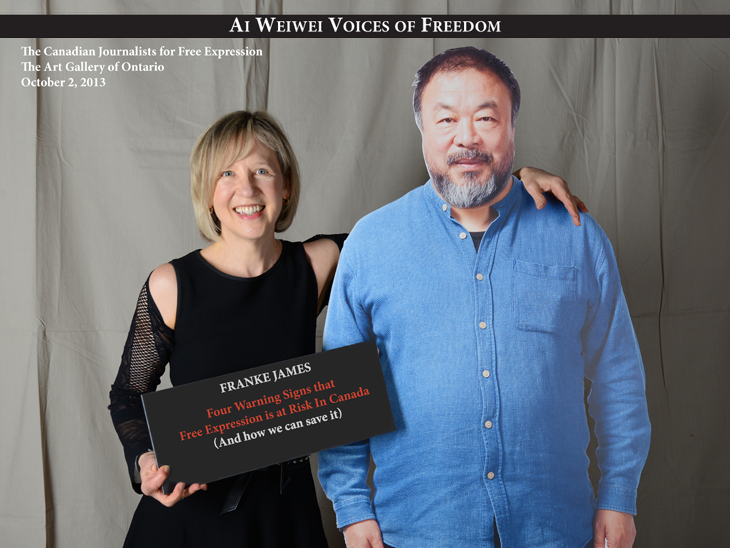
Here is the presentation I gave at the Ai Weiwei event organized by the CJFE and the AGO. I have added notes in italics and a couple of slides, so you can follow along.

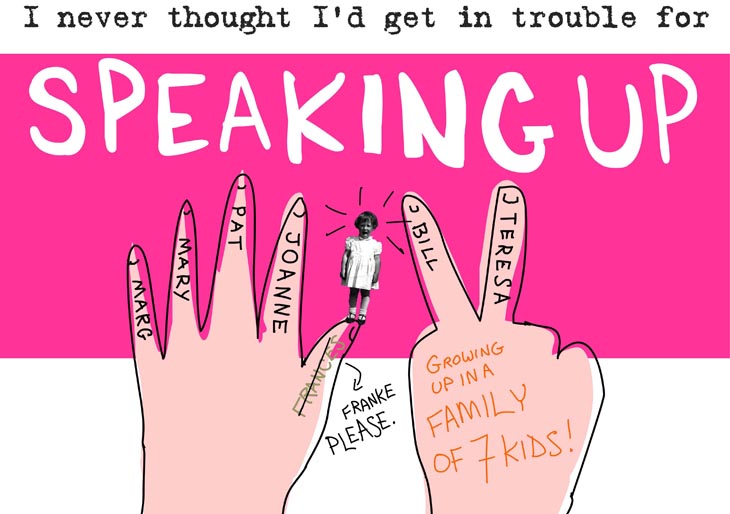
Nope. I never thought for a minute I’d get in trouble for speaking up — because I live in Canada! But I did get in trouble. So let me tell you the 4 warning signs I see…
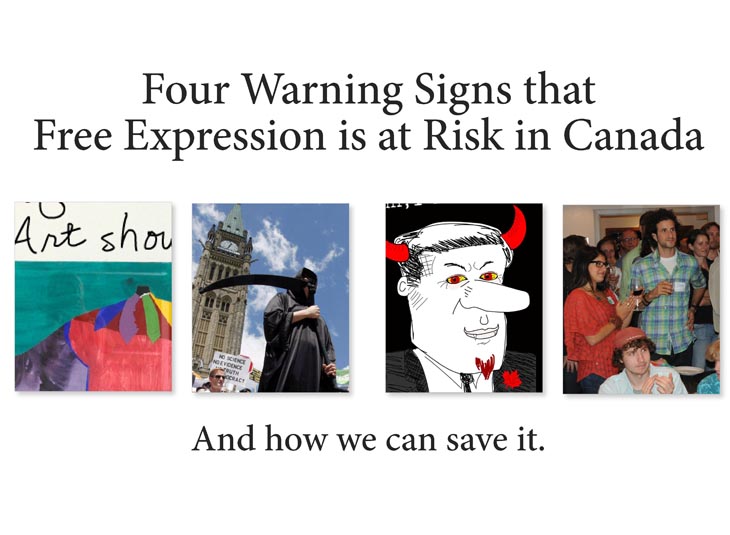
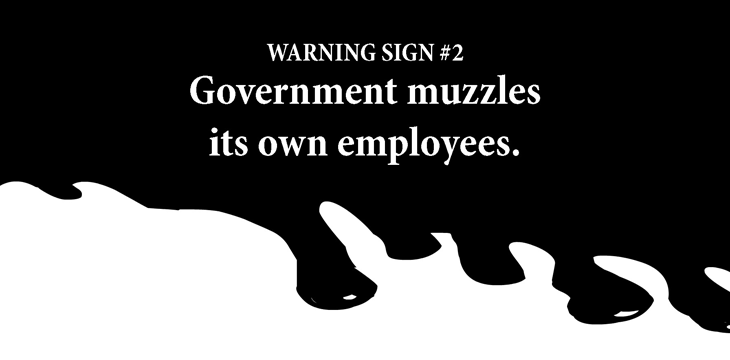
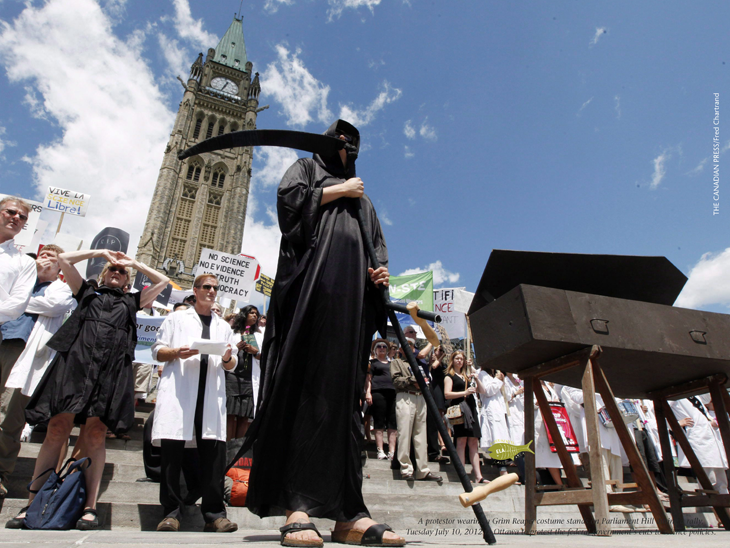
I could have given the example of Librarians being muzzled. Or Canada’s wounded soldierswho have been told not to criticize the government online. Or aboriginal groups who are protesting the government’s failure to consult, but this talk was brief… So I focused on scientists being muzzled, and pointed to how they are protesting the ‘death of evidence’ . This photo (licensed from CP) shows the protest on Parliament Hill in Ottawa, July 2012. In September 2013, scientists again protested the muzzling of science on the Hill — and on university campuses. “The facts do not change just because the Harper government has chosen ignorance over evidence and ideology over honesty.”
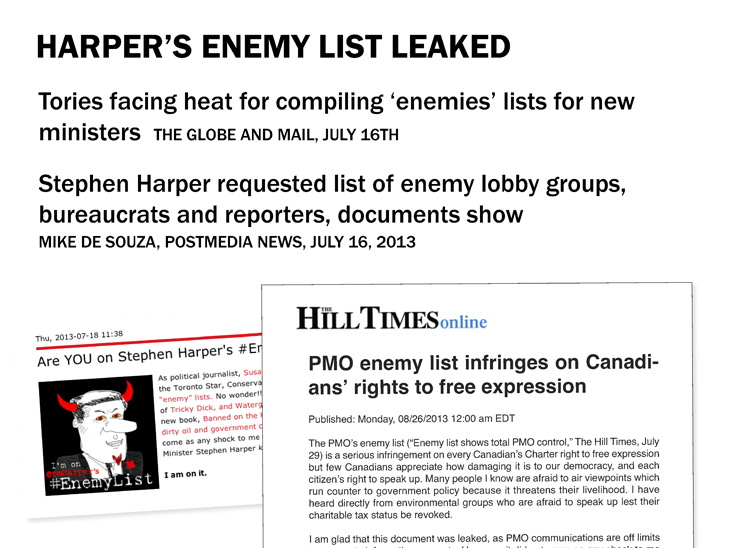
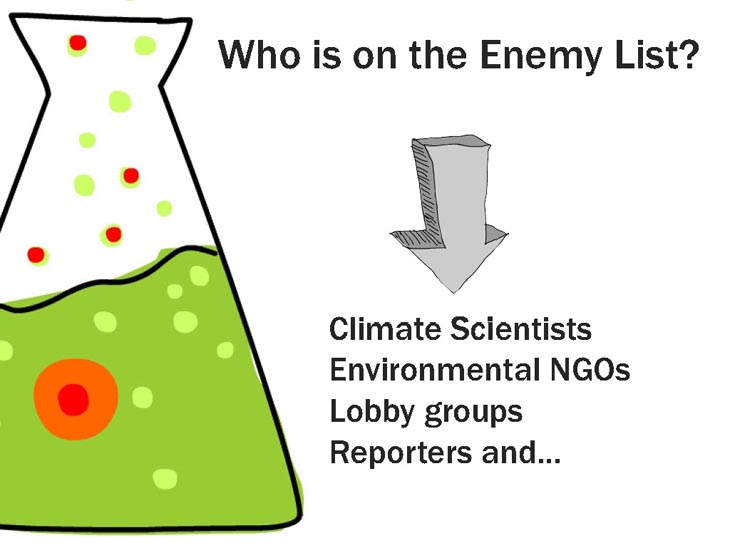
News of Harper’s Enemy List broke in July 2013. I took the opportunity to write a Letter to the Editor at the Hill Times stating that the PMO’s Enemy List infringes on our rights to free expression. Many people are afraid to speak up lest they get on Harper’s Enemy List too!
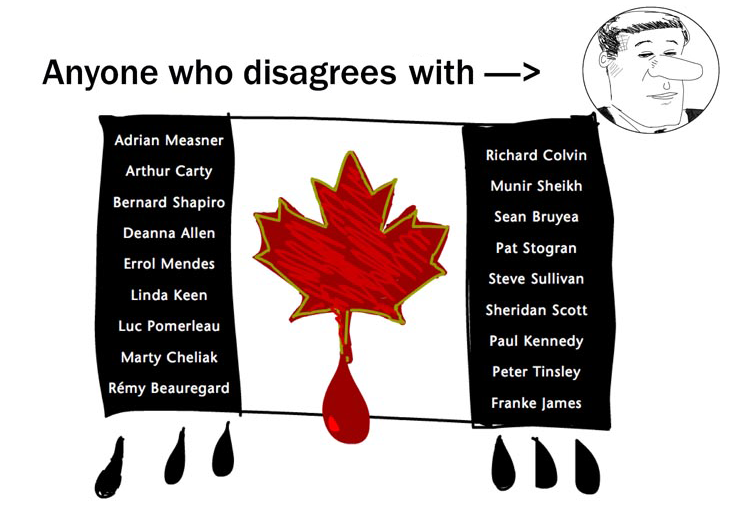
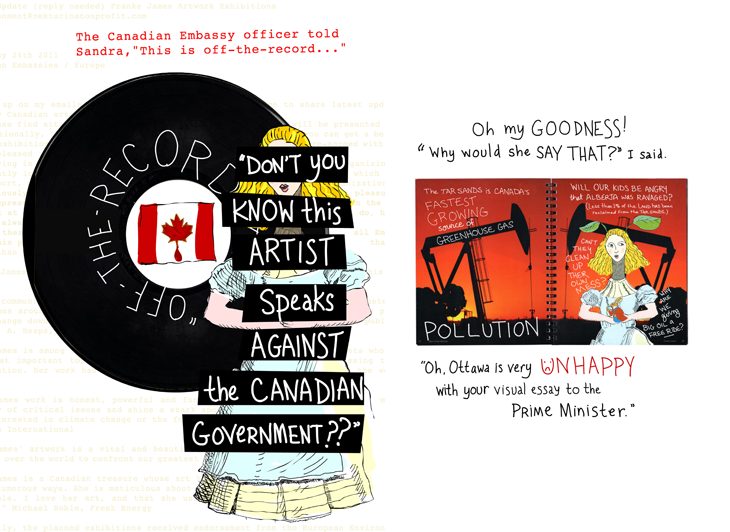
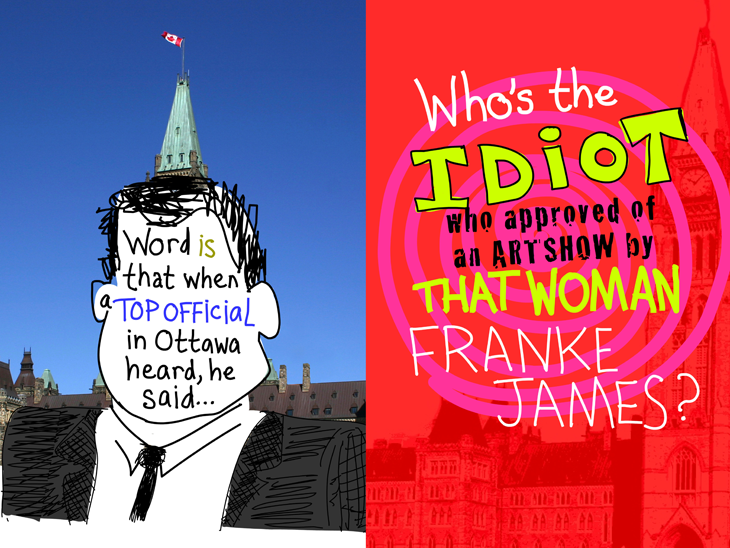
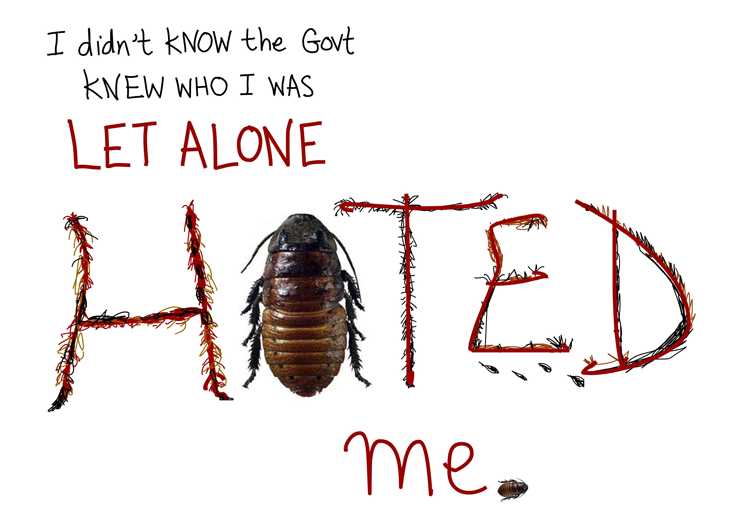
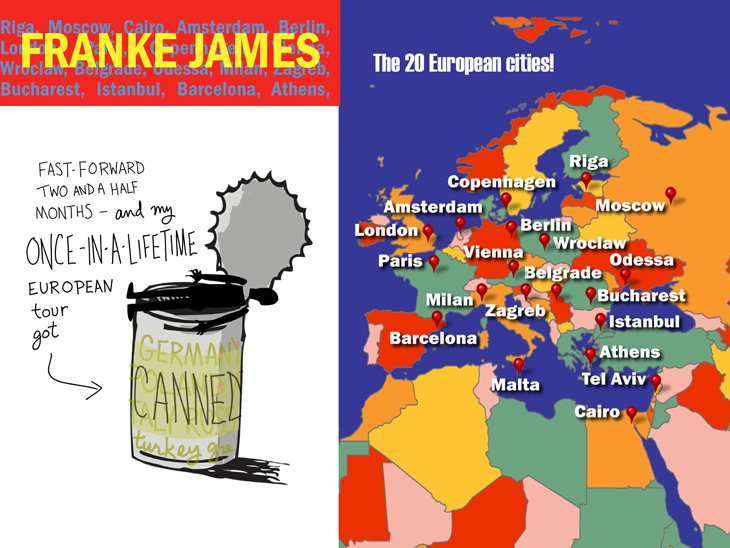
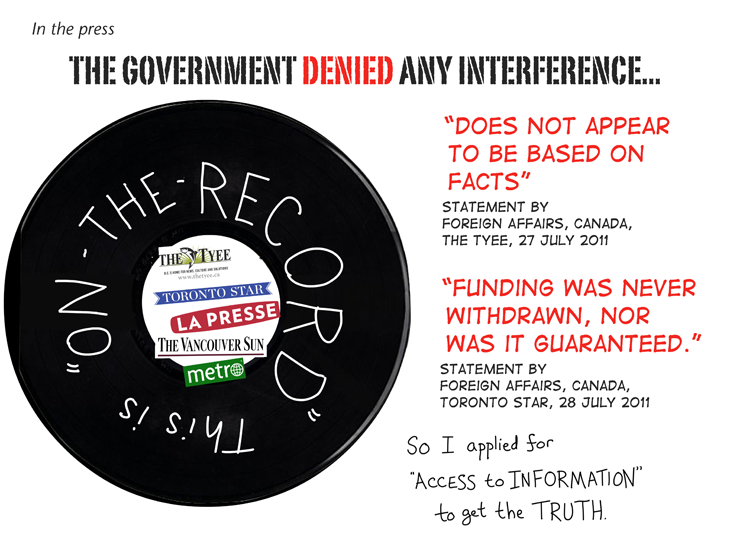
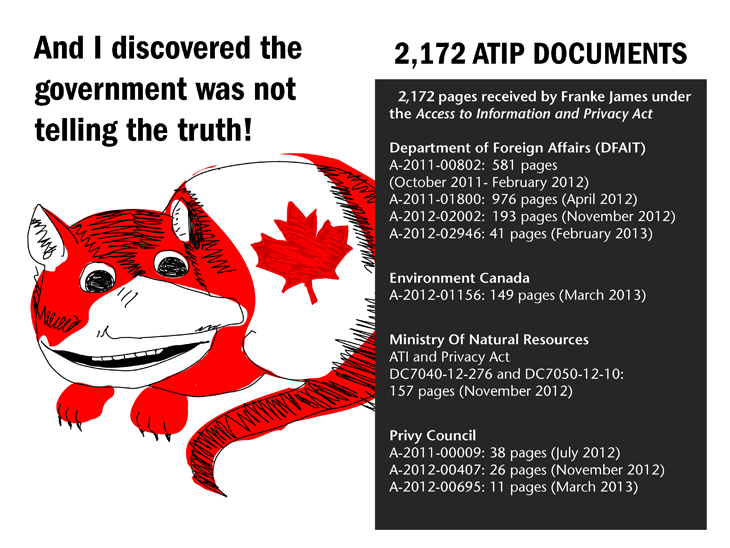
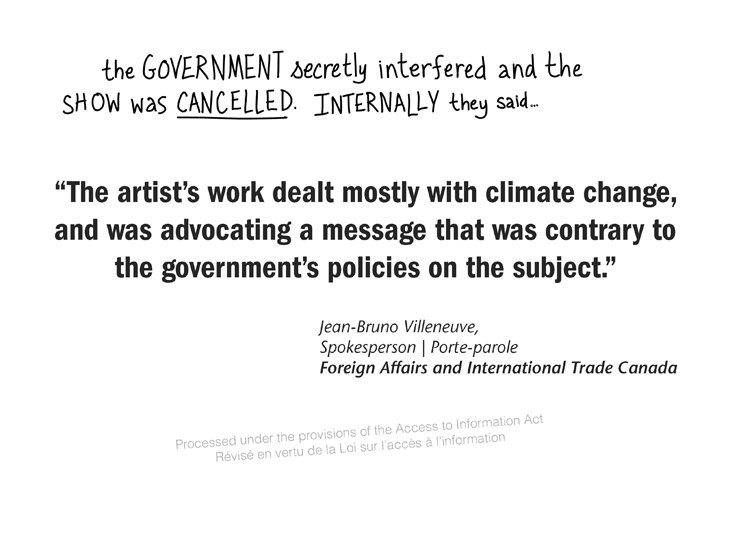
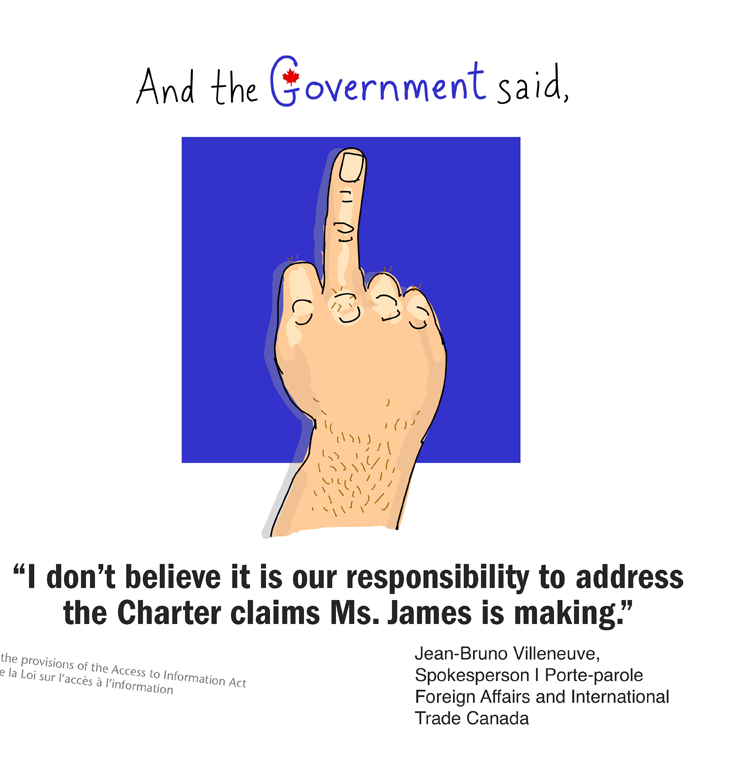
See Voices-Voix for who is who on the blacklist flag above. Below is a short summary of how I discovered I was blacklisted by the Harper Government in 2011 and why they were interfering in my proposed European art show… Read the full story in Banned on the Hill.
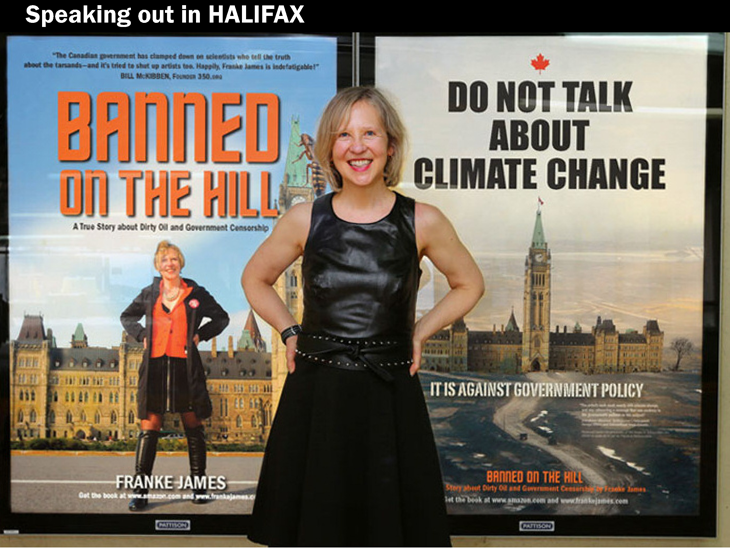 Enough money was raised to also take the posters to Halifax. Dalhousie University asked me to give a talk to 375 students. and conduct an art workshop. It was a big success.
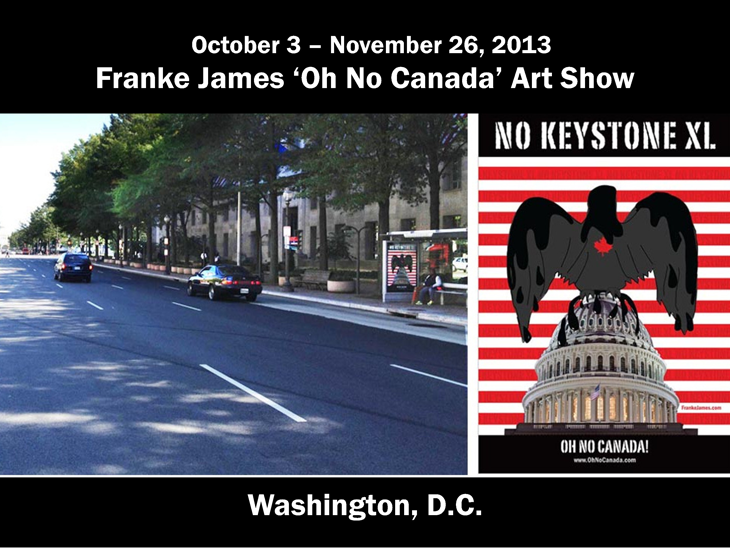 The Indiegogo crowd-funding, together with support from Natural Resources Defense Council (NRDC), Sierra Club and National Wildlife Federation has made the Washington DC art show happen!
Here is the presentation I gave at the Ai Weiwei event organized by the CJFE and the AGO. I have added notes in italics and a couple of slides, so you can follow along.
And in fact…
Nope. I never thought for a minute I’d get in trouble for speaking up — because I live in Canada! But I did get in trouble. So let me tell you the 4 warning signs I see…
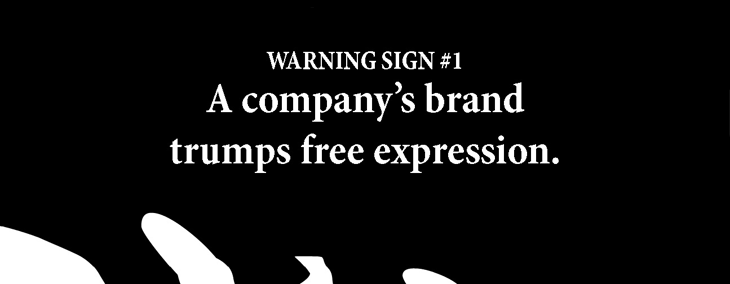
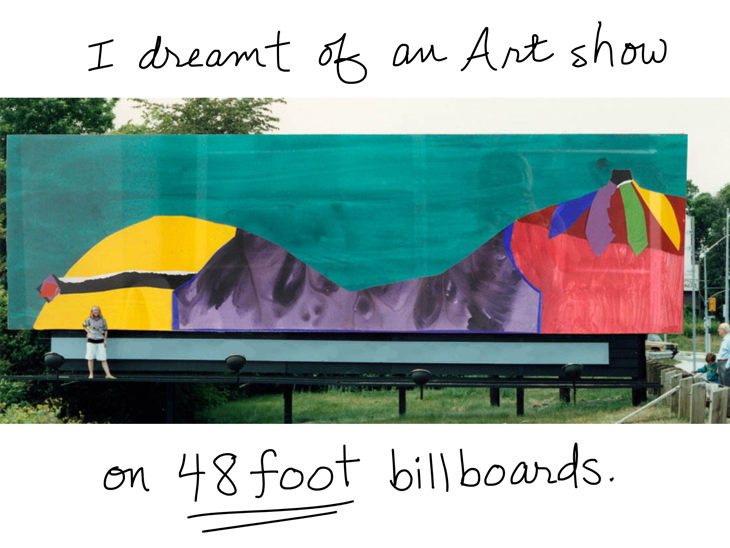
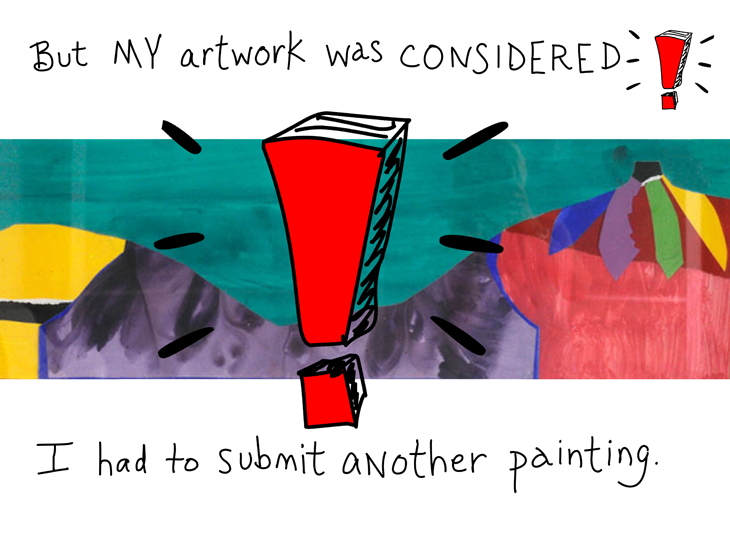
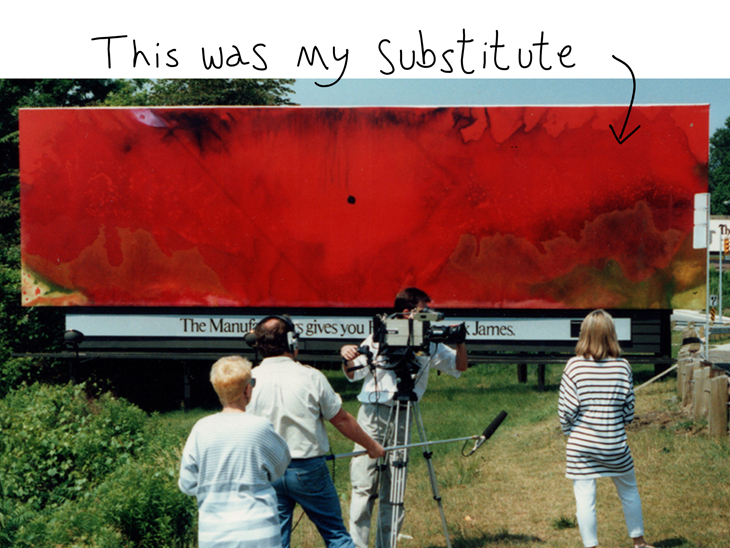
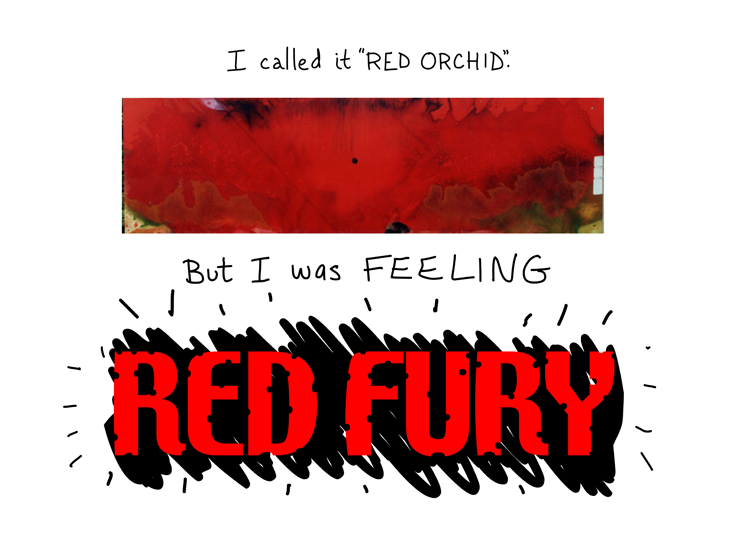
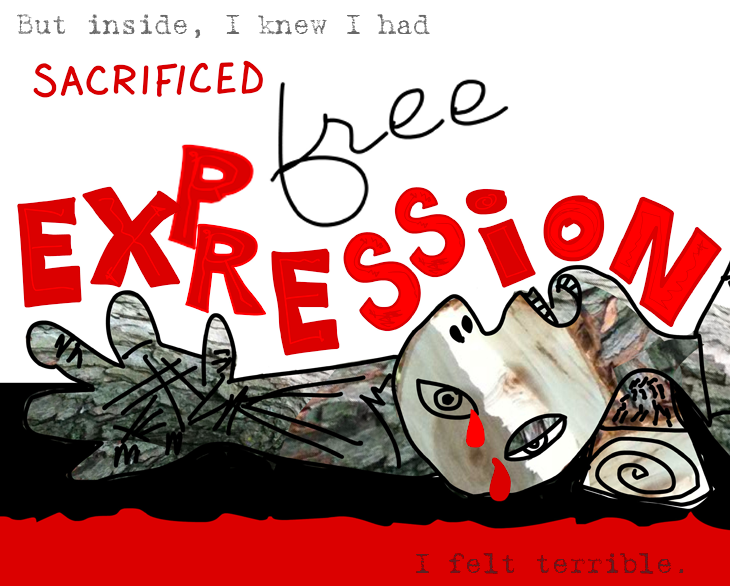
However the artwork I submitted was considered too provocative and off-message from the sponsor’s brand.
I could have given the example of Librarians being muzzled. Or Canada’s wounded soldierswho have been told not to criticize the government online. Or aboriginal groups who are protesting the government’s failure to consult, but this talk was brief… So I focused on scientists being muzzled, and pointed to how they are protesting the ‘death of evidence’ . This photo (licensed from CP) shows the protest on Parliament Hill in Ottawa, July 2012. In September 2013, scientists again protested the muzzling of science on the Hill — and on university campuses. “The facts do not change just because the Harper government has chosen ignorance over evidence and ideology over honesty.”
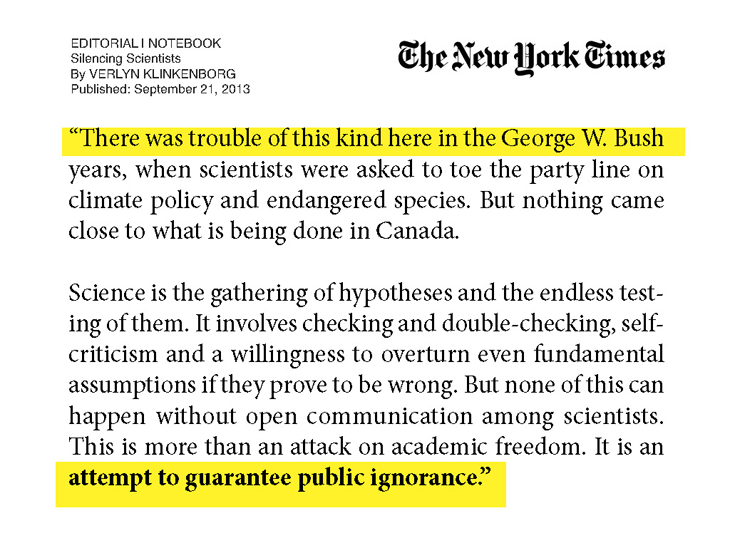
You know Canada has a problem when our friendly neighbours to the south give us sharp rebukes like this recent Editorial in the New York Times, which points out that the Harper government’s silencing of scientists is an attempt to “guarantee public ignorance”. I agree. The Canadian public at large is not worried about climate change because the scientific evidence has been buried. One infuriating example: In 2008, a major Health Canada report on the impact of climate change on human health was suppressed. If Canadians were properly informed they would want to take action rather than hiding their heads in the tar sands.
News of Harper’s Enemy List broke in July 2013. I took the opportunity to write a Letter to the Editor at the Hill Times stating that the PMO’s Enemy List infringes on our rights to free expression. Many people are afraid to speak up lest they get on Harper’s Enemy List too!
See Voices-Voix for who is who on the blacklist flag above. Below is a short summary of how I discovered I was blacklisted by the Harper Government in 2011 and why they were interfering in my proposed European art show… Read the full story in Banned on the Hill.
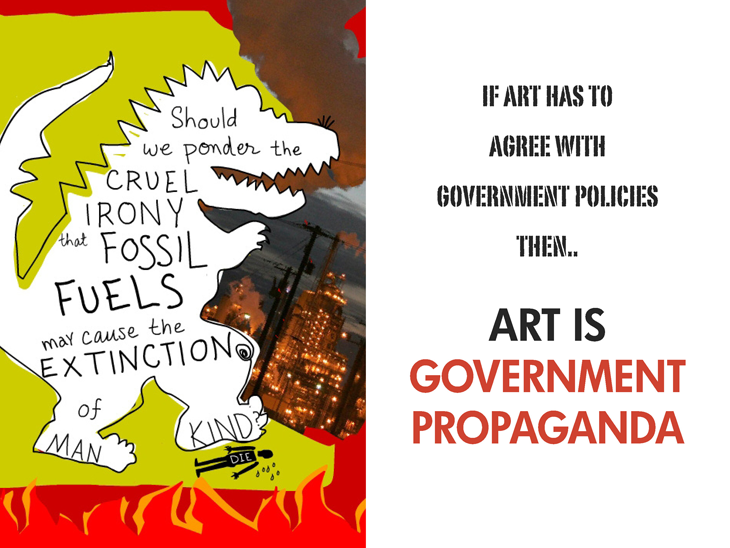
The AGO crowd cheered and broke out in spontaneous applause when I said, “If art has to agree with government policies then art is government propaganda”.

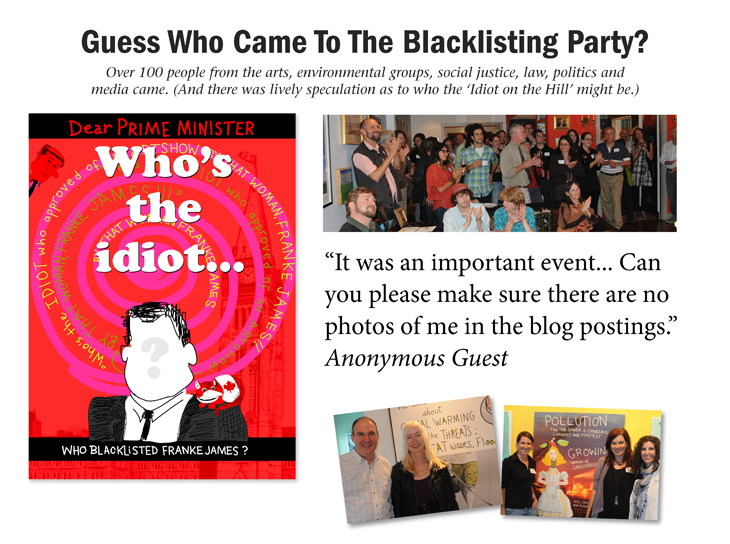
In September 2011, I hosted a ‘Blacklisting Party‘ to raise funds for my protest art show in Ottawa in November 2011. The ‘thank you’ note below is a perfect example of a person self-censoring themselves out of fear of government reprisals.
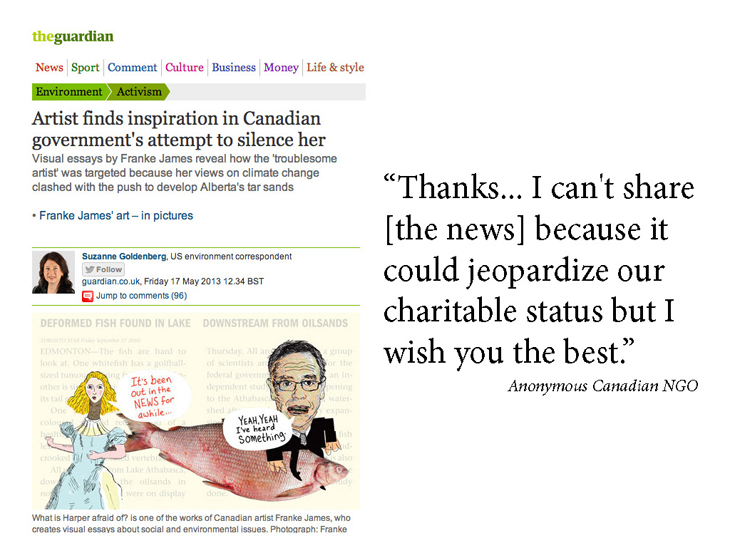
In May 2013, I shared the news of the Guardian UK writing about my new book with a friend from an environmental organization. His response is an example of the culture of fear in Canada — and why an independent individual like me has an important role to play in speaking up.
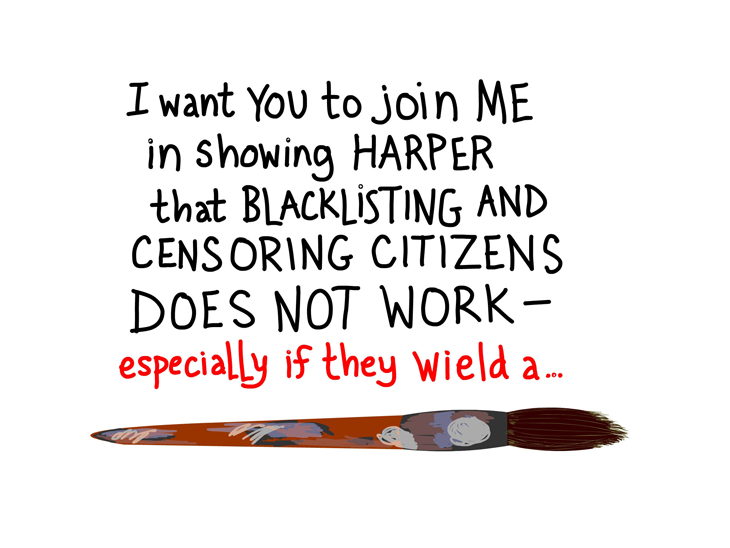
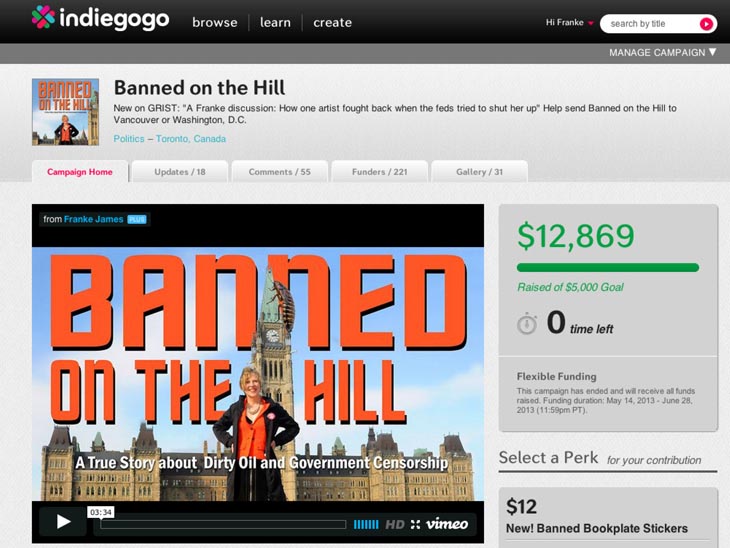
Here’s the wrap-up on how we can fight for our right to free expression! I had learned some hard lessons in how corporations and the Canadian government can stifle free expression when you are “off-message”. So I turned to the very democratic crowd-funding platformIndiegogo to help me raise funds for an outdoor art show. My pitch…
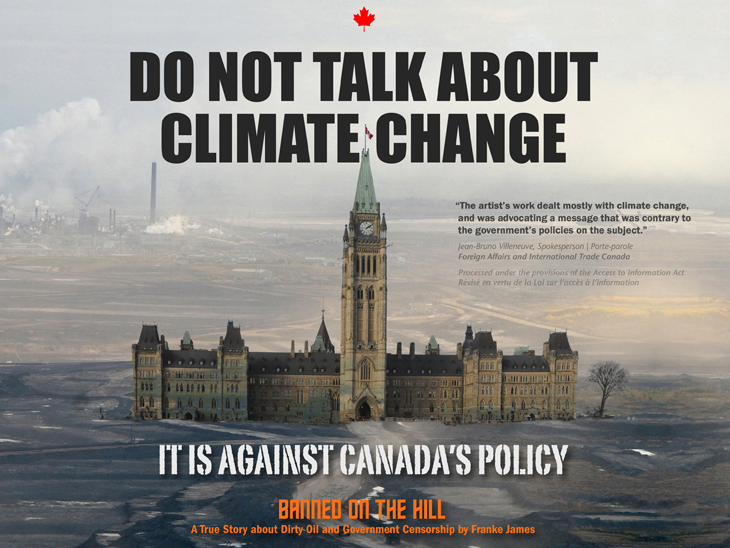
I wanted to raise $5,000 to put this poster up in Ottawa.
Within 45 days, 221 people had pitched in more than enough money to make it happen!
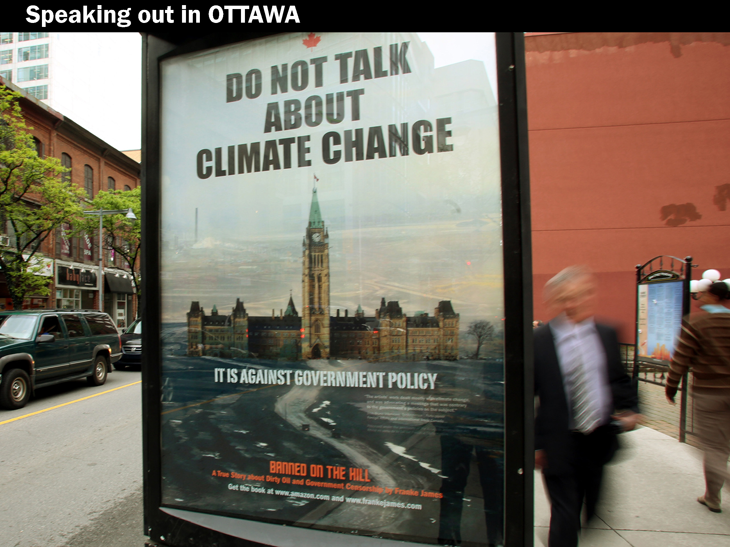
The posters went up in Ottawa and succeeded in getting people talking about climate change (and government censorship). There was media coverage from coast-to-coast, in newspapers, online, radio and TV. And some in the USA too.
Enough money was raised to also take the posters to Halifax. Dalhousie University asked me to give a talk to 375 students. and conduct an art workshop. It was a big success.
So does government censorship of the arts work? Playwright Michael Healey nails it…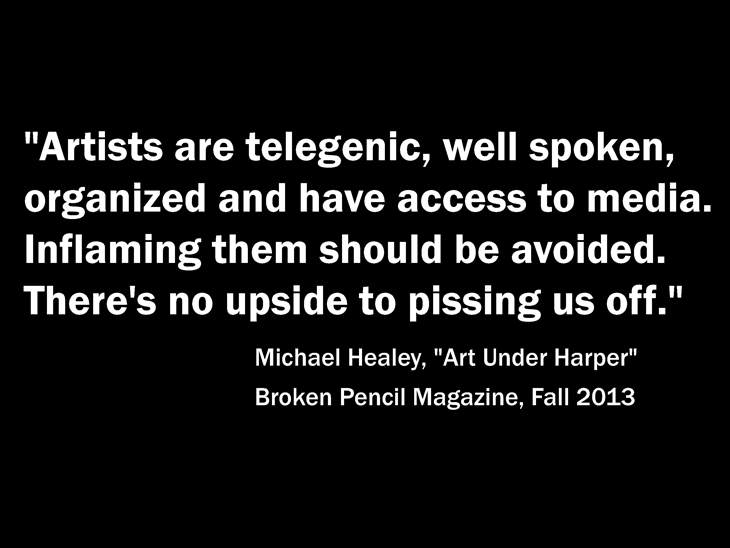
Then I showed the audience my new poster opposing the Keystone XL pipeline…
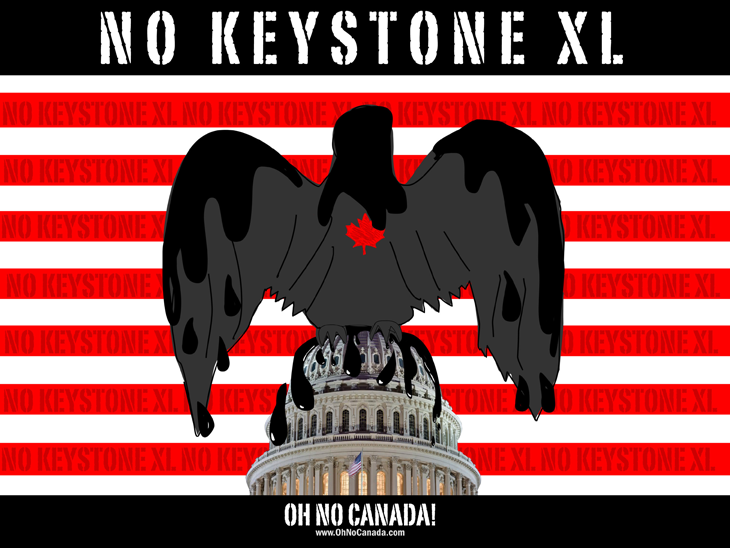 The Indiegogo crowd-funding, together with support from Natural Resources Defense Council (NRDC), Sierra Club and National Wildlife Federation has made the Washington DC art show happen!
Censored Canadian Artist Launches DC Anti-Tar Sands Ad Campaign…
Washington, DC – Franke James, a Canadian environmental writer, illustrator and activist is bringing her protest art show to DC in the form of a series of bus stop advertisements along Pennsylvania and Constitution Avenue.
The five-figure ad buy will run through November, and features six pieces of art in protest of Canada’s attempts to silence environmental voices, including hers. The bus stop locations are at 7th & Pennsylvania NW, 10th & Pennsylvania NW, 8th & Pennsylvania SE, 7th & Constitution NW, and 15th & Constitution NW.
One poster shows the Canadian Parliament Buildings dropped into the tar sands with the words, “Do Not Talk about Climate Change. It Is Against Canada’s Policy.” Another uses text from The Guardian that says, “Canada Is The Dirty Old Man” and features a Stephen Harper caricature wearing a trench coat and revealing his tar sands oil barrel undergarments.
“Canadians’ right to free expression is being quietly eroded by a pro-oil government insistent on promoting tar sands and silencing anyone who might interfere with those plans,” said Franke James. “Rather than the friendly neighbor to the north, Canada has become the dirty old man.”
James is part of a Canadian delegation that will be in Washington, DC next week for high-level meetings and to share the Canadian perspective of the Harper government, tar sands, and climate change.
Under the government of Stephen Harper, Canada has been cracking down on dissenting voices, including scientists, activists, and artists. Documents show that James fell victim to this aggressive censorship when her 20-city European art show was cancelled as a direct result of behind-the-scenes government interference by high-level bureaucrats, including the Deputy Director of Climate Change, Jeremy Wallace, a Canadian Ambassador Scott Heatherington and a Senior Trade Commissioner in Berlin Thomas Marr.
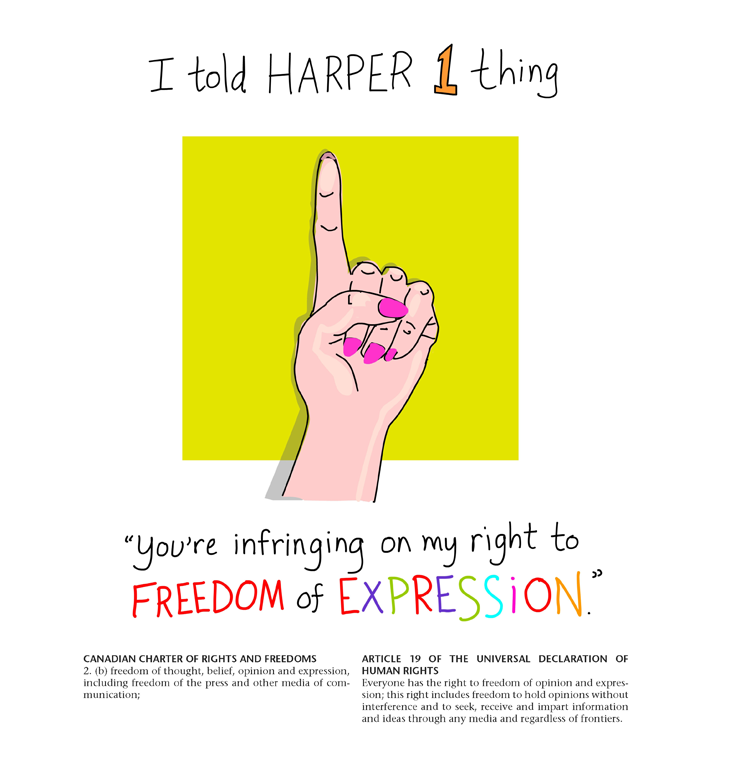
James has vigorously and creatively fought back against the government’s interference and censorship calling it an infringement on her right to free expression. James used freedom of information laws to obtain 2,172 internal government documents concerning herself, and used those documents as the basis for Banned on the Hill: A True Story about Dirty Oil and Government Censorship, the book in which James tells how she first discovered she was being censored by the Canadian government—and how she fought back.
Just this week, James participated in a Toronto event to honor the Chinese activist artist Ai Weiwei and pay tribute to his relentless pursuit of free expression, where she gave a presentation titled “Four Warnings Signs that Free Expression is at Risk in Canada.”
Franke James will be giving an illustrated talk, “Speaking up for the climate and against censorship” at Georgetown University on Wednesday, October 9th at 6:30pm. It is open to the public.
The delegation, featuring some of Canada’s leading environmental leaders, including Dr. David Suzuki and Tzeporah Berman, will participate in a briefing at the National Press Club on Friday, October 11th from 9:00-10:30 am about Canada’s failed climate policies, anti-democratic actions, and tar sands expansion goals. See the media release and the six posters…
4 Warning Signs Credits
“Four Warning Signs” copyright Franke James, 2013. All writing, illustration and photography by Franke James with the following exceptions in order of appearance…
“Franke James with cardboard Ai Weiwei” photo by Henry’s Camera staff
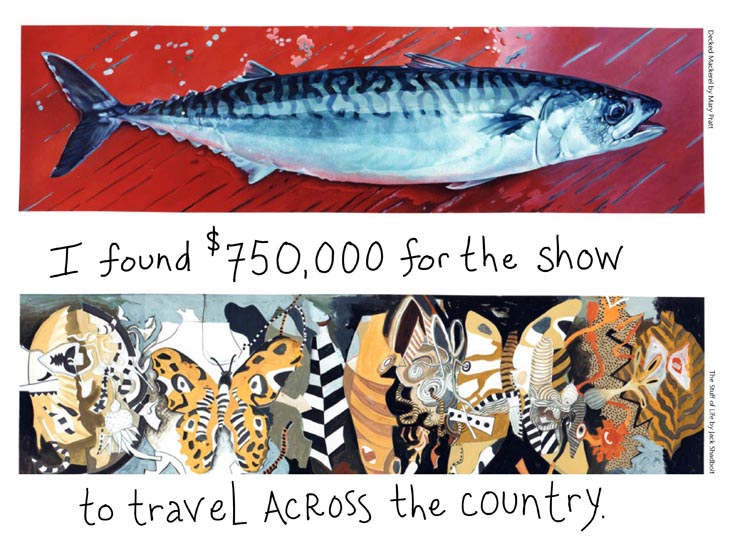
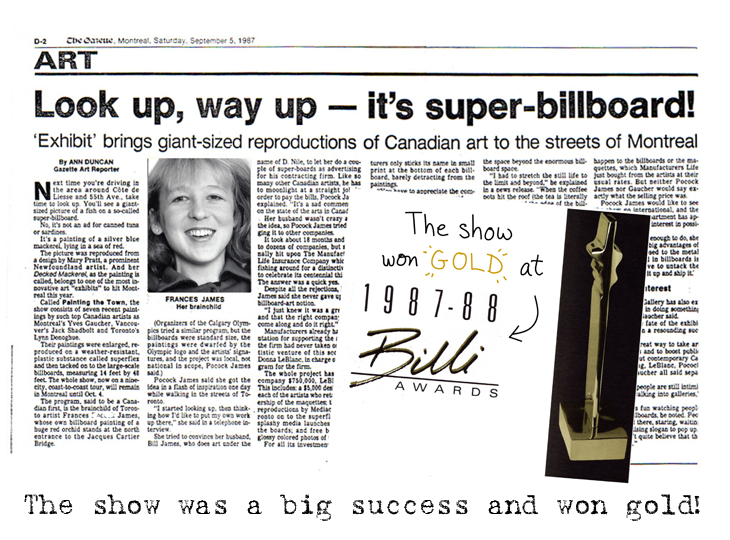
Billboard art – “Decked Mackerel” by Mary Pratt
Billboard art – “The Stuff of Life” by Jack Shadbolt “Death of Evidence” photo by Fred Chartrand, Canadian Press
New York Times Editorial: Silencing Scientists by Verlyn Klinkenborg
The Guardian UK: Artist finds inspiration in Canadian government’s attempt to silence herby Suzanne Goldenberg
“Franke James in Halifax” photo by Nick Pearce, Dalhousie News
Michael Healey quote “Art Under Harper” Broken Pencil Magazine
The Ai Weiwei: Voices of Freedom event was organized by the CJFE and the AGO.
“Franke James with cardboard Ai Weiwei” photo by Henry’s Camera staff
Billboard art – “Decked Mackerel” by Mary Pratt
Billboard art – “The Stuff of Life” by Jack Shadbolt “Death of Evidence” photo by Fred Chartrand, Canadian Press
New York Times Editorial: Silencing Scientists by Verlyn Klinkenborg
The Guardian UK: Artist finds inspiration in Canadian government’s attempt to silence herby Suzanne Goldenberg
“Franke James in Halifax” photo by Nick Pearce, Dalhousie News
Michael Healey quote “Art Under Harper” Broken Pencil Magazine
The Ai Weiwei: Voices of Freedom event was organized by the CJFE and the AGO.


