Thursday, 30 December, 2010

Entropy and ecology -- by Rex Weyler

Rex Weyler - This is from his "Deep Green" personal blog.
Rex Wyler

If you don’t have some appreciation of the economy as being embedded in the natural systems of the planet, you’re not going to get very far understanding why we’ve got the problems we have with the environment, and how we’re going to solve them.” - Peter Victor, York University

The 2010 climate talks in Cancún ended with a marginal climate deal that proposed funds for climate mitigation but no mechanism to provide the money, and carbon emission cuts that remain non-binding and too negligible to arrest global warming. British scientist John Beddington warned the conference offered “little chance” of limiting global warming to 2°C and conceded, “We have to focus on adaptation.” Meanwhile, the World Meteorological OrganizationThe Royal Society (WMO) released data showing atmospheric CO2 at record levels, and published a report, Four degrees and beyond, warning humanity to prepare for a 4°C warmer world.

Human society has known the global warming science since 1896, when Swedish physicist Svente Arrhenius described and predicted the effect. At that time, CO2 concentrations had started to grow from pre-industrial 280 parts per million (ppm) to 290ppm. In 1979, James Lovelock sent Greenpeace a graph of atmospheric CO2, which we pinned to our office wall, showing CO2 concentrations at 337 ppm. By 1985, when the first climate conference opened in Villach, Austria, CO2 concentrations had reached 345 ppm. The assembled scientists ‘expected’ significant warming.

Last summer, CO2 concentrations reached over 390 ppm. Meanwhile, methane gas rises from melting Arctic tundra, 13 million hectares of forest disappear each year and acidic seas and dying coral reefs absorb less carbon; these factors increase the rate of planetary heating.

With a century of science and 25 years of conferences behind us, why are we still losing ground in the global warming battle? We might blame greed, delusion or denial. However, one important piece of the answer may appear at the very roots of our global economic system.


A drainage ditch in Gurao, China clogged with wastewater and trash. Here the economy is centered around textile production and Greenpeace has found high levels of industrial pollution and has documented the effects on the community.
Image: Qiu Bo / Greenpeace

Economics without limits

Some very respected economists have been saying some very erroneous things for a very long time.” - Herman Daly, Ecological Economics and Sustainable Development.

In 1972, biophysicist Donella Meadows and her colleagues at the Club of Rome published The Limits to Growth, explaining how declining resources would eventually limit economic growth. The following year, economist Robert Solow delivered a lecture to the American Economics Association in response. Solow claimed that capital could be substituted for resources and that if this were true, then “the world can, in effect, get along without natural resources.”

In neoclassic economic terms, Solow’s ‘production function’ states that economic ‘output’ is a product of capital x labour x resources. If this were true then, with a stable work force, as industry depletes resources, production could be maintained by increasing capital. This notion has remained a conventional economic justification for unlimited growth.

However, in 1971, Romanian economist Nicholas Georgescu-Roegen published The Entropy Law and Economic Process, formulating what he called ‘Bioeconomics’, exposing certain errors in conventional economic theory. Georgescu-Roegen made an important distinction between resources on the one hand and capital, labour and technologies on the other.

Money, or capital, is not transformed in the industrial process. However, resources – materials and energy – pass through the production process and are changed from raw materials into products and waste. This transformation must obey the laws of energy conversion, or thermodynamics. The Second Law of Thermodynamics, known as the ‘Entropy Law’ states that energy is always depleted and degraded in any mechanical process. Georgescu-Roegen showed how this law also applies to material transformation.

This may sound technical, but it's actually very simple. We cannot burn the same barrel of oil twice. Common sense tells us that a pile of boards and sawdust is not a tree, even if it represents the same amount of material. Although we can recycle materials, every transformation degrades matter and burns energy. There is no escape. Money, therefore, is not a substitute for energy, trees, fresh water or any other resource, and material constraints do indeed limit economic growth.


A saline deposit is the only evidence left of a small lake in the Star Sea Lake area of China which completely dried up in 2001. Image: Greenpeace / John Novis

Entropy

Since the Entropy Law allows no way to cool a continuously heated planet, thermal pollution could prove to be a more crucial obstacle to growth than the finiteness of accessible resources.” - Nicholas Georgescu-Roegen, 1975

Entropy is a measure of disorder in a system. Without energy, physical order decays toward disorder. Sunlight bathes Earth daily, offsets entropy and allows organic organisation. We eat to bring that solar energy into our personal biological system. However, every biological or mechanical process transforms useful energy (low entropy) into waste energy (high entropy).

Georgescu-Roegen showed that human economics had to respect the entropy law. This is why there is no such thing as a ‘perpetual motion’ machine. A machine cannot create the resources that it transforms. Tools can increase the harvest but they don’t create resources. Ancient hunters knew this. Making more arrowheads did not create more bison. Farmers have known this throughout history, which is why fields were left fallow to recover nutrients and energy.

The entropy law applies to materials as well as to energy. We can transform a tree into a table but we can’t transform a table back into a tree. We can recycle a table into building materials but this requires more energy and involves a net loss of both energy and material. Everyone who keeps a house can witness how entropy works. Order falls apart easily but it takes energy to put it back together again. A house left on its own does not get cleaner or more organised- it collects dust and gets less organised. That’s entropy at work.

Georgescu-Roegen and later economists such as Donella Meadows and Herman Daly (Steady State Economics) showed that resource depletion is inevitable with all economic activity. In nature, ‘sustainability’ is the state of homeostasis, balance with the material and energy flows available in a habitat. The promoters of endless growth mock this as pessimism but, to any biologist or physical scientist, it is simple realism. When we look around at our degraded Earth – acidic seas, drained aquifers, growing deserts, extinct species – we witness the entropic cost of human economic growth.

Georgescu-Roegen also stated that industrial growth necessarily results in social conflict (over depleted resources) and inequality, both regional (the rich taking resources from the poor) and inter-generational (today’s society leaving resource scarcity and waste to future generations.)


New wind turbines are constructed at the Butterwick Moor Wind Farm in the UK. Image: Steve Morgan / Greenpeace

Quest for homeostasis

They bombard us with adverts cajoling us to insulate our homes, turn down our thermostats, drive a little less, walk a little more. The one piece of advice you will not see on a government list is ‘buy less stuff!’” - Tim Jackson, UK Sustainable Development Commission

Today, humanity finds itself in a complex dilemma. Our primary energy source is heating Earth’s atmosphere, oceans and land. To stop the heating, we must make a transition from hydrocarbons to renewable energy sources such as geothermal, wind and solar. But there is more. Hydrocarbons have allowed us to grow our numbers and consumption at unprecedented rates, and that growth itself degrades our resource base and frustrates the transition.

University of Manitoba Environment and Energy Professor Vaclav Smil warns that the biggest challenge with the transition from hydrocarbons is the scale of our oil-based economy. In the 19th century, during the transition from biomass (wood) to coal, it took over 60 years for coal to grow from 5 percent to 50 percent of human energy use. However, today, our overall energy consumption is 20 times greater than it was then.

Smil warns that the transition to renewables will take longer since “the absolute quantities that need to be replaced have only become bigger.” He advises that to make such a conversion feasible requires “decreasing the rates of per capita energy use.” The leading strategies of our energy transition must be reduction and conservation.

The entropy law teaches us that tools – including computers and windmills – do not create resources; tools burn resources. Humanity has stumbled over this fact of nature in the Sumerian cedar forests, on ancient denuded Greek hillsides, on Easter Island, and today on a global scale.

Global warming has not slowed down because it is a symptom of a deeper problem: a belief in unlimited growth. Biophysical economists such as Georgescu-Roegen, Meadows and Daly are the Copernicus, Kepler and Galileo of our age. They looked behind conventional delusions and discovered the truth. The status quo today, as in the 16th century, ignored and mocked them. However, just as the cosmos revealed itself, so too will nature here on Earth. Nature shall not be mocked.

In the end, our quest for sustainability will be governed not by wishful thinking but by nature’s laws. Anywhere in nature – in a watershed, on an island or on the entire planet – a species endures only when it discovers homeostasis, living within the natural energy and material flow of its habitat.

***

See also "The economic heresy of Herman Daly" Grist 10 Apr 2003, Wikipedia ecological economics, environmental economics, and green economy.

Saturday, 25 December, 2010

Native voices from drowning islands

‪The drowning islands include: Kiribati, Tuvalu, and the Maldives‬. For years, President Anote Tong of Kiribati has been urging international climate action, an end to "business as usual." The Christmas gift to his people from the recent Cancún conference is...a death sentence for their homeland.

Rising sea levels are destroyed housing and agriculture. Within a generation they will be environmental refugees. See also natives' eyewitness accounts in UNDP's Kiribati Climate Change Reality, a 7 min video; the trailer for ‪King Tide trailer (from the documentary The Sinking of Tuvalu)‬. The Maldives cabinet met underwater to dramatize the threat: reported by Andrew Revkin of the NY Times 3 Mar 2009, but repeatedly questioned by climate change denier Anthony Watts, whose claim to expertise is his stint as a TV weather announcer. We will not engage with the endless postings of the denier claque here, except to mention that much of what they say has been heavily funded by the oil lobby.

Further references: see Alliance of Small Island States (AOSIS) and Small Island Developing States (SIDS). The Maldives are hoping to use tourist revenue to buy land: “We will invest in land,” said the president. “We do not want to end up in refugee tents if the worst happens”: findingdulcinea 12 Nov 2008.

Thursday, 23 December, 2010

Indigenous peoples protest so-called "green economy"

On UN Human Rights Day, 10 Dec 2010, Survival International released two videos highlighting the plight of the Guarani Indians in Brazil. In One must have courage they ask return of their lands, stolen for ranches, soya and sugarcane plantations.
The Gunmen expresses their anger at landgrabbers and fear of hired pistoleros.
Further north in Pará, Amazonian peoples protest huge hydro dams that destroy forest and river ecosystems, polluting their water and dispossessing them. In June and August, in the city of Altamira, hundreds demonstrated against the huge Belo Monte dam."The forest is our grocery, the river is our market. We want strangers to leave the rivers of the Xingu alone," say chiefs quoted by the church organization CIMI. 300 more dams are planned, say the protesters.

The NGO Amazonia has reported illegal pipeline construction, land grabs by ranchers, Indian children sold as slaves, vigilante murders, fullscale military attacks, corrupt state governments and judges -- all in the name of "development". Even REDD is "short-sighted and deadly" to indigenous peoples, the NGO adds.

There is blood on the organic soya (or hamburgers) you eat, the "green" biofuels you use. More than 1,400 rural poor in Pará have been killed by illegal logger-ranchers over the last 35 years, according to the Catholic Pastoral da Terra. Witnesses die mysteriously. This year, a long-standing court case marked by corrupt decisions ended; a rancher who ordered the assassination of a white Catholic human rights activist, Sister Dorothy Stang, was finally imprisoned after strong US diplomatic pressure. See the 2008 film They Killed Sister Dorothy and the 2009 opera Angel of the Amazon. Land grabs, deforestation, and near-slavery to big landowners continue. A fifth of Amazon forests have been clear-cut in 40 years, exceeding losses in the previous five centuries. Brazil has become one of the leading emitters of greenhouse gases.

The price of development? A Time article "Brazil's Land-Reform Murders" points out that Brazil has become the world's biggest producer of sugar, soy beans, coffee, orange juice, beef and chicken. Father Edilberto Senna, an activist priest, says clear-cuts, jobs, and cash are motivating factors behind the bloodshed. Despite free elections, "nothing changes," he says. "Brazil will soon be the fifth biggest economy in the world... But who pays for these ambitious goals? Amazonia, the home of the biggest reserves of minerals and timber." A geographer, Julio Jacobo Waiselfisz, has produced a map of the violence. Worst murder rates are in the frontier provinces, and cities where police death squads operate. See also National Geographic's eyewitness reports from the Amazon.

Thanks to Margaret Kidd's blogs on QEWnet for these references.

Tuesday, 21 December, 2010

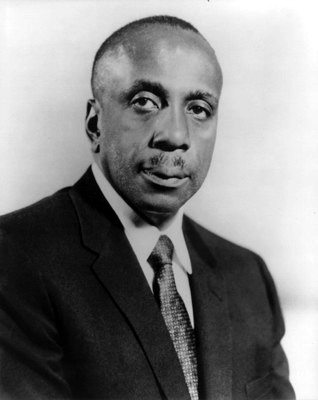
The Song of the Angels -- by Howard Thurman

Howard Thurman: from Wikipedia
When the star in the sky is gone,
When the song of the angels is stilled,
When the kings and princes are home,
When the shepherds are back with their flocks,
The work of Christmas begins:
To find the lost,
To heal the broken,
To feed the hungry,
To release the prisoner,
To rebuild the nations,
To bring peace among peoples,
To bring the music of love to all our hearts.

A musical setting by Elizabeth Alexander. Thurman studied under Rufus Jones, was a longtime member of the Fellowship of Reconciliation, and greatly influenced Martin Luther King. Thanks to Lynne Phillips for this reference.

Saturday, 18 December, 2010

Sourire -- par Pascale Frémond


Sourire sur les lèvres auquel répond un inconnu, surprise.
Sourire face à l'enfant.
Sourire de contentement.
Sourire chaleureux de bienvenue.
Sourire bienveillant face à l'erreur.
Sourire devant son miroir.
Sourire de joie profonde.
Sourire sans mots de l'amitié.
Sourire des yeux.
Grand sourire du soleil, jusqu'aux oreilles.
Bonhomme Sourire.
Sourire béat.
Sourire solidaire.
Sourire aux anges.
Sourire à la vie.
Sourire au bonheur.
Sourire à la paix.
Sourire à la beauté.
Te sourire.

Tiré de son blogue Regard sur la vie.

Friday, 10 December, 2010

Kenya churches urge action on climate change,

Kenyan churches call for action on climate change, threats to the Mau forest in the Rift Valley, drying up of rivers in the Mt Kenya area, increasing desertification, political reform and resettlement of refugees from the violence of 2007. All are contributing causes of tribal violence. They support the new constitution, an end to corruption and violence, and reforestation. Susie Ibutu is NCCK Director of Governance and Social Service Programs:

On Youtube you will find a number of other videos from the National Council of Churches of Kenya and climate change in East Africa. The General Assembly of the NCCK, which includes Friends Church in Kenya (Quakers), met 29 Nov-3 Dec 2010. Themes included Christian unity and peace, the new Kenyan constitution, ending ethnic strife and corruption, resettling internally displaced persons (IDP). See the NCCK final statement.
***
See our previous posts from Kenya on the genocidal battles of 2007 and their underlying causes. Also: Kenya government's appeal for international aid to save the Mau forest, land grabs by KANU party members, evictions of squatters and ethnic disputes. Water and food shortages in "Shalom City" IDP camp in the Rift Valley. Police brutality against refugees from drought-stricken, war-torn Somalia. Leaked US diplomatic note warns of lack of reform and further violence. Jul-Aug 2010 Kenya church leaders oppose the new constitution allowing abortions, sharia. Dec 2010 National Dialogue and Reconciliation conference has just begun. Citizen journalism and videos from Nairobi in Global Voices Online.

Tuesday, 7 December, 2010

Soumission à dieu! -- par Nelson Tardif


graphisme: Fotolia.com

Nous entendons régulièrement parler de privatisation, particulièrement depuis le printemps 2003 alors que le parti libéral du Québec, sous la direction de M. Jean Charest, accédait au pouvoir. Privatisation par-ci, privatisation par-là, il semble que l’air du temps est saturé de ce parfum à la mode… Oui, mais à la mode pour qui? Qui profite vraiment des transferts de services traditionnellement offerts par l’État à l’entreprise privée? Qui a intérêt à voir se démanteler ce qui relève du Bien commun et non de l’intérêt particulier? Au nom de quoi s’entête-t-on à emprunter la route des privatisations?

Riccardo Petrella: dans World People's Blog
Bien sûr, le gouvernement parle plutôt de partenariat public-privé, mais la logique à l’œuvre est essentiellement celle des privatisations. Dans cette perspective, il n’est pas innocent de savoir que cette dynamique s’inscrit dans le cadre de l’idéologie néolibérale qui peut se
comprendre autour des trois axes fondamentaux suivants : la libéralisation; la déréglementation et la privatisation. À cet égard, dans son livre Le bien commun: Éloge de la solidarité, Riccardo Petrella parle alors de la
« Sainte-Trinité » du dieu marché. Pourquoi faire appel à un langage de type religieux lorsqu’il est question d’économie? À mon point de vue, il est non seulement possible, mais éclairant de faire une lecture religiologique de la réalité économique actuelle.

Disons d’abord que l’être humain a une propension évidente à se fabriquer des dieux. C’est-à-dire qu’il va absolutiser un aspect ou l’autre de la réalité et s’y soumettre aveuglément sans distance critique. Ça peut être le pouvoir, l’argent, la sécurité nationale, le corps, l’individualisme, le sexe, mais aussi le marché. Une fois absolutisé, l’aspect de la réalité transformée en chose sacré, c’est-à-dire en un dieu, devient un intouchable qu’on ne peut pas remettre en question ni critiquer sans passer pour gauchiste et ennemis du progrès. C’est ainsi que Petrella va parler du dieu marché. Une fois transformé en absolu on a attribué au nouveau dieu marché des fantasmes d’autorégulation comme s’il se suffisait à lui-même et que personne ne contribue à son fonctionnement. Ainsi, l’adhésion aux prétendues vertus du marché devient un acte de foi de type religieux et les convertis se transforment en dépositaire de vérités révélées par le dieu marché. Il devient alors particulièrement difficile de pouvoir entrer en dialogue avec les disciples du dieu marché, qui, du fait qu’ils connaissent la vérité, sont convaincus de posséder une lucidité d’esprit qui disqualifie les personnes qui ne pensent pas comme eux. En fait, il s’agit plutôt d’une soumission aveugle au dieu.


Puisque la logique de privatisation découle de l’enseignement idéologique du dieu marché, elle passe pour incontournable et inéluctable. D’où la nécessité de déconstruire la logique néolibérale pour en dévoiler les véritables rouages et éveiller l’esprit critique. Seule une intelligence libre, si elle peut véritablement l’être, peut oser remettre en question les enseignements du dieu, ce qui s’impose comme la norme et apparaît, de ce fait, incontestable. D’où aussi l’importance de poser des questions comme celles que j’ai formulées au premier paragraphe de ce texte.

Nicholas Poussin, l'Adoration du veau d'or (ca 1634)
voir Exode 32, Quran 20:83.

Avant tout, l’entreprise privée vise essentiellement le profit. Dans la perspective néolibérale, nous devons plutôt parler de maximisation des profits. Dans cette foulée, le privé à tout intérêt à voir se transformer en marchandise des secteurs qui jusque-là ne lui étaient pas dévolus. La santé, l’éducation, l’eau constituent une manne potentielle de profits mirobolants pour le secteur privé. Les grandes Corporations salivent d'emblée et pressent les gouvernements d’assurer l’accès à cette manne. Ainsi, au nom de la libre entreprise, de la compétitivité, de la croissance économique, c’est-à-dire au nom du dieu marché, nous voyons nos dirigeants mettre la hache dans l’appareil étatique en sabrant dans les programmes sociaux, dans les mesures de protection environnementales et en dilapidant ce qui relève du Bien commun au profit du secteur privé. Comment le Bien de tous et de toutes peut-il être remis entre les mains de quelques-uns qui se préoccupent avant tout de leur profit? C’est pourquoi il nous faut dénoncer, résister à cette logique qui nous dépossède et nous appauvrit tous et toutes. Il faut dire non à la soumission à dieu pour pouvoir dire un jour : soumission adieu.

Monday, 6 December, 2010

Spirit-led creativity

video by 15th St Meeting, NYC of the Religious Society of Friends:


Also see their QuakerArts blog. Here is another sample from that blog:

In the Fifteenth Street Meeting

(poem written during Sunday Worship, Aug 2009)


Each of goes much deeper than we can explore ourselves,

so we go down in peace together, bouncing sometimes,

till we rest in peace together where we haven't been. -- Annie Finch


Annie Finch has written and edited 15 books of poetry, translation and criticism, including Among the Goddesses, Calendars, and The Body of Poetry.

Wednesday, 1 December, 2010

News and videos from COP-16 at Cancun

See the Cancun thread in QEWnet for more news. The second post in that thread includes an attachment with links to personal blogs by Quakers, youth, and NGO observers, as well as some trustworthy mainstream media sources.

On the first day of COP-16, the youth delegation awarded Canada all three "fossil" awards for its persistent blocking of negociations. See the video, one of many from COP-16. Climate Action Network explains why Canada deserves such a black eye:
(voir la version française en bas)

Canada Fossil of the Day on the opening day of the UN climate talks!

by Hannah McKinnon CAN November 29, 2010

Fossil of the Day is presented daily in Cancun from a network of over 400 leading international non-governmental organizations following a vote to determine which country had done the most over the course of the day to delay, stall, and otherwise disrupt these negotiating sessions in Cancun in December.

The Canadian Government, led by returning Environment Minister John Baird, has kicked off the UN climate talks in Cancun by winning an incredible first, second and third place Fossil of the Day awards! With three consecutive Colossal Fossil of the Year awards behind them, it seems this government is continuing its reckless approach to climate change in the hopes of setting even more fossil records. Canada won its first colossal fossil in Bali under the leadership of Minister Baird. The Fossil of the Day is an award voted on and given by over 400 leading international organizations to the country who has done the most to disrupt or undermine the UN climate talks.

Canada has been awarded the 1st, 2nd, and 3rd place Fossil of the Day for the following reasons:

Canada wins third place for a spectacular year-long effort to regain its title of “colossal fossil” as the country making the least constructive contribution to the negotiations.

“Last January Canada backed off of a weak target to adopt an even weaker one, as part of the government’s plan to outsource climate policy to the United States. Canada’s plan to meet that target is, to put it nicely, still being written,” says Graham Saul of Climate Action Network Canada. “Furthermore, the person they’ve just put in charge as Environment Minister is John Baird; COP veterans might remember him as the solo holdout against science-based targets for developed countries at the end of Bali.”

In second place we have...Canada again. So we’ve already heard that Canada doesn’t have a plan to cut emissions. What it does have is a plan to cut a lot of other things, such as:

-the only major federal support program for renewable energy
-a program funding energy efficiency upgrades for homeowners
-funding for Canada’s climate science foundation
-climate change off of the G8 and G20 agendas when Canada played host this summer, and last but not least...
-clean fuels policies in other countries.

“Internal government documents released today reveal that Canada worked to “kill” a US federal clean fuels policy to protect its tar sands, working with allies like the Bush administration and Exxon”, says Steven Guilbeault of Equiterre. “With friends like that, who needs clean energy?”

Now, turning to our first place winner:

Some of you might think the US Senate wasn’t too helpful on climate change. But today’s fossil winner has a Senate that makes the US look good, and not just because these Senators aren’t elected.

“In Canada, Conservative Senators killed a progressive climate change bill without even bothering to debate it, leaving Canada without a science-based target or any domestic transparency program for the already weak 2020 target the government has brought to these talks,” says Patrick Bonin of AQLPA. “Only in Canada could you find such a fossil-worthy Senate.”

So Canada is starting off with a substantial lead, taking three prizes today. Killing progressive legislation, cancelling support for clean energy and failing to have any plan to meet its target all position Canada well for another two weeks of ignominy here in Cancun.”

Despite getting of on the wrong foot, we must remind the Canadian Government that there is still time! This is only day one of these negotiating sessions, still plenty of time to wipe the tar from their eyes and clean up their act

Sommet de Cancún: négocier de mauvaise foi

par Hannah McKinnon - Responsable des communications pour le Réseau action climat Canada, et Steven Guilbeault - Coordonnateur général adjoint d'Équiterre

Pour négocier, il faut avoir quelque chose à mettre sur la table, une contribution à faire. Le Canada arrive les mains pratiquement vides à ce sommet des Nations unies sur le climat à Cancún, alors que la crise climatique touche des millions de personnes dans le monde et ici, au Canada.

Alors que plusieurs autres pays avancent et agissent, d'autres se contentent de rester assis à regarder les impacts s'intensifier. Et de laisser passer l'occasion de contribuer à un avenir énergétique propre. Dans la dernière catégorie, on peut dire que le Canada se complaît tout au fond du baril.

Un bref survol historique de l'inaction de Stephen Harper dans le dossier des changements climatiques montre bien toute la difficulté qu'aura le gouvernement canadien à être considéré comme un partenaire crédible et sérieux encore une fois cette année.

Au cours des derniers mois, les sénateurs conservateurs, non élus, ont tué le projet de loi C-311 lors d'un vote de dernière minute, sans même l'avoir étudié ou débattu, ce qui ne s'était jamais vu depuis plus de 70 ans.

Pas de plan crédible

Des documents récemment rendus publics démontrent que ce gouvernement s'immisce dans les affaires d'autres pays et juridictions pour tenter de les convaincre d'abandonner leurs politiques favorisant les énergies propres et luttant contre les changements climatiques, et ce, afin de protéger les intérêts de l'industrie des sables bitumineux.

Le gouvernement continue d'alimenter le problème en octroyant environ un milliard de dollars en exemptions d'impôts pour les pétrolières, malgré son engagement d'y mettre fin, de concert avec d'autres leaders, dans le cadre du sommet du G20.

Le gouvernement n'a aucun plan crédible ne serait-ce que pour atteindre notre maigre objectif de réduction d'émissions de gaz à effet de serre, et ce, même si le Canada est l'un des dix plus grands pollueurs de la planète. Depuis le sommet des Nations unies à Copenhague l'an dernier, le Canada est le seul pays à avoir diminué son objectif de réduction de ses émissions de GES.

Le gouvernement a systématiquement muselé les spécialistes canadiens du climat, coupant radicalement leurs budgets de recherche, en plus de louer le plus important navire de recherche du Canada à des entreprises pétrolières en quête de pétrole dans l'Arctique.

Pas de sérieux

Ce gouvernement s'est engagé à contribuer financièrement à l'adaptation aux changements climatiques et au transfert de technologies propres vers les pays en voie de développement. Par contre, cet argent prend principalement la forme de prêts gérés par des agences du secteur privé et de grandes institutions financières multilatérales. Les sommes consenties sous forme de dons proviennent directement du budget actuel d'aide au développement.

Ce gouvernement a choisi de renommer John Baird à titre de ministre de l'Environnement, un ministre reconnu pour ne pas prendre au sérieux le dossier des changements climatiques.

Pire performance

Le principal programme fédéral pour le développement des énergies renouvelables n'a plus un sou. Le seul programme d'efficacité énergétique destiné aux propriétaires de maisons est lui aussi à sec.

Sous le gouvernement Harper, le Canada a systématiquement été identifié comme le pays ayant la pire performance de ces négociations internationales, en remportant le prix Fossile de l'année, et ce, pendant trois années consécutives.

Les impacts des changements climatiques n'ont jamais été aussi clairs: incendies de forêt en Colombie-Britannique, inondations dans les Maritimes et les Prairies, et des centaines de millions de personnes affectées partout à travers le monde. Si les gouvernements agissent maintenant, il n'est pas trop tard pour éviter le pire.

Le premier ministre Harper doit cesser d'agir de façon insouciante en ce qui concerne les changements climatiques, et doit maintenant représenter les intérêts des Canadiens en agissant concrètement et dès maintenant au pays, et en cessant de miner les efforts des autres pays qui, eux, tentent d'apporter leur juste contribution.